

Najpoznatije djelo umjetnika Leopold Seyffert je Self Portrait (1915), koje se nalazi u muzeju Detroit Institute of Arts, u gradu Detroit. Uz Old Spanish Woman (1914) i Samuel Gompers (1850-1924) (1919), to su tri djela koja svi prepoznaju. Naš katalog sadrži 7 djela umjetnika Leopold Seyffert; ovih 7 ispod su djela koja svijet najčešće posjećuje, a svako od njih navodi godinu nastanka, muzej u kojem se nalazi i razlog njegovog značaja.
Rangirano prema našoj ocjeni popularnosti, koja objedinjuje broj pretraživanja, posjeta i narudžbi za svako djelo. Ažurirano Listopad 2026. Svako remek-dielo na ovoj stranici može se naručiti kao ručno oslikana uljana reprodukcija muzejske kvalitete ili kao umjetnička štampa, u dimenzijama koje odaberete.


3 muzeja u kojima se nalazi najviše djela s ove stranice.
| Muzej | Grad | Djela autora Leopold Seyffert | Slike iz ovog popisa |
|---|---|---|---|
 Detroit Institute of Arts |
Detroit | 1 | Self Portrait |
 New York Historical Society |
New York City | 1 | Samuel Gompers (1850-1924) |
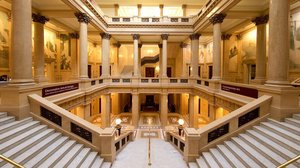 Carnegie Museum of Art |
Pittsburgh | 1 | Portrait of Dr. William Jacob Holland, Director Emeritus, Carnegie Museum |


Self Portrait (1915), Detroit Institute of Arts, Detroit. Sljedeći su Old Spanish Woman (1914) i Samuel Gompers (1850-1924) (1919).
28 godina: Self Portrait datira iz 1915, a Leopold Seyffert je rođen/a 1887.
Naš katalog sadrži 7 djela umjetnika Leopold Seyffert, datiranih od 1914 do 1953.
Većina njih se nalazi u Detroit Institute of Arts (Detroit), New York Historical Society (New York City) i Carnegie Museum of Art (Pittsburgh). Gornja tablica navodi muzeje jedan po jedan.
U razdoblju 1910s: 3 od ukupno 7 djela na ovoj stranici datira iz tog vremena, među kojima je i Self Portrait.
Najstarije djelo na ovoj stranici je iz Old Spanish Woman (1914), a najnovije iz Samuel Henry Kress (1953).
Da. Svako djelo na ovoj stranici možete naručiti kao ručno oslikano ulje na platnu muzejske kvalitete ili kao umjetničku tisku, u odabranoj veličini, izravno sa stranice samog djela.
Leopold Gould Seyffert (January 6, 1887 – June 13, 1956) remains a quietly significant figure in 20th-century American art. Often overshadowed by the flashier personalities of his contemporaries, Seyffert’s career spanned over half a century, producing an astonishingly consistent body of work—over 500 portraits—that continues to grace museums and private collections across the nation. His legacy isn't one of radical innovation or groundbreaking style, but rather of meticulous observation, technical mastery, and a remarkable ability to capture the essence of his subjects – from titans of industry and cultural figures to everyday Americans, revealing their dignity and character with subtle yet profound skill.
Born in California amidst the burgeoning West, Seyffert’s early life was shaped by both the rugged landscapes of Colorado and the bustling energy of Pittsburgh. His family's roots traced back to Germany, a heritage that instilled a deep appreciation for craftsmanship and tradition. These formative years fostered an innate artistic sensibility, initially nurtured through modest pursuits like cake decorating and taxidermy glass eye creation – experiences that honed his observational skills and developed a keen understanding of form and texture. His formal training at the Pennsylvania Academy of the Fine Arts provided him with a solid foundation in classical techniques, but it was his brief encounters with European masters—particularly Velasquez and Hals—that truly ignited his passion for portraiture, shaping his approach to capturing the nuances of human expression.
Seyffert’s artistic journey began in earnest during the early years of the 20th century. His travels through Europe – three distinct visits between 1910 and 1914 – proved pivotal, exposing him to a diverse range of artistic styles and cultural perspectives. These experiences weren't merely vacations; they were immersive studies in observation, as he meticulously sketched ordinary people from the streets of Volendam, Holland, capturing their unique faces and vibrant costumes. This fascination with the commonplace—a deliberate departure from the idealized subjects favored by some of his contemporaries—became a defining characteristic of his work. He absorbed lessons from masters like Van Gogh and Goya, integrating their expressive brushwork and dramatic use of light into his own style, while retaining a refined simplicity that distinguished him from more overtly avant-garde movements.
His early years were marked by financial struggles and a relentless pursuit of recognition. He supplemented his income with various odd jobs – office work for John Worthington, geologist for Standard Oil; baseball playing; and even baking cakes—demonstrating an adaptability and resilience that mirrored the spirit of the era. Crucially, he benefited from the guidance of influential figures like William Merritt Chase, who championed his talent and secured him commissions that launched his career. The support of Samuel Henry Kress further solidified his position, providing crucial financial assistance during his formative years.
Seyffert’s trajectory shifted dramatically with the arrival of MacBeth Gallery in New York City. The gallery's astute management recognized Seyffert’s exceptional talent and quickly established him as one of the leading portraitists of the 20th century. The sheer volume of commissions he received—over 500 portraits—testifies to his enduring popularity and the esteem in which he was held by wealthy patrons, industrialists, politicians, and cultural luminaries. His subjects were a who’s who of American society: Henry Clay Frick, Fritz Kreisler, Andrew Mellon, John Wanamaker, Edward T. Stotesbury, Elizabeth Arden, Samuel Gompers, Charles Lindbergh, and David Sarnoff – figures whose lives shaped the nation's trajectory.
Seyffert’s portraits weren’t merely likenesses; they were carefully constructed narratives of character and personality. He possessed a remarkable ability to capture not just physical appearance but also the inner life of his subjects, conveying their dignity, intelligence, and often, a hint of vulnerability. His meticulous attention to detail—the subtle curve of a smile, the glint in an eye—transformed ordinary individuals into compelling works of art. He was awarded numerous prizes and honors throughout his career, reflecting the widespread recognition of his skill and dedication.
Leopold Gould Seyffert’s influence extends far beyond the sheer number of portraits he created. He represents a quiet yet vital thread in the tapestry of American art history—a testament to the enduring power of traditional portraiture, executed with technical precision and profound sensitivity. His work continues to be exhibited in museums and private collections across the country, offering a valuable window into the lives and times of those who shaped America’s cultural landscape. While he may not command the same level of fame as some of his more flamboyant contemporaries, Leopold Seyffert's legacy as a master portraitist—a chronicler of the American century—remains secure.