मुफ़्त कला परामर्श सेवा

x
पेंटिंग ऑर्डर करें पेंटिंग ऑर्डर करेंछवि खरीदें छवि खरीदें साझा करेंसाझा करें
विवरणविवरण पसंदीदा में जोड़ें पसंदीदा में जोड़ें डाउनलोड करेंडाउनलोड करें समान कलाकृतियाँसमान कलाकृतियाँ एक्स-रेएक्स-रे स्लाइड शो देखेंस्लाइड शो देखें

Quarries

Explore Pablo Picasso’s ‘Quarries’ (1896), a realistic oil painting showcasing early Realist style & landscape. Discover its desolate beauty & influence on modern art.

पिकासो (1881-1973) एक क्रांतिकारी स्पेनिश चित्रकार और मूर्तिकार थे, जिन्होंने क्यूबिज्म की स्थापना में महत्वपूर्ण भूमिका निभाई। 'गुएर्निका' और 'ले डेमेसेल डी’एविग्नन' जैसी उत्कृष्ट कृतियों के लिए जाने जाते हैं, उनका कलात्मक प्रभाव आज भी प्रेरणादायक है।

गिक्ली / आर्ट प्रिंट

तेज़ उत्पादन और विभिन्न फिनिश विकल्पों के साथ म्यूजियम-क्वालिटी गिकली (giclée) या कैनवस प्रिंट।

P118B $10
P118H $10
P118W $10
P438Z $10
P508JH $12
P508YH $12
P805H $10
P805Z $10
P919BZ $10
P919G $10
P919XJ $10
P959ZH $10
P968JZ $12
W106C $8
W218G $10
W218JH $8
W218Y $10
W307PJ $10
W316G $10
W316PJ $8
W316Y $10
W398PJ $8
W4111J $10
W500HY $15
W500JH $15
W692G $12
W849H $8
W940BG $15
W953PJ $8

Standard
custom
CM
INCH

कलाकृति के मूल अनुपात से मेल खाने वाले हमारे पूर्व निर्धारित आकारों में से चुनें।

चौड़ाई
ऊँचाई

आप किसी विशिष्ट फ्रेम या स्थान के अनुसार अपने स्वयं के आयाम (dimensions) दर्ज कर सकते हैं। यदि आपके द्वारा चुना गया आकार मूल छवि के अनुपात से मेल नहीं खाता है, तो हम कलाकृति को क्रॉप कर देंगे या मिरर किए गए या सॉलिड-फिल किनारे के साथ छवि का विस्तार करेंगे। उत्पादन शुरू होने से पहले आपकी स्वीकृति के लिए एक डिजिटल मॉकअप भेजा जाएगा।
कृपया ध्यान दें कि स्क्रीन पर दिखने वाला प्रीव्यू वास्तविक क्रॉपिंग या विस्तार को नहीं दर्शाता है। केवल मॉकअप ही अंतिम संरचना को सटीक रूप से दिखाएगा।
हालाँकि कस्टम आकार उपलब्ध हैं, फिर भी हम मूल अनुपात बनाए रखने के लिए पूर्व-निर्धारित सूची में से एक आयाम चुनने की सलाह देते हैं।

विश्वव्यापी डिलीवरी (), मानक 4/5 सप्ताह के बजाय मात्र 2 सप्ताह में। (7 जुलाई)

why_choose_icon
दुनिया भर में मुफ़्त एक्सप्रेस शिपिंग
why_choose_icon
उच्च गुणवत्ता वाला लिनेन कैनवास
why_choose_icon
पूर्ण शिपिंग बीमा
why_choose_icon
सीमा शुल्क और आयात कर वापसी की गारंटी
why_choose_icon
सटीक रंग मिलान की गारंटी
why_choose_icon
60-दिन की वापसी नीति (केवल दोषों के लिए)
why_choose_icon
100% पैसे वापसी की गारंटी
why_choose_icon
थोक छूट का लाभ

कुल कीमत

-

reproduction

Quarries

गिक्ली / आर्ट प्रिंट

प्रतिकृति का आकार

-

कुल देय राशि

-

प्रमुख विशेषताएँ

  • subject: Rocky landscape with trees and birds
  • title: Quarries
  • medium: Oil on canvas
  • influences: Paul Cézanne
  • style: Realistic, Impressionistic Realism

कला प्रश्नोत्तरी

प्रत्येक प्रश्न का केवल एक ही सही उत्तर है।

प्रश्न 1:
In what year did Pablo Picasso create 'Quarries'?
प्रश्न 2:
Before his Cubist period, 'Quarries' demonstrates Picasso’s early exploration of which artistic style?
प्रश्न 3:
The image description notes the painting utilizes a technique characterized by thick application of paint, creating texture. What is this technique called?
प्रश्न 4:
Which artist's emphasis on underlying structure and use of planes of color significantly influenced Picasso’s later work, particularly his development of Cubism?
प्रश्न 5:
The overall atmosphere of 'Quarries' is described as...

संग्रहणीय वस्तु का विवरण

A Glimpse into Picasso’s Early Realist Period: ‘Quarries’

Before Pablo Picasso revolutionized the art world with Cubism, he honed his skills through meticulous observation and a dedication to realistic representation. *Quarries*, painted in 1896 when the artist was just fifteen years old, offers a fascinating window into this formative period of his artistic development. This landscape isn’t merely a depiction of a rocky hillside; it's a testament to Picasso’s burgeoning talent and foreshadows the innovative spirit that would define his career.

Desolate Beauty: Subject & Composition

The painting presents a rugged, earthy scene dominated by warm tones – ochres, browns, and reds – evoking a sense of sun-baked earth and weathered stone. A prominent, seemingly lifeless tree anchors the foreground, its bare branches reaching towards the sky. Scattered smaller trees dot the landscape, while two birds offer subtle points of interest within the expansive vista. The composition is largely horizontal, emphasizing the breadth of the terrain and the layered rock formations. Picasso’s careful arrangement creates a sense of depth despite a somewhat flattened perspective, drawing the viewer into the scene's quiet solitude.

Technique & Artistic Influences

*Quarries* showcases Picasso’s mastery of traditional oil painting techniques. Visible brushstrokes and an *impasto* application of paint – particularly in shadowed areas – create a rich, tactile texture that brings the landscape to life. The artist demonstrates a keen eye for detail in rendering the rock formations, capturing their rough surfaces and geological strata with precision. This dedication to naturalism reflects the influence of earlier masters like Gustave Courbet and Jean-François Millet, who championed Realist depictions of everyday life and landscapes. The subtle play of light and shadow also hints at the emerging Impressionistic tendencies that would briefly inform his work before he embarked on more radical explorations.

Historical Context & Artistic Evolution

Created during Picasso’s adolescence in Spain, *Quarries* reflects a period of intense artistic training under his father, José Ruiz y Blasco. The painting exemplifies the academic style prevalent at the time, emphasizing accurate representation and skillful execution. However, even within this framework, hints of Picasso's future innovations are present – a sensitivity to form and structure that would later become central to Cubism. This work serves as a crucial stepping stone in understanding his artistic journey, demonstrating how he built upon traditional foundations before dismantling them to forge a new visual language. The influence of Paul Cézanne’s emphasis on underlying structures is also subtly present, foreshadowing Picasso's later deconstruction of form.

Symbolism & Emotional Resonance

While seemingly straightforward in its depiction, *Quarries* evokes a sense of melancholy and abandonment. The dying tree, the desolate landscape, and the sparse vegetation contribute to an atmosphere of quiet solitude. The painting can be interpreted as a meditation on nature’s power, resilience, and the passage of time. It speaks to the enduring beauty found even in seemingly barren environments. It's a poignant reminder that even in decay, there is a certain dignity and grace.

Legacy & Relevance for Today

Although *Quarries* represents an early phase in Picasso’s career, it remains significant as a testament to his foundational skills and artistic potential. It demonstrates the importance of mastering traditional techniques before pushing boundaries and challenging conventions – a lesson that continues to inspire artists today. For collectors and interior designers, a reproduction of *Quarries* offers a unique opportunity to own a piece of art history, bringing a touch of serene beauty and intellectual depth to any space.
  • Style: Realism with Impressionistic undertones
  • Medium: Oil on Canvas
  • Period: Early Period (1896)
  • Themes: Landscape, Nature, Solitude, Decay
WahooArt.com offers museum-quality reproductions of *Quarries* and other masterpieces by Pablo Picasso, allowing you to experience the beauty and artistry of this iconic artist in your own home or office.

संबद्ध कलाकृतियाँ


कलाकार का जीवन परिचय

पाब्लो पिकासो: कलात्मक क्रांति के प्रतीक

पाब्लो रुइज़ वाई पिकासो, एक ऐसा नाम जो कलात्मक क्रांति का पर्याय है, का जन्म 25 अक्टूबर 1881 को मलागा, स्पेन में हुआ था। उनका अस्तित्व ही रचनात्मक अभिव्यक्ति के लिए अभिशप्त प्रतीत होता था; किंवदंती है कि उनके पहले शब्द "पिज, पिज़" थे, पेंसिल कहने का एक प्रयास। इस प्रारंभिक झुकाव को उनके पिता, जोसे रुइज़ वाई ब्लास्को द्वारा पोषित किया गया, जो एक चित्रकार और कला शिक्षक थे, जिन्होंने युवा पाब्लो को मूलभूत प्रशिक्षण प्रदान किया। हालाँकि, छात्र ने जल्द ही प्रशिक्षक को पीछे छोड़ दिया, प्राकृतिक चित्रण के लिए एक उल्लेखनीय योग्यता का प्रदर्शन किया जिसने भीतर निहित असाधारण प्रतिभा का संकेत दिया। परिवार की बाद की चालें – पहले ए कोरुना, फिर बार्सिलोना – व्यक्तिगत त्रासदी से चिह्नित थीं, विशेष रूप से पिकासो की बहन की हानि, अनुभव जो सूक्ष्म रूप से उनके बाद के काम में उदासी और मृत्यु दर के विषयों को भर देंगे। औपचारिक अध्ययन के दौरान बार्सिलोना के स्कूल ऑफ फाइन आर्ट्स में और मैड्रिड के रॉयल एकेडमी ऑफ सैन फर्नांडो में एक संक्षिप्त कार्यकाल के दौरान भी, पिकासो कठोर शैक्षणिक बाधाओं के खिलाफ विद्रोह करते थे, इसके बजाय वेल्ज़क्वेज़ और गोया जैसे मास्टर्स के कार्यों में खुद को डुबो देते थे, कलात्मक नवाचार की ओर अपने स्वयं के मार्ग का निर्माण करते थे।

नीले और गुलाबी रंगों की दुनिया: प्रारंभिक चरण

20वीं सदी के शुरुआती वर्षों ने पिकासो के काम में दो विशिष्ट अवधियों का उदय देखा: नीला दौर (लगभग 1901-1904) और गुलाबी दौर (1904-1906)। व्यक्तिगत कठिनाई और सामाजिक पीड़ा की गहरी समझ से पैदा हुआ नीला दौर, नीले और नीले-हरे रंगों की गंभीर छायाओं में डूबे चित्रों द्वारा चिह्नित है। ये काम हाशिए के आंकड़ों से भरे हुए हैं – भिखारी, अंधे, वेश्याएं – एक भयावह सहानुभूति के साथ प्रस्तुत किए गए हैं जो अलगाव और निराशा के विषयों को व्यक्त करते हैं। ला वी (1903) और द ओल्ड गिटारिस्ट (1903-1904) इस भावनात्मक रूप से आवेशित चरण के मार्मिक उदाहरण के रूप में खड़े हैं। एक व्यक्तिगत जीवन में बदलाव, पेरिस जाने के साथ मिलकर, गुलाबी दौर का आगमन हुआ। पैलेट काफी गर्म हो गया, गुलाबी, नारंगी और लाल रंग को अपनाते हुए, एक अधिक आशावादी दृष्टिकोण को दर्शाता है। इस अवधि ने सर्कस कलाकारों में रुचि देखी - हार्लेक्विन, एक्रोबेट और पारिवारिक दल - जो नाजुकता और लचीलापन दोनों को मूर्त रूप देते हैं। फैमिली ऑफ साल्टिंबैंक्स (1905) खूबसूरती से इस संक्रमण को समाहित करता है, आगामी शैलीगत अन्वेषणों का संकेत देता है।

दृष्टिकोण का विघटन: घनवाद और उससे आगे

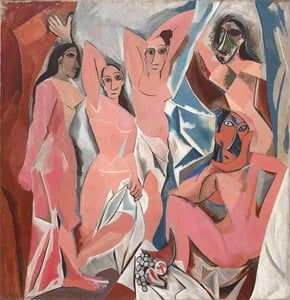
1907 ने कला के इतिहास में एक महत्वपूर्ण क्षण चिह्नित किया लेस डेमॉइसल डी’एविग्नन के निर्माण के साथ। आइबेरियन मूर्तिकला और अफ्रीकी मुखौटों से प्रभावित, इस अभूतपूर्व पेंटिंग ने परिप्रेक्ष्य और प्रतिनिधित्व की पारंपरिक धारणाओं को तोड़ दिया। यह एक कट्टरपंथी प्रस्थान था, सदियों पुरानी परंपराओं का जानबूझकर अस्वीकृति जिसने घनवाद के लिए मार्ग प्रशस्त किया। जॉर्ज ब्राक के साथ घनिष्ठ सहयोग में काम करते हुए, पिकासो ने इस क्रांतिकारी आंदोलन की सह-स्थापना की, मौलिक रूप से बदल दिया कि कलाकारों ने वास्तविकता को कैसे देखा और चित्रित किया। विश्लेषणात्मक घनवाद (1909-1912) वस्तुओं को ज्यामितीय आकृतियों में खंडित करने पर केंद्रित था, जो शांत रंगों में प्रस्तुत किया गया था, जैसे कि स्वयं रूप का विश्लेषण करना। यह सिंथेटिक घनवाद (1912-1919) में विकसित हुआ, जिसमें अखबार के क्लिपिंग और कपड़े के टुकड़ों जैसे कोलाज तत्वों को शामिल किया गया, बनावट और दृश्य जटिलता की नई परतें जोड़ दी गईं। पिकासो दुनिया का प्रतिनिधित्व करने से संतुष्ट नहीं थे; उन्होंने इसे विघटित करना और अपनी शर्तों पर पुनर्निर्माण करना चाहा।

एक बेचैन प्रयोगकर्ता: नवशास्त्रीयवाद, अतियथार्थवाद और युद्ध

1920 के दशक ने पिकासो को संक्षिप्त रूप से नवशास्त्रीय शैलियों का पता लगाने के लिए देखा, जो क्लासिक रूपों को प्रतिध्वनित करने वाले विशाल आंकड़े बनाते हैं जबकि एक विशिष्ट आधुनिक संवेदनशीलता बनाए रखते हैं। साथ ही, उन्होंने उभरते अतियथार्थवादी आंदोलन के साथ भी जुड़ गए, हालांकि कभी भी इसके सिद्धांतों के साथ पूरी तरह से नहीं जुड़े। इस अवधि में उनका काम पहले की शैलीगत प्रभावों को अवास्तविक कल्पना और विकृत दृष्टिकोणों के साथ मिलाता है, उनकी अथक प्रयोग का प्रदर्शन करता है। स्पेनिश गृहयुद्ध की भयावहताओं ने पिकासो को गहराई से प्रभावित किया, जिसके परिणामस्वरूप गुएर्निका (1937) का निर्माण हुआ, गुएर्निका शहर के बमबारी के प्रति एक जीवंत और भावनात्मक रूप से विनाशकारी प्रतिक्रिया। यह विशाल कार्य युद्ध की क्रूरता का एक स्थायी प्रतीक बन गया, पिकासो की भूमिका को न केवल एक कलाकार बल्कि शांति और सामाजिक न्याय के लिए एक शक्तिशाली आवाज के रूप में मजबूत किया। 1950 और 60 के दशक में, उन्होंने अचल जिज्ञासा और कौशल के साथ सिरेमिक, मूर्तिकला और प्रिंटमेकिंग का पता लगाते हुए सीमाओं को लगातार चुनौती दी। जैक्वलीन रोक् के साथ उनकी शादी ने उनके व्यक्तिगत जीवन और कलात्मक अभिव्यक्ति में एक नया आयाम लाया।

एक अगणनीय प्रभाव

पाब्लो पिकासो 8 अप्रैल 1973 को मोउइन्स, फ्रांस में 91 वर्ष की आयु में निधन हो गए, जिससे एक आश्चर्यजनक कार्य का शरीर पीछे छूट गया - अनुमानित रूप से 50,000 से अधिक टुकड़े - जो आज भी दर्शकों को मोहित और प्रेरित करता है। उनके कलात्मक विकास को वेलज़क्वेज़ और गोया जैसे स्पेनिश मास्टर्स से लेकर आइबेरियन मूर्तिकला, अफ्रीकी कला और हेनरी मैटिस के जीवंत रंग पैलेट तक विविध प्रकार के प्रभावों द्वारा आकार दिया गया था। 20वीं सदी की कला पर उनका प्रभाव अगणनीय है। उन्होंने घनवाद की सह-स्थापना की, कोलाज और निर्मित मूर्तिकला का मार्ग प्रशस्त किया, और लगातार कलात्मक परंपराओं को चुनौती दी। पिकासो के अथक प्रयोग ने आधुनिक कला को फिर से परिभाषित किया, पीढ़ियों के कलाकारों पर एक अमिट छाप छोड़ी और इतिहास में सबसे महत्वपूर्ण और प्रभावशाली आंकड़ों में से एक के रूप में अपनी स्थिति मजबूत की। उनकी विरासत कैनवास से परे फैली हुई है, समकालीन संस्कृति के अनगिनत पहलुओं में प्रतिध्वनित होती है और हमें कलात्मक दृष्टि की परिवर्तनकारी शक्ति की याद दिलाती है।
पाब्लो पिकासो

पाब्लो पिकासो

1881 - 1973 , स्पेन

मुख्य तथ्य

  • Artistic Movement Or Style: क्यूबिज्म, अतियथार्थवाद
  • Artists Or Movements Influenced By This Artist:
    • क्यूबिज्म
    • आधुनिक कला
  • Artists Who Influenced This Artist:
    • वेलज़क्वेज़
    • गोया
    • मातिस
  • Date Of Birth: 25 अक्टूबर 1881
  • Date Of Death: 8 अप्रैल 1973
  • Full Name: पाब्लो रुइज़ पिकासो
  • Nationality: स्पेनिश
  • Notable Artworks:
    • लेस डेमेइसल्स डी'एविग्नन
    • ग्वेर्निका
    • द ओल्ड गिटारिस्ट
    • ला विए
    • फैमिली ऑफ़ साल्टिम्बैंक्स
  • Place Of Birth: मलागा, स्पेन
विषयों, शैलियों और विशेषताओं के आधार पर व्यवस्थित कलाकृतियों का अन्वेषण करें।