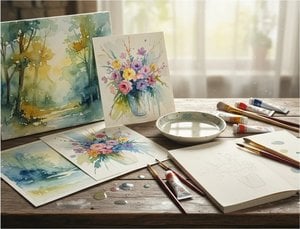
une vie d'expression artistique
william blamire young, artiste anglo-australien de premier plan, a laissé une empreinte indélébile dans le monde de la peinture à l'aquarelle. né à castlemaine, en Australie, en 1862, le parcours artistique de young fut marqué par un style unique et des techniques novatrices.premières années et inspiration
les premières années de young furent empreintes d'une fascination profonde pour l'art, ce qui l'a conduit à développer une approche distinctive de l'aquarelle. cette méthode, telle que décrite par julian ashton, consistait à « s'entourer de coupelles débordant de couleurs pures... il couvrait rapidement une feuille de papier de sa grande teinte générale ». Cette dextérité dans l'usage de l'aquarelle lui a valu la réputation de l'un des plus grands praticiens d'australie.œuvres notables et expositions
- voir sur art gallery nsw).
- les œuvres de young ont été présentées dans de nombreuses expositions, notamment la society of artists spring exhibition (1912) et la british empire exhibition (1924), consolidant davantage sa présence dans le monde de l'art.
musées et collections
le travail de young se retrouve dans divers musées à travers l'australie, notamment :- art gallery of new south wales, qui présente plusieurs aquarelles de young (explorer la collection).
- castlemaine art museum, où son lien avec la région est célébré à travers diverses expositions et événements.
héritage et impact
l'approche innovante de young envers la peinture à l'aquarelle a laissé un impact durable sur l'art australien. son style unique, caractérisé par des couches transparentes et un espace non linéaire, continue d'inspirer les artistes d'aujourd'hui. découvrir les œuvres de william blamire young sur WahooArtpour aller plus loin
- the watercolours of blamire young / stephen marshall, une étude complète du travail de young, est disponible dans la collection de l'australian war memorial (voir sur awm).
- pour plus d'informations sur la vie et l'art de young, visitez la page de l'artiste sur WahooArt.
conclusion
le voyage remarquable de william blamire young à travers l'univers de la peinture à l'aquarelle a marqué l'art australien de façon permanente. son approche novatrice et son style singulier continuent d'inspirer, faisant de lui un véritable maître de son art.Questions et réponses
Puis-je explorer les œuvres de Blamire Young par spectre de couleurs ?
Les œuvres de Blamire Young peuvent être explorées par couleur sur la page Par couleur de l'artiste.
Où peut-on trouver les œuvres de Blamire Young regroupées par technique ?
Les œuvres de Blamire Young peuvent être consultées par technique sur la page Par technique de l'artiste.
Où peut-on trouver les œuvres de Blamire Young regroupées par mouvement artistique ?
Retrouvez les œuvres de Blamire Young classées par mouvement sur la page Tous les mouvements artistiques de l'artiste.