CONSEIL EN ART GRATUIT

x

Informations clés

  • Top 3 works:
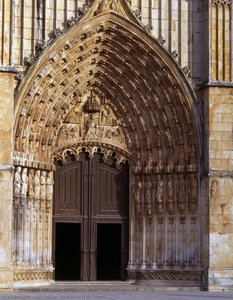
    • Archivolts of the west portal of the church
    • Archivolts and tympanum of the west portal of the church
    • West portal of the church
  • Color intensity: vivid
  • Typical colors: driftwood
  • Top-ranked work: Archivolts of the west portal of the church
  • Plus…
  • Also known as: Victor Pierre Huguet
  • Museums on APS:
    • Monastère de Batalha
    • Monastère de Batalha
    • Monastère de Batalha
    • Monastère de Batalha
    • Monastère de Batalha
  • Works on APS: 9
  • Copyright status: Under copyright

Quiz d'art

Chaque question ne comporte qu'une seule bonne réponse.

Question 1:
What artistic movement did Victor Huguet primarily belong to?
Question 2:
Where was Victor Huguet born?
Question 3:
Who mentored Victor Huguet at the École supérieure des beaux-arts de Marseille?
Question 4:
What was Victor Huguet’s notable expedition focused on?
Question 5:
Which city did Victor Huguet frequently visit for artistic inspiration?

Victor Huguet

Victor Pierre Huget (1 May 1835, Le Lude – 16 August 1902, Paris) was a French Orientalist painter who captivated audiences with his vivid depictions of Eastern landscapes and cultures. His artistic journey unfolded amidst the transformative currents of the Second French Empire, the Franco-Prussian War, and the subsequent establishment of the Third Republic—periods that profoundly shaped both his personal life and his creative output. Huguet’s legacy resides not merely in his impressive oeuvre but also in his role as a pivotal figure within the burgeoning Orientalist movement, marking a crucial bridge between classical artistic traditions and the experimental spirit of modern art.

Early Life and Artistic Foundations

Born in Lyon, France, Huguet's formative years were steeped in the vibrant atmosphere of a city undergoing rapid industrialization—a dynamic environment that fostered an appreciation for both craftsmanship and innovation. His family’s modest means provided him with access to foundational artistic education, beginning with instruction under local artists who instilled in him the techniques and stylistic sensibilities prevalent within Lyon’s burgeoning art scene. Notably influenced by Émile Loubon at the École supérieure des beaux-arts de Marseille, Huguet honed his skills in landscape painting—a genre favored during the Romantic era—capturing the grandeur of mountainous vistas and the serenity of rural landscapes with remarkable precision. Simultaneously, he studied under Eugène Fromentin in Paris, absorbing the stylistic nuances of Realism while maintaining a sensitivity to emotional expression. This dual influence would permeate his artistic vision throughout his career.

The Egyptian Expedition and Artistic Awakening

A pivotal moment arrived in 1852 when Huguet embarked on his inaugural voyage to Egypt—a journey that irrevocably altered his artistic trajectory. Accompanied by Jean-Baptiste Henri Durand-Brager, he participated in an expedition dedicated to documenting the landscapes and architectural marvels of ancient Egypt—an experience that ignited his passion for Orientalist subjects and cemented his commitment to portraying Eastern cultures with authenticity and nuance. The expedition’s meticulous observation of Egyptian topography and artistic traditions served as a catalyst for Huguet's stylistic evolution, prompting him to adopt bolder color palettes and looser brushstrokes—techniques characteristic of Impressionism and foreshadowing the broader artistic innovations of the late 19th century.

The Crimean War Canvas: A Blend of Observation and Emotion

Continuing his artistic exploration, Huguet joined Durand-Brager’s second expedition in 1853, venturing into Crimea during the tumultuous Franco-Prussian War—a conflict that gripped Europe and fueled nationalist fervor. This undertaking demanded not only technical proficiency but also a profound understanding of human psychology—qualities Huguet skillfully conveyed through his paintings depicting scenes of military encampments and battlefield landscapes. Unlike purely descriptive works, Huguet’s Crimean canvases pulsated with emotional intensity, reflecting the anxieties and aspirations of a generation grappling with existential questions amidst the backdrop of armed conflict. His masterful use of color and light underscored his ability to capture both the grandeur of the natural world and the complexities of human experience—a hallmark of Romantic artistic ideals.

Prolific Orientalist Output: Landscapes of Libya, Egypt & Beyond

From 1859 onwards, Huguet established himself as a regular exhibitor at the Société des Peintres Orientalistes Français, dedicating his artistic energies to portraying Eastern landscapes and cultures with unwavering dedication—a pursuit that yielded an impressive body of work spanning decades. His expeditions to Libya, Egypt, Istanbul and Algeria provided him with unparalleled inspiration for capturing the vibrant hues and textures of these exotic locales—subjects that resonated deeply with audiences captivated by Romanticism’s fascination for the “Other.” Huguet's paintings exemplify a remarkable fusion of observation and imagination, blending meticulous topographical accuracy with evocative artistic embellishments. His distinctive style—characterized by luminous color palettes and expressive brushstrokes—became synonymous with the Orientalist movement, establishing him as one of its foremost practitioners.

Legacy and Recognition

Victor Huguet’s influence extended beyond his own lifetime, shaping subsequent generations of painters who embraced Impressionism and Symbolism—movements that challenged traditional artistic conventions and championed subjective experience. His enduring legacy resides not only in the beauty of his artworks but also in his role as a pioneer—a figure who bridged the gap between classical aesthetics and modernist innovation. Huguet’s paintings continue to be admired for their technical brilliance, emotional depth, and profound engagement with the cultural heritage of Eastern civilizations—testaments to his artistic vision and enduring contribution to the history of art. His works are housed in museums across France and internationally, ensuring that his legacy persists as a beacon of Romantic idealism and stylistic excellence.