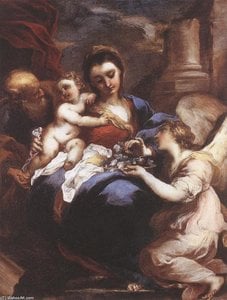
La Genèse d'un Visionnaire Génois
Valerio Castello émerge de l'ombre d'une noble lignée génoise, une vie marquée à la fois par le prestige de sa naissance et par la morsure soudaine de la précarité financière suite au décès prématuré de son père. Si son chemin aurait pu le mener vers les salles feutrées de l'érudition, une connexion innée et profonde avec l'art du dessin a redirigé son destin vers la toile. Sous le regard attentif de maîtres tels que Domenico Fiasella et Giovanni Andrea De Ferrari, le jeune Castello commença à entrelacer sa prouesse technique avec une ambition artistique bourgeonnante. Cette période formative ne consistait pas seulement à maîtriser le pinceau ; il s'agissait d'absorber l'essence même de l'esprit ligurien, le préparant à une carrière qui allait bientôt illuminer les sommets de l'ère baroque.Une Tapisserie de Lumière et de Mouvement
La trajectoire du génie de Castello fut irrévocablement transformée par ses voyages marquants à travers Milan et Parme entre 1640 et 1645. Ces errances servirent d'immersion vitale dans les courants vibrants de l'art vénitien, où il rencontra l'intensité dramatique de Camillo Procaccini. Son style commença à se fondre en une magnifique synthèse, mêlant le dynamisme théâtral de Tintoret à la grandeur opulente et baignée de soleil de Véronèse. Cette alchimie unique lui permit de maîtriser les complexités de la composition et de la perspective, particulièrement dans ses célèbres scènes de bataille, qui capturaient l'énergie chaotique et l'échelle héroïque prisées par l'élite européenne. Sa capacité à fusionner ces influences disparates créa un langage visuel à la fois musclé et d'une grâce exquise.Un Héritage Baroque Éternel
Bien que sa vie fut tragiquement brève, s'achevant en 1659, l'empreinte de la main de Castello demeure gravée dans le tissu architectural et spirituel de Gênes. Sa capacité à commander tant la toile intime que la fresque monumentale est manifeste dans des œuvres telles que Moïse frappant le rocher, un chef-d'œuvre de 1653 qui incarne la puissance divine par un mouvement viscéral, ainsi que dans ses fresques époustouflantes au sein de la Basilica della Santissima Annunziata del Vastato. Qu'il dépeigne les récits bibliques poignants de Rebecca au puits ou les grands triomphes collaboratifs du Palazzo Balbi, Castello insufflait à chaque coup de pinceau un sentiment de transcendance spirituelle. Son influence se répercuta à travers les générations, façonnant notamment le développement de Domenico Piola et consolidant son statut de figure prééminente du Baroque, laissant derrière lui un héritage de lumière, de drame et d'une profonde émotion humaine.Questions et réponses
Existe-t-il une visite virtuelle en 3D des œuvres de Valerio Castello ?
Retrouvez les œuvres de Valerio Castello dans une galerie 3D sur la page Musée en 3D de l'artiste.
Où puis-je voir toutes les œuvres de Valerio Castello ?
Retrouvez toutes les œuvres de Valerio Castello sur ce site en consultant sa page Toutes les œuvres d'art.
À quelle époque historique Valerio Castello a-t-il vécu ?
Valerio Castello a œuvré durant la période L'époque moderne. Cette époque permet de situer l'activité de l'artiste dans l'histoire.