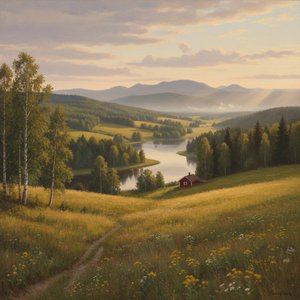
Theude Grönland: A Pioneer of Nordic Landscape Painting
Theude Grønland (1817 – 1876) stands as a pivotal figure in Norwegian art history, recognized for his masterful depictions of the Scandinavian wilderness and his contribution to establishing Romantic landscape painting as a prominent genre. Born Johan Christian Dahl in Altona, Prussia—now Germany—Grönland’s artistic journey began amidst the burgeoning intellectual fervor of the mid-19th century, shaping him into one of Norway's foremost painters and cementing his place within the broader European art scene.
Early Life & Education: Grønland’s formative years were marked by exposure to influential artistic mentors, notably Johan Christian Dahl Sr., who instilled in him a deep appreciation for Romantic ideals and observational accuracy. His formal training at the Danish Royal Academy in Copenhagen provided him with foundational skills in portraiture and composition, though his true passion lay in capturing the grandeur of Norway’s fjords and mountains. This early influence would prove crucial in shaping Grönland's artistic sensibilities throughout his career—a dedication to meticulous detail and a profound understanding of tonal harmony—characteristics that would become hallmarks of his distinctive style.
Travel & Artistic Development: Driven by an unwavering desire to immerse himself in nature’s beauty, Grønland embarked on extensive expeditions throughout Scandinavia during the 1840s and 50s. These travels profoundly impacted his artistic vision, fueling his fascination with dramatic lighting effects and conveying a palpable sense of atmosphere—characteristics that would define his distinctive style. He meticulously documented the landscapes he encountered, honing his observational skills and experimenting with innovative techniques to translate the sublime grandeur of Norway’s wilderness onto canvas. The resulting paintings are imbued with an emotional intensity that reflects Grönland's deep connection to the natural world.
Style & Technique: Grønland’s paintings are characterized by their meticulous attention to detail and their expressive use of color. He favored oil paints on canvas, employing loose brushstrokes combined with precise blending to achieve luminous surfaces and convey the textures of rock formations, snowdrifts, and foliage. His compositions often prioritized panoramic vistas, emphasizing the immensity of the landscape and capturing fleeting moments of sublime beauty—a stylistic approach that aligns seamlessly with the tenets of Romanticism. He skillfully manipulated light and shadow, creating dramatic contrasts that heighten the emotional impact of his artworks and conveying a sense of dynamism and movement.
Notable Works & Recognition: Among Grönland’s most celebrated canvases are “Winter” (1863), a breathtaking portrayal of a snowy fjord bathed in ethereal light—a masterpiece that exemplifies his mastery of tonal harmony and atmospheric perspective—and “The Snow Landscape” (1870). These works garnered considerable acclaim during his lifetime, securing him membership to the Danish Royal Academy and establishing him as a respected artist within Norway’s artistic circles. His dedication to capturing the essence of Nordic landscapes cemented his place in art history and ensured that his paintings continue to inspire awe and admiration today.
Legacy & Influence: Grönland's influence extended beyond his own generation, inspiring subsequent Norwegian painters—particularly Frants Diderik Bøe—to explore similar themes of landscape and emotion. His pioneering approach to Romantic painting helped establish Norway as a center for artistic innovation and solidified his enduring legacy as one of the nation’s most significant cultural figures. He remains an exemplar of artistic integrity and unwavering devotion to capturing the sublime beauty of the natural world, ensuring that his vision continues to resonate with audiences worldwide.