Roberto Cacciari: Bridging Tradition and Innovation in Bolognese Art
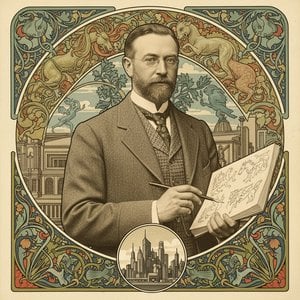
Roberto Cacciari (1882 – 1966) stands as a significant figure within the artistic landscape of Bologna and early 20th-century Italy. Born into a family steeped in architectural heritage, his formative years instilled an appreciation for meticulous craftsmanship and enduring forms—influences that would profoundly shape his own artistic endeavors. Studying under the tutelage of Silvio Gordini, Cacciari honed his painting skills while simultaneously pursuing academic excellence at the University of Bologna, establishing himself as both artist and educator. This dual commitment fostered a unique perspective on artistic development, blending classical sensibilities with burgeoning modernist ideas—a synthesis that defines his distinctive contribution to Bolognese art.
Early Influences & Education: Gordini’s Guidance and Academic Foundations
Silvio Gordini’s mentorship proved instrumental in shaping Cacciari's artistic trajectory. Gordini instilled in him a profound respect for mastering technique and capturing the essence of Italian art history, emphasizing the importance of meticulous observation and disciplined practice. Simultaneously, Cacciari excelled academically at the University of Bologna, securing a solid intellectual base that complemented his artistic pursuits. This balanced approach ensured he possessed not only technical proficiency but also a nuanced understanding of artistic context—a crucial element for interpreting and innovating upon established traditions.
Architectural Firm & Academic Career: Shaping Bologna’s Landscape
Cacciari collaborated closely with Cacciari, Guidacci and Venturi, contributing significantly to Bologna's architectural evolution during his lifetime. His involvement extended beyond mere construction; he served as a professor of architecture at the University, imparting knowledge and fostering critical thinking amongst aspiring architects—a role that solidified his commitment to artistic education and shaping the cultural fabric of his city. This multifaceted engagement underscored Cacciari’s belief in the interconnectedness of art and scholarship, recognizing their mutual influence on societal progress.
Stylistic Characteristics: Charcoal's Depth and Deco Influence
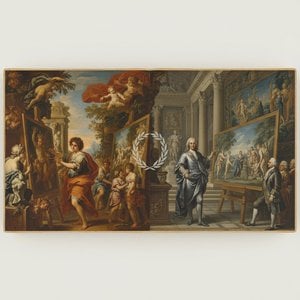
Cacciari’s artistic style is characterized by a harmonious fusion of tradition and innovation—a hallmark of his era. Unlike many contemporaries who embraced purely abstract expressionism, he retained a grounding in figurative representation, skillfully employing charcoal to convey depth and nuance. This technique allowed him to capture subtle tonal variations and textural complexities—as powerfully demonstrated in ‘The Sepulture of St. Cecilia and the Saints Cecilia and Valeriano.’ The artwork reflects the stylistic concerns prevalent during the Art Deco period, characterized by geometric forms and opulent ornamentation, yet retains Cacciari’s unwavering dedication to honoring artistic heritage while simultaneously pushing creative boundaries.
Notable Artwork Example: ‘The Sepulture of St. Cecilia’
‘The Sepulture of St. Cecilia and the Saints Cecilia and Valeriano,’ exemplifies Cacciari's ability to distill complex theological concepts into visually arresting compositions—a testament to his intellectual rigor alongside his artistic talent. The meticulous attention to detail – evident in every stroke – underscores his commitment to honoring artistic tradition while simultaneously embracing modernist experimentation. This painting stands as a cornerstone of Bolognese art history, showcasing Cacciari’s mastery of charcoal and his profound understanding of conveying spiritual themes through visual imagery.
Legacy & Collections
Roberto Cacciari's enduring legacy resides in the preservation of Italian artistic heritage—a testament to his unwavering dedication to craftsmanship and intellectual curiosity. His paintings are housed in prestigious institutions such as Pinacoteca Comunale di Recanati and Retiro di San Pellegrino Museum, offering invaluable insights into his artistic vision and its resonance with the broader cultural landscape of his time. These collections serve as enduring reminders of Cacciari’s contribution to Bolognese art history and solidify his place among Italy's most respected artists.