Raymond Anthony Langton: A Life Illuminated by Art and Stage
Raymond Anthony Langton, affectionately known as Ray Leighton, was a British actor and artist whose life unfolded against the backdrop of mid-century England—a period defined by both artistic innovation and social change. Born in Manchester in 1942, he transitioned from modest beginnings into a celebrated performer on Coronation Street and a respected painter whose canvases breathed with quiet contemplation and subtle beauty. His artistic trajectory mirrored his theatrical pursuits: an unwavering dedication to observation, experimentation, and a profound engagement with the human experience.
Early Life and Artistic Foundations
Langton’s formative years nurtured a lifelong passion for drawing and painting—a gift imparted by his father, John Godward Snr., who worked as an investment clerk but instilled in him a deep appreciation for visual art. Growing up in Peterborough Terrace, Fulham—a tranquil enclave nestled amidst London's vibrant expansion—provided Langton with invaluable exposure to the natural world, shaping his artistic sensibility and informing his later compositions. His grandfather, William Godward, established himself as a successful businessman, instilling in him values of discipline and ambition – qualities that would prove instrumental in Langton’s educational journey and intellectual curiosity. The Godward family's financial stability afforded him access to enriching opportunities, fostering a spirit of inquisitive exploration from an early age.
Coronation Street: From Humble Beginnings to Iconic Performance
Langton’s breakthrough arrived on ITV’s Coronation Street in 1965, where he debuted as Ray Langton—a character whose turbulent life resonated powerfully with Langton's own personal reflections on relationships and self-discovery. Initially cast in a supporting role, Langton swiftly gained recognition for his captivating performances and willingness to tackle challenging storylines. His portrayal of Langton became inextricably linked to the soap opera’s unforgettable moments—capturing the poignant complexities of desire, regret, and ultimately, redemption. Critics lauded his masterful characterization, recognizing his ability to convey emotion through understated gestures and expressions – a skill honed not merely on stage but also in his artistic endeavors.
Painting: Capturing Atmosphere and Emotion
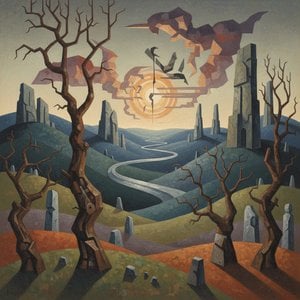
Beyond the glare of television lights, Langton cultivated a prolific artistic practice, experimenting with watercolor and gouache—media he favored for their capacity to capture fleeting impressions and convey emotional resonance. He frequently depicted landscapes imbued with atmospheric qualities – misty hillsides bathed in twilight hues or serene coastal vistas reflecting the changing seasons. These canvases weren’t simply representations of places; they were explorations of mood and feeling, mirroring the introspective nature of his artistic vision. Influenced by Impressionism and Neo-classicism, Langton sought to distill emotion into visual form—prioritizing color palettes and compositional arrangements that evoked specific sensations and moods. Artists like Samuel Palmer and William Blake served as enduring inspirations, guiding him toward a path of imaginative contemplation and spiritual expression.
Notable Works and Legacy
Langton’s artistic output included “Minorite Church,” a watercolor depicting the interior of St Mary's Roman Catholic Church in Fulham—a piece celebrated for its delicate rendering of light and shadow and its evocative portrayal of religious devotion. His paintings were recognized by collectors and exhibited in galleries across Britain, securing his place within the canon of British art history. Raymond Anthony Langton died peacefully in 2005 at the age of 63, leaving behind a legacy that honored both theatrical artistry and artistic achievement—a testament to his unwavering commitment to creative exploration and his enduring contribution to the cultural heritage of his era.