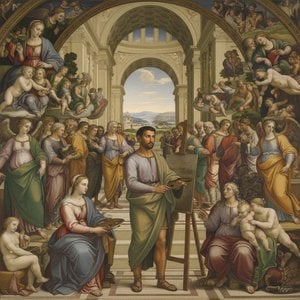
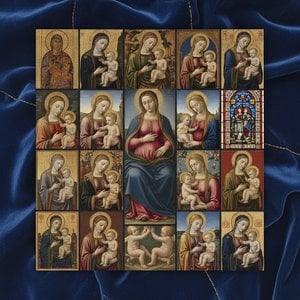
Rafael Coronel (born , ) is a Mexican painter whose distinctive style—characterized by serene Madonnas and architectural brilliance—has garnered international acclaim. Unlike many artists of his era, Coronel’s oeuvre isn't defined by flamboyant spectacle but rather by a profound stillness imbued with melancholic sobriety. His canvases often depict faces from the past masters, subtly layered in a diffuse haze, creating an atmosphere of contemplative beauty. While he may not be recognized as one of Mexico’s most celebrated figures, Coronel’s work holds considerable significance within the artistic landscape of his country and beyond.
Early Life & Artistic Inclinations
Rafael Coronel's artistic journey began early in life, nurtured by a family steeped in artistic tradition. His grandfather was a church decorator, meticulously adorning buildings with vibrant frescoes—a legacy that instilled in Rafael an innate fascination for visual storytelling and craftsmanship. Recognizing his brother Pedro’s ambition to pursue painting professionally, Rafael initially viewed it as a misguided path, acknowledging the practical realities faced by artists striving to earn a living. He himself confessed that he “betrayed my father,” prioritizing his own artistic pursuits over conventional expectations. This formative experience instilled in him a deep appreciation for both artistic expression and societal responsibility—values that would permeate his entire artistic career.
Education & Artistic Development
Despite societal pressures favoring vocational careers, Rafael’s passion for painting persisted. Studying at Escuela Nacional de Pintura, Escultura y Grabado "La Esmeralda," he rapidly honed a unique artistic vocabulary—a testament to his dedication and innate talent. He sought inspiration from the monumental architecture of Zacatecas, where he currently resides, mirroring the grandeur and solemn beauty found in Baroque masterpieces. Though his subjects often explore themes of popular culture, Coronel's paintings aren’t spontaneous expressions but rather carefully considered compositions reflecting profound intellectual engagement. The pivotal moment arrived in 1952 when he secured a prestigious painting contest prize: “Mujer de Jerez,” executed with crayons—a resourceful choice given budgetary constraints—demonstrating his unwavering commitment to artistic exploration. He famously declared, "I betrayed my father, but I've done good for the country," encapsulating his belief in art’s transformative potential and its contribution to national identity.
Notable Works & Influences
Coronel’s artistic vision was shaped by a diverse range of influences—from classical masters like Raphael himself to Diego Rivera’s monumental murals, which championed social justice and artistic innovation. His fascination with architecture is evident in his meticulous attention to detail and spatial composition. He achieved considerable recognition through competitions like “Mujer de Jerez,” securing a scholarship that fueled his creative endeavors. Among his celebrated paintings are "Tiziano y su mujer" (1995), a masterful Baroque portrait capturing the essence of Titian’s style, and “Beatificación” – an evocative piece exploring themes of faith and spirituality—demonstrating his ability to convey emotion through understated elegance.
Legacy & Recognition
Rafael Coronel's enduring legacy rests on his ability to evoke contemplation and beauty with remarkable restraint—a hallmark of his distinctive artistic approach. He continues to inspire artists and collectors alike with his unwavering dedication to craftmanship and his profound understanding of the human condition. His work stands as a testament to the power of art to transcend time, capturing moments of serenity and intellectual depth that resonate deeply within viewers. The Museo Rafael Coronel, established in Zacatecas' former convent of San Francisco de Almoloyan y de Asis, showcases his extensive mask collection—a captivating reflection of his artistic sensibilities and a celebration of cultural heritage. Coronel’s contribution to Mexican art history is undeniable, securing his place among the nation’s most respected visual artists.
Par la rédaction de WahooArt.com
Quiz d'art
Chaque question ne comporte qu'une seule bonne réponse.
Question 1:
Qui était le beau-père influent de Rafael Coronel ?
Question 2:
Quel style artistique est connu pour Rafael Coronel ?
Question 3:
Où pouvez-vous trouver un musée dédié à la collection de masques de Rafael Coronel ?
Elevate your home with the sublime harmony of Raphael’s masterpieces. Explore iconic High Renaissance works, from St. George to The School of Athens, and discover how premium, hand-painted reproductions can transform your space into a sanctuary of classical elegance and timeless beauty.
Embark on a sophisticated journey through art history with our curated guide to the most iconic Madonna and Child masterpieces. Discover the profound beauty, theological depth, and enduring legacy of these sacred Renaissance treasures.
Embark on a journey through the High Renaissance. Discover the mastery of light, form, and classical harmony through an expert exploration of the era's greatest masters, techniques, and enduring artistic legacy.
Bonjour ! Je peux vous aider à choisir une œuvre d'art, à suivre une commande ou à répondre à vos questions sur la garantie. Comment puis-je vous aider ?