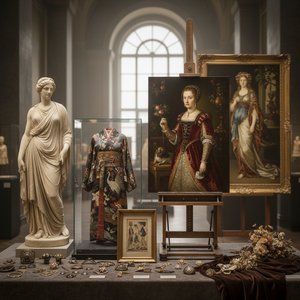
Princess Irene Galitzine: The Architect of Elegant Loungewear
Princess Irene Galitzine (1916-2006) stands as a singular figure in the annals of 20th-century fashion, remembered not merely for her designs but for crafting an aesthetic that embodies understated glamour and timeless sophistication. Born in Tbilisi, Georgia, amidst the turbulent backdrop of the Russian Revolution, Galitzine’s journey was marked by displacement and resilience—experiences that profoundly shaped her artistic vision. Her formative years instilled a deep appreciation for heritage and tradition alongside a burgeoning fascination with European art and culture, setting the stage for her remarkable career as a designer.
Early Life & Education: Galitzine’s aristocratic lineage propelled her into privileged surroundings where she pursued studies in Rome, Cambridge, and Paris, immersing herself in disciplines ranging from fine arts to English literature and French language. These intellectual pursuits cultivated a discerning eye for beauty and craftsmanship—qualities that would become central to her creative process. She honed her artistic skills during formative years studying under renowned instructors at prestigious institutions, absorbing the principles of classical sculpture and mastering techniques vital to crafting enduring designs.
The Sorelle Fontana Collaboration: Recognizing the importance of mentorship, Galitzine joined the Italian fashion house Sorelle Fontana in 1943, gaining invaluable experience amidst the exigencies of wartime production. This collaboration honed her skills and broadened her understanding of industrial design principles while simultaneously exposing her to innovative techniques and materials—a crucial step in developing her signature style. The collaborative spirit fostered by Sorelle Fontana instilled a dedication to blending artistic vision with practical considerations—a cornerstone of Galitzine’s enduring legacy.
The Palazzo Pyjama: Galitzine’s breakthrough came with the conception of the Palazzo Pyjama—a revolutionary trouser silhouette that redefined feminine elegance. Rejecting restrictive styles prevalent at the time, she championed comfort and fluidity without sacrificing grace or formality. The palazzo pyjama swiftly ascended to iconic status, becoming a favored garment among Hollywood actresses like Jackie Kennedy and Audrey Hepburn, cementing Galitzine’s reputation as a visionary designer—a testament to her ability to anticipate evolving tastes and elevate everyday apparel into objects of beauty and aspiration. Her innovative design challenged conventional notions of fashion, establishing herself as an influential figure in the history of couture.
Legacy & Influence: Galitzine's enduring contribution lies not only in her groundbreaking palazzo pyjama but also in her unwavering commitment to preserving artistic traditions while embracing modern innovation. Her designs are celebrated in museums across Europe—including The Metropolitan Museum of Art in New York, Victoria & Albert Museum in London and Costume Museum in St. Petersburg—demonstrating the breadth of her artistic vision. Princess Irene Galitzine’s story exemplifies how personal experience can fuel creative brilliance and transform fashion history forever. She remains an inspiration to designers striving for elegance and sophistication, securing her place as one of the most influential figures in 20th-century couture.