Pietro di Francesco degli Orioli: A Sienese Visionary Bridging Florentine and Gothic Traditions
Pietro di Francesco degli Orioli (c.1458-1496) stands as a singular figure within the artistic landscape of Siena during the Renaissance, representing a fascinating confluence of stylistic influences that distinguished him from his contemporaries in Florence and Rome. Born in Siena itself—a city renowned for its late medieval masters like Duccio di Buoninsegna and Simone Martini—Orioli emerged into an era where Sienese art was experiencing a subtle shift away from the dominant classical aesthetic, yet retaining echoes of the opulent Gothic traditions that had shaped its artistic heritage. This delicate balance is precisely what characterizes Orioli’s oeuvre and secures his place as one of Siena's most important artists of the fifteenth century.
Early Life and Artistic Training
Pietro di Francesco Orioli was born in Siena around 1458, the son of Francesco di Bartolomeo degli Orioli—a prominent horologist—and Caterina d’Andrea. His family’s involvement in the craft of clockmaking reflected the broader economic dynamism of Siena during this period, a city increasingly engaged in international trade and intellectual exchange. From an early age, Pietro demonstrated exceptional artistic talent, receiving instruction from Matteo di Giovanni, a leading figure within the Quattrocento sienese school—a movement dedicated to harmoniously blending Florentine realism with Sienese decorative splendor. This formative apprenticeship instilled in Orioli a profound understanding of both classical principles and Gothic expressive conventions—influences that would permeate his entire artistic career. Furthermore, he benefited from the mentorship of Francesco di Giorgio Martini—Siena’s celebrated sculptor—a former pupil of il Vecchietta—solidifying his position within Siena's artistic elite and exposing him to innovative sculptural techniques.
The Influence of Pius II and Florentine Humanism
Pietro Orioli’s artistic development coincided with the ascension of Cardinal Aeneas Sylvius Piccolomini to the papacy—Pope Pius II—a pivotal moment that dramatically elevated Siena’s cultural prestige. Pius II, a humanist scholar and fervent patron of the arts, actively fostered artistic innovation within his diocese—albeit amidst anxieties regarding maintaining Sienese identity against the pervasive influence of Florentine humanist ideals championed by Lorenzo de Medici. This complex interplay of forces shaped Orioli's creative vision—driving him to explore new stylistic approaches while simultaneously honoring Siena’s rich artistic heritage. The papal court’s patronage provided invaluable resources for commissioning ambitious artworks—particularly frescoes and sculptures—that aimed to glorify God and celebrate the grandeur of Pius II’s reign.
Stylistic Characteristics and Artistic Output
Orioli's distinctive artistic style is immediately recognizable by its masterful fusion of Florentine and Gothic traditions. Unlike many artists of his time who prioritized meticulous anatomical accuracy and perspectival realism—as exemplified by Leonardo da Vinci and Michelangelo Buonarroti—Orioli embraced a more expressive aesthetic—drawing inspiration from Flemish painters’ techniques for conveying emotion through vibrant color palettes and dynamic compositions. However, he retained an ethereal quality reminiscent of Gothic iconography—particularly in depictions of religious subjects—reflecting Siena's enduring connection to medieval artistic sensibilities. His figures possess palpable dynamism—a characteristic often attributed to the influence of Flemish painters—yet they maintain a solemn grandeur that transcends mere physicality. This fusion is vividly illustrated in “Christ Washing the Feet of the Apostles” (1489)—where Christ’s posture conveys profound humility and compassion, simultaneously embodying a spiritual majesty surpassing conventional representation. The painting's luminous coloration and subtly textured surfaces contribute to its mystical atmosphere—a hallmark of Sienese art during Pius II’s papacy.
Among Orioli’s most celebrated works are “Madonna and Child with Saint Jerome” (c. 1490) and “Nativity” (c. 1494–96). These compositions demonstrate Orioli's masterful command of color and drapery—techniques honed through collaboration with Francesco di Giorgio Martini—and reveal a preoccupation with themes of piety and divine grace. The Madonna’s serene countenance and Saint Jerome’s contemplative gaze invite viewers to contemplate the spiritual significance of the depicted scene—mirroring the broader artistic ethos of Siena during Pius II's papacy. Similarly, “The Baptism of Christ” showcases Orioli’s ability to convey emotion through stylized figures—a stylistic choice consistent with Gothic art’s emphasis on conveying spiritual truths rather than literal accuracy. His frescoes adorn several churches in Siena and Venice, showcasing his versatility as an artist and cementing his reputation as a visionary innovator.
Legacy and Historical Significance
Pietro di Francesco degli Orioli tragically perished in 1496 at the young age of thirty-seven—a premature end to a brilliant artistic career. Despite his brief activity as an independent artist, Orioli left behind a legacy of remarkable paintings—particularly “The Resurrection” and “Processional Crucifix”—that continue to captivate audiences today. His work stands as testament to Siena’s artistic vitality during Pius II's papacy—a period marked by courageous assertion of regional identity amidst the dominant forces shaping European art. Orioli’s enduring contribution lies not merely in his technical skill but also in his ability to synthesize disparate stylistic influences into a singular vision—a vision that embodies the spirit of Sienese Renaissance art and secures his place as one of Siena's most poignant artistic voices—a testament to the lasting impact of a truly exceptional artist.
Par la rédaction de WahooArt.com
Quiz d'art
Chaque question ne comporte qu'une seule bonne réponse.
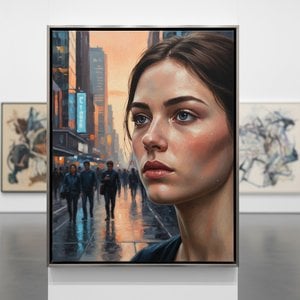
Explore the profound depth of Contemporary Realism. Discover how hyper-realistic art captures modern emotion through technical mastery, offering collectors a sophisticated way to preserve the soul of human experience through exquisite, museum-quality oil paintings and fine art.
Embark on a visual journey through Italy's most iconic landscapes and Renaissance masterpieces. Discover the profound beauty of classical art, from Venetian altarpieces to serene countryside vistas, curated for the discerning art enthusiast and collector.
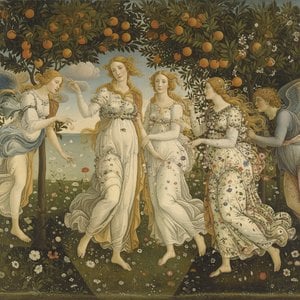
Explore the ethereal beauty of Sandro Botticelli's masterpieces. Delve into the profound symbolism, mythological grace, and technical mastery that define the Italian Renaissance through an expert art-historical lens.
Bonjour ! Je peux vous aider à choisir une œuvre d'art, à suivre une commande ou à répondre à vos questions sur la garantie. Comment puis-je vous aider ?