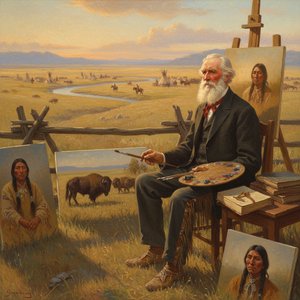
Oscar Edmund Berninghaus: Pioneer of Southwestern Impressionism
Oscar Edmund Berninghaus (1874-1952) stands as a pivotal figure in the burgeoning artistic landscape of the American Southwest, particularly recognized for his membership within the Taos Society of Artists and his captivating portrayals of Native American culture. Born in Saint Louis, Missouri, Berninghaus’s early life was marked by an appreciation for art fostered through attendance at the Saint Louis School of Fine Arts during his formative years—a dedication that would ultimately shape his artistic trajectory.
Early Influences: Berninghaus's artistic sensibilities were profoundly impacted by Impressionism, spearheaded by artists like Claude Monet and Pierre-Auguste Renoir. These masters championed capturing fleeting moments of light and color, a stylistic approach that resonated deeply with Berninghaus’s vision. He absorbed the lessons of these luminaries, prioritizing observation and emotion over rigid academic conventions—a distinction that would define his artistic method throughout his career. The Impressionists' insistence on portraying the immediacy of experience served as an inspiration for Berninghaus to translate the grandeur of the Southwest onto canvas with unparalleled sensitivity.
The Denver Expedition (1899): A pivotal moment arrived when the Denver & Rio Grande Railway commissioned him to document the scenic splendor of its route westward. This expedition served as an invaluable catalyst for honing his observational skills and immersing himself in the raw beauty of New Mexico’s landscapes—a formative experience that would inform countless subsequent paintings. During this journey, Berninghaus meticulously sketched vistas of mesas, canyons, and juniper forests—capturing not merely visual representations but also conveying the spirit and essence of Southwestern wilderness. The expedition instilled in him a profound respect for the natural world and fueled his desire to depict it with uncompromising honesty.
His Artistic Output: Berninghaus’s artistic output is characterized by a distinctive blend of Impressionistic techniques and a deep empathy for Native American subjects. He skillfully rendered scenes depicting daily life, ceremonies, and portraits of individuals from various tribes – capturing not merely visual representations but also conveying the spirit and essence of Southwestern culture. His canvases pulsate with vibrant hues—particularly yellows and reds—reflecting the arid climate and rich traditions of the region. He employed loose brushstrokes and layering of colors to convey atmospheric depth and luminosity, mirroring the Impressionist ethos. Berninghaus’s paintings are imbued with a lyrical quality that transcends mere depiction; they strive to evoke emotion and capture the soul of his subjects—a testament to his artistic genius.
The Taos Society of Artists: Berninghaus’s involvement with the Taos Society of Artists solidified his position as a champion of Southwestern art. Founded in 1915 by Mabel Dodge MacKenzie and Charles Burchfield, this collective aimed to foster artistic experimentation and celebrate the unique cultural heritage of New Mexico. Recognizing the importance of collaborative effort, Berninghaus joined forces with fellow artists Ernest Blumenschein, W. Herbert Dunton, Irving Couse and Bert G. Phillips—creating a vibrant artistic community dedicated to documenting Southwestern landscapes and traditions. The Society’s exhibitions garnered considerable acclaim, establishing Taos as an epicenter of American Impressionism and cementing Berninghaus's legacy as one of its foremost figures.
Notable Achievements: Among Berninghaus’s most celebrated paintings include “Cowboy Mess Camp,” a masterful depiction of a campfire gathering amongst cowboys—a scene imbued with warmth, camaraderie, and an astute understanding of human interaction. Similarly, "The Old Man" exemplifies his ability to convey profound emotion through subtle gestures and expressive facial expressions. His meticulous attention to detail and his masterful use of color contributed significantly to the artistic canon of the Southwest, securing his place as a visionary artist whose work continues to inspire admiration and scholarly study. Berninghaus’s legacy extends beyond mere aesthetic achievement; he served as a conduit for documenting and preserving Southwestern culture, ensuring that future generations would appreciate its beauty and complexity.