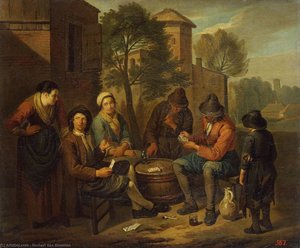
Norbert van Bloemen (1670 – 1746): Bridging Flemish Tradition and Italian Sensibility
Norbert van Bloemen (1670, Antwerp – 1746, Amsterdam), called cefalus or cephalos, was a Flemish painter and draughtsman who flourished primarily in Italy and the Dutch Republic. He stands as a pivotal figure within the Van Bloemen family’s artistic legacy—a lineage distinguished by brothers Pieter and Jan Frans—who established themselves as prominent artists across Europe during the Baroque period. Norbert's contribution to art history lies in his masterful synthesis of Flemish realism with Italian landscape aesthetics, aligning him squarely with the Bamboccianti movement, a trend that celebrated rustic scenes and idealized depictions of rural life.
Early Life and Training
Born in Antwerp as the younger brother of Pieter and Jan Frans van Bloemen, Norbert’s artistic upbringing was deeply rooted in familial tradition. Pieter, recognizing his brother's talent, actively fostered Norbert’s artistic development, instructing him alongside Jan Frans. Pieter’s departure for Lyon in 1674 marked a significant turning point, bringing Jan Frans to join him—a collaborative venture that would eventually lead them to Rome in 1688. This formative period exposed Norbert to the intellectual and artistic currents of the Roman Baroque, shaping his stylistic preferences and broadening his artistic horizons. While precise details regarding Norbert’s individual teachers remain elusive, it is undeniable that he absorbed influences from established masters prevalent within the vibrant Roman art scene—artists who championed dramatic compositions and masterful use of chiaroscuro—techniques perfected by Rembrandt and Caravaggio.
Roman Years and Artistic Development
Norbert's arrival in Rome solidified his connection to the Bentvueghels, an influential association of Dutch and Flemish artists active during this era. The Bentvueghels fostered a tradition of assigning nicknames—‘bent names’—to its members, reflecting their personalities and artistic inclinations. Norbert’s bent name, ‘cefalus,’ or ‘cephalos,’ commemorates the Greek mythological hero known for his colossal head—a symbol of wisdom and authority—suggesting an ambition to achieve greatness within his craft. He quickly established himself amongst fellow artists residing in Rome, engaging in lively discussions about art theory and technique—practices common among intellectuals of the time. Norbert’s artistic style evolved under the tutelage of prominent Roman painters, incorporating elements of Italian landscape aesthetics while retaining the meticulous realism characteristic of Flemish painting. This blending of styles exemplifies the broader artistic trends of the Baroque period—a movement characterized by dynamism, grandeur, and a fervent embrace of classical ideals.
Notable Works and Artistic Style
Norbert van Bloemen’s oeuvre encompasses a diverse range of subjects—ranging from portraits to history paintings and genre scenes—demonstrating his versatility as an artist. Among his most celebrated achievements is “Interior with a Man and a Woman Smoking,” a captivating depiction of domestic life rendered in the characteristic Italianizing style, prioritizing atmospheric perspective and nuanced tonal gradations. This artwork exemplifies Norbert’s mastery of chiaroscuro—the dramatic interplay between light and shadow—a technique perfected by Rembrandt and Caravaggio—artists who profoundly influenced Norbert's artistic sensibilities. Similarly, “Self Portrait” showcases Norbert’s artistic prowess, presenting a dignified representation of himself—a testament to his meticulous technique and keen observation skills. Furthermore, “Genre Scene” captures the dynamism of a bustling marketplace, reflecting the influence of Bamboccianti painters who championed depictions of rural life with idealized beauty. His landscapes are particularly noteworthy for their incorporation of Italian compositional principles, emphasizing dramatic vistas and harmonious color palettes—a stylistic hallmark that distinguishes him from many of his contemporaries.
Legacy and Historical Significance
Norbert van Bloemen’s artistic legacy extends beyond his individual masterpieces; he represents a crucial link in the Van Bloemen family's artistic lineage—a dynasty renowned for its contribution to Baroque art across Europe. His embrace of Italian landscape aesthetics, coupled with his dedication to genre painting and portraiture, solidified his position as a prominent artist of his time. Norbert’s work serves as an invaluable window into the cultural milieu of the Dutch Golden Age, reflecting the artistic dialogues that characterized this era—a period marked by innovation, experimentation, and a profound appreciation for classical ideals. He remains remembered as a gifted painter who skillfully blended Flemish tradition with Italian sensibility, leaving an indelible mark on European art history—a testament to his enduring influence on subsequent generations of artists.