L'Héritage Lumineux de Michiel Simons
Dans le crépuscule doré de l'Âge d'Or néerlandais, peu d'artistes ont capturé la beauté éphémère du monde matériel avec autant d'intimité tactile que Michiel Simons. Né vers 1648, à une époque où les Pays-Bas s'épanouissaient sous une ère sans précédent de curiosité scientifique et de richesse mercantile, Simons s'est imposé comme un maître de la nature morte. Alors que l'histoire réserve souvent ses projecteurs les plus éclatants à des titans tels que Rembrandt ou Vermeer, Simons s'est taillé une place profonde grâce à sa capacité à transformer le banal — un citron pelé, une grappe de raisins ou un oiseau tombé — en une méditation dramatique sur l'existence. Sa vie, bien qu'enveloppée dans les brumes biographiques typiques du XVIIe siècle, trace un voyage au cœur des traditions artistiques néerlandaises et flamandes, le menant de ses années de formation vers une place durable dans les annales de l'excellence baroque.
Les fondations de l'art de Simons ont été posées par un apprentissage rigoureux, notamment sous la direction de Hendrick Jacobsz. van Balen I. Ce lien avec l'école baroque de Haarlem fut déterminant, car il lui a inculqué un respect pour la précision et une compréhension sophistiquée de la lumière. Grâce à cette formation, Simons a maîtrisé l'art du chiaroscuro, utilisant des ombres profondes et veloutées pour projeter ses sujets vers l'espace du spectateur. Sa technique ne relevait pas de la simple imitation, mais d'un rendu émotionnel de la texture ; l'on peut presque ressentir la peau fraîche et humide d'une prune ou le zeste délicat et parcheminé d'un agrume sous son pinceau. Cet engagement envers le réalisme lui a permis de combler le fossé entre le monde physique et l'expérience sensorielle de l'observateur.
Symbolisme et Vision Baroque
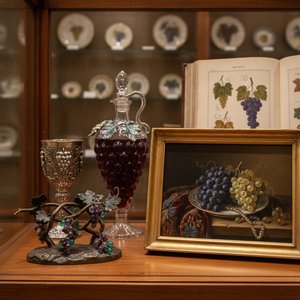
Contempler une composition de Simons, c'est s'engager dans un langage complexe de symboles. Au XVIIe siècle, la peinture de nature morte servait de bien plus qu'une simple décoration ; elle était un vecteur de pensées philosophiques et religieuses profondes. Simons utilisait les pronkstillevens — ou natures mortes somptueuses — pour explorer les thèmes de l'abondance et de la nature fugace de la vie. Dans ses œuvres célèbres, telles que Still Life with Fruit, la présence de fruits mûrs et succulents aux côtés du gibier mort sert de poignant memento mori. La vitalité vibrante de la récolte contraste radicalement avec l'immobilité de la mort, rappelant au spectateur que tous les plaisirs terrestres sont soumis au passage inévitable du temps.
Ses compositions intégraient souvent des éléments exotiques, tels que la porcelaine chinoise et la verrerie luxueuse, reflétant l'envergure mondiale du commerce néerlandais. Ces objets n'étaient pas choisis au hasard, mais agissaient comme des marqueurs de statut et de réussite mondaine, tout en étant toujours équilibrés par un sentiment de fragilité. En entrelaçant les allégories bibliques et les sous-entendus mythologiques avec la réalité tangible de ses sujets, Simons a élevé le genre de la nature morte de la simple observation à une haute quête intellectuelle. Son œuvre a capturé la tension d'une époque tiraillée entre la célébration d'une prospérité nouvelle et une conscience spirituelle profonde de la mortalité.
Importance Artistique et Influence Durable
L'importance historique de Michiel Simons réside dans sa capacité à synthétiser les diverses influences des Pays-Bas en un style cohérent et époustouflant. Bien que certains érudits aient historiquement lutté avec les attributions — distinguant parfois sa main du groupe des "Pseudo-Simons" de peintres d'Anvers — le cœur de son héritage demeure incontestable. Son travail représente un apogée de l'esthétique baroque, où la lumière, l'ombre et le sujet convergent pour créer un sentiment de grandeur théâtrale. Même lorsque le monde de l'art s'est tourné vers des sensibilités différentes aux siècles suivants, la minutie de ses compositions a continué de commander le respect des collectionneurs comme des historiens.
Aujourd'hui, les contributions de Simons sont préservées dans certaines des institutions les plus prestigieuses au monde, notamment le Rijksmuseum, où sa capacité à évoquer l'atmosphère reste aussi puissante que jamais. Sa vie, durant laquelle il fut actif dans les grands centres artistiques comme Utrecht et Amsterdam jusqu'à son décès après 1673, témoigne du pouvoir durable de la tradition de la nature morte néerlandaise. Par sa maîtrise du pinceau, Simons a veillé à ce que la beauté éphémère du monde naturel soit capturée dans une danse éternelle et lumineuse de lumière et d'ombre.
Questions et réponses
Quelles émotions les œuvres de Michiel (II) Simons expriment-elles ?
La L'espace des émotions de Michiel (II) Simons vous permet de découvrir les œuvres de l'artiste classées par ambiance.
Puis-je explorer les œuvres de Michiel (II) Simons par mot-clé ?
Pour trouver des œuvres de Michiel (II) Simons sur un thème spécifique, consultez la page Par mots-clés de l'artiste, qui regroupe les œuvres par mot-clé.
Où puis-je voir toutes les œuvres de Michiel (II) Simons ?
Retrouvez toutes les œuvres de Michiel (II) Simons sur ce site en consultant sa page Toutes les œuvres d'art.