The Legacy of Bentwood: Exploring the Genius of Michael Thonet
Michael Thonet (1796-1871) stands as a monumental figure in the annals of furniture design, irrevocably altering the aesthetic landscape of the Victorian era and establishing a tradition that continues to resonate within contemporary interiors. Born in Boppard, Germany, his life was marked by an unwavering dedication to innovation—a pursuit that culminated in the revolutionary technique of bentwood furniture, transforming mass production and elevating craftsmanship to new heights.
Early Life & Apprenticeship: Thonet’s formative years were spent honing his skills as a cabinet maker under the tutelage of Johann Georg Wolffenbüttel, absorbing the principles of traditional woodworking while simultaneously cultivating an inquisitive spirit. This grounding in established methods proved crucial for his subsequent breakthroughs. He meticulously studied the intricacies of joinery and carving techniques, recognizing that true artistry lay not merely in ornamentation but also in mastering fundamental structural elements.
Vienna & The Birth of Bentwood: Moving to Vienna in 1842, Thonet embarked on a period of experimentation fueled by a desire to push beyond conventional boundaries. Recognizing the limitations of solid wood construction—particularly its weight and cost—he tirelessly investigated methods for achieving curved shapes without resorting to complex joinery. Driven by an acute understanding of material science, he sought ways to optimize structural integrity while minimizing visual bulk. This quest led him to explore innovative techniques that would fundamentally reshape furniture production.
The Patent & Methodical Innovation: In 1859, Thonet secured a patent for a groundbreaking process involving steam-bending solid timber—a technique that dramatically reduced production time and material usage. This methodical approach wasn’t merely about efficiency; it was underpinned by meticulous observation of wood grain and structural integrity. He painstakingly analyzed the behavior of timber under heat stress, perfecting methods to ensure consistent curvature and maintaining dimensional stability – a feat previously unattainable with traditional woodworking practices. His unwavering focus on precision solidified his reputation as an inventor and innovator.
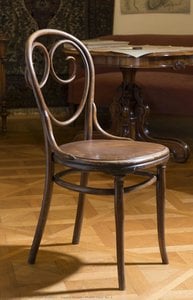
Thonet's designs are instantly recognizable for their understated elegance and remarkable simplicity. Rejecting ornate embellishments, he prioritized functionality alongside aesthetic beauty—a philosophy that profoundly influenced the burgeoning Art Nouveau movement and anticipated the streamlined forms of mid-century modernism. His iconic creations – notably the Rocking Chair No. 7500 and the Number 2 chair – exemplify this ethos, embodying a harmonious balance between form and function. These pieces are celebrated for their graceful curves, achieved through the ingenious manipulation of bentwood, creating comfortable seating that remains timelessly stylish. They represent a triumph of engineering artistry—a testament to Thonet’s belief that beauty could be born from careful consideration of structural principles.
Influence & Recognition: Thonet's innovations captivated designers across Europe and beyond. His furniture was adopted by royalty, aristocracy, and burgeoning middle-class families alike, establishing him as a dominant force in shaping the visual culture of his time. He collaborated closely with artists like Gustav Klimt and Alphonse Mucha, whose stylistic sensibilities mirrored Thonet’s commitment to refined elegance and understated beauty—a partnership that cemented his place within the artistic landscape of the era.
The Thonet Company Legacy: Following Michael Thonet's death in 1871, his sons continued to operate the family business, ensuring that his pioneering techniques persisted. Today’s Thonet company remains one of the oldest furniture manufacturers globally, upholding a tradition of excellence and innovation—a testament to the enduring impact of a single visionary craftsman. The company continues to produce furniture using methods remarkably similar to those developed by Michael himself, demonstrating an unwavering dedication to preserving his legacy as a pioneer in modern design. His influence extends far beyond the workshop walls, inspiring contemporary artisans to embrace innovative approaches to craftsmanship and upholding the timeless beauty of bentwood furniture for generations to come.