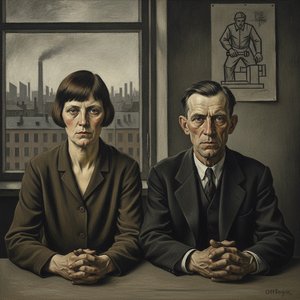
Matthäus Gundelach (1566 – 1653), also Gondolach or Gundlach, was a German painter and graphic artist whose artistic journey spanned from the turbulent Renaissance to the burgeoning Baroque era. Born in Großalmerode, Hessen, he emerged as a prominent figure within the artistic landscape of his time, primarily recognized for his captivating Venetian paintings and his contributions to religious iconography—particularly commissioned altarpieces that showcased both technical prowess and profound spiritual contemplation.
Early Life & Training
Information regarding Gundelach’s formative years remains somewhat sparse, yet records indicate he received his artistic education in Frankfurt am Main. While precise details about his instructors are elusive, it is believed that he studied under Johann Georg Falke, a respected painter known for his meticulous realism and adherence to humanist ideals—influences undeniably shaping Gundelach's stylistic sensibilities. This grounding in classical principles would prove crucial as he embarked upon his artistic career. His dedication to mastering the fundamentals of painting established him as an artist capable of achieving remarkable expressive depth.
Prague Court Patronage
Gundelach’s ascent to prominence began with his appointment as a chamber painter to Emperor Rudolf II in Prague around 1609. Rudolf II, an ardent supporter of Mannerism and fascinated by alchemy and esoteric knowledge, fostered an environment where artistic experimentation flourished. Gundelach skillfully navigated this complex patronage relationship, producing portraits and decorative panels that reflected the emperor’s intellectual curiosity and aesthetic tastes—demonstrating a remarkable ability to adapt his style to suit the prevailing artistic currents. His work at Prague's court solidified his reputation as a skilled artist capable of capturing both likeness and psychological nuance. He meticulously recreated Rudolf II’s image, conveying not only physical appearance but also inner character with impressive subtlety.
Bohemian Commissions: The Fürstenberg Family
Following Rudolf II’s death in 1612, Gundelach transitioned to service with the Fürstenberg family in Bohemia, where he undertook several significant commissions—most notably the creation of two monumental paintings adorning the baroque high altar of St. Christophorus Church in Haslach im Schwarzwald. These canvases exemplify Gundelach’s mastery of Venetian painting techniques—characterized by luminous color palettes, atmospheric perspective, and a dramatic interplay of light and shadow. The Fürstenberg patronage allowed him to explore his artistic vision on a grand scale, resulting in artworks that continue to inspire admiration for their beauty and expressive power. His meticulous attention to detail ensured that the altar paintings conveyed not only visual splendor but also profound spiritual resonance.
Augsburg Guild Membership & Legacy
In 1617 Gundelach joined the painters’ guild in Augsburg—a pivotal moment signifying his acceptance into the established artistic community of Bavaria. He continued to produce paintings throughout his life, demonstrating unwavering dedication to his craft until his death in 1653. Though relatively few of his works survive today, Matthäus Gundelach's Venetian paintings stand as testament to his exceptional talent and enduring contribution to European art history—a painter who skillfully blended humanist ideals with the grandeur of Baroque aesthetics. His legacy resides in the beauty and solemn contemplation embodied by his masterpieces, ensuring that Gundelach’s artistic vision continues to captivate audiences centuries later.
Par la rédaction de WahooArt.com
Quiz d'art
Chaque question ne comporte qu'une seule bonne réponse.
Question 1:
Où Matthäus Gundelach est né ?
Question 2:
Quel palais Gundelach servait-il pendant sa carrière artistique ?
Question 3:
Pour qui Gundelach créait-il des œuvres importantes, notamment des tableaux d’autel ?
Question 4:
Dans quelle ville Gundelach était membre du guildeau artistique ?
Question 5:
Quel style artistique est particulièrement présent dans les peintures vénitiennes de Gundelach ?
Explore the raw emotion of German Expressionism through a definitive guide to Ernst Ludwig Kirchner. Discover how his bold colors and distorted forms redefined modern art history, from Berlin street scenes to iconic masterpieces.
Delve into the visceral world of German Expressionism. Explore the history, key artists like Kirchner and Kandinsky, and the movement's profound emotional impact through an expert art-history lens. Discover how bold colors and distortion redefined modern aesthetics.
Bonjour ! Je peux vous aider à choisir une œuvre d'art, à suivre une commande ou à répondre à vos questions sur la garantie. Comment puis-je vous aider ?