Lee Seung-hee: Exploring Identity Through Immersive Performance and Photography
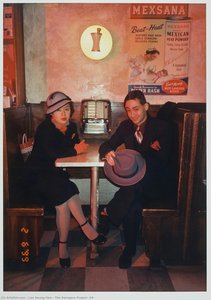
Lee Seung-hee, known professionally as Nikki S. Lee, is a South Korean visual artist born in Seoul in 1970, whose work delves into profound questions of identity and belonging through innovative mediums like performance art, photography, and film. Her artistic journey began with an exploration of the complexities inherent in perceiving oneself within broader social contexts—a preoccupation that continues to shape her oeuvre. Early Life & Education: Details about Lee Seung-hee’s formative years are scarce publicly available, highlighting a deliberate choice for artistic privacy. This discretion underscores a core principle guiding her creative process – prioritizing observation and experiential understanding over biographical exposition. Her early influences likely included Korean avant-garde movements that championed experimentation and challenged established aesthetic conventions. Performance Art Pioneers: The ‘Hispanic Project’: Arguably her most ambitious undertaking, this project saw Lee immersing herself in the Hispanic community of Los Angeles. She meticulously documented her experiences—from attending quinceañeras to participating in cultural events—creating a multi-layered visual narrative that interrogated assumptions about ethnicity and representation. This work exemplifies her commitment to confronting stereotypes and fostering empathy. Utilizing techniques rooted in Situationism, she aimed to disrupt passive viewership and provoke critical reflection on societal biases. Her performances were characterized by deliberate vulnerability and an honest engagement with the realities of intercultural exchange. Photography as Observation: Lee’s photographic practice isn't merely documentation; it’s an active process of observation and reflection. Her images often capture fleeting moments, capturing the nuances of human interaction and revealing hidden layers of social dynamics. She favors a humanist approach, prioritizing candid portraits that convey emotion and authenticity. Influenced by Minimalist aesthetics—specifically the emphasis on simplicity and clarity—Lee strives to distill complex ideas into visually arresting compositions. The resulting photographs possess a remarkable ability to evoke atmosphere and invite contemplation about human experience. Film Projects & Conceptual Exploration: ‘Swingers’: Continuing her exploration of identity, Lee undertook a film project examining the experiences of young gay men in New York City. This piece delves into themes of vulnerability, acceptance, and the challenges faced by marginalized communities. Employing cinematic techniques—such as slow motion and handheld camerawork—Lee sought to capture the emotional resonance of everyday life within this specific social sphere. Her films are marked by a sensitivity to nuance and an unwillingness to offer easy answers, mirroring her broader artistic philosophy. Influences & Artistic Style: Lee Seung-hee’s artistic vision draws inspiration from a diverse range of sources—including conceptual art movements like Situationism and Minimalism—which encouraged artists to challenge conventional notions of aesthetics and explore alternative modes of expression. Her approach prioritizes immediacy and sensory experience, favoring techniques that allow for direct engagement with the viewer. She skillfully employs color palettes and framing choices to convey emotion and create a sense of atmosphere within her artworks. This stylistic blend reflects her belief in art’s capacity to provoke dialogue and foster understanding across cultural divides. Notable Achievements & Recognition: Lee Seung-hee’s dedication to artistic experimentation has garnered considerable acclaim. Notably, she received The Louis Comfort Tiffany Foundation Award in 2001 for her groundbreaking work exploring social identity. Her projects have been exhibited internationally, cementing her position as a leading voice within contemporary Korean art and furthering the dialogue surrounding representation and cultural understanding. Her commitment to pushing boundaries—both technically and conceptually—solidifies her legacy as an artist who consistently seeks to expand our perceptions of self and society.Questions et réponses
Dans quel pays Lee Seung-hee est-il né ?
Lee Seung-hee est né(e) en Corée du Sud.
Où et en quelle année Lee Seung-hee est-il né ?
Lee Seung-hee est né à Séoul en 1970.
Comment la carrière de Lee Seung-hee est-elle divisée en périodes ?
La carrière de Lee Seung-hee se dévoile période par période sur la page Parcours de carrière de l'artiste : une frise chronologique horizontale des œuvres, regroupées en chapitres correspondant aux différentes étapes de sa carrière.