Sell Your Art
x

Kamat Foto Flash

Informations clés

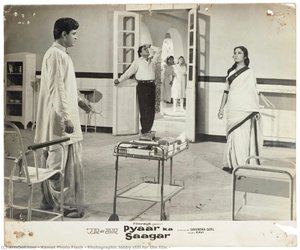
  • Top-ranked work: Photographic lobby still for the film
  • Also known as: Damodar Kamat
  • Top 3 works: Photographic lobby still for the film
  • Museums on APS:
    • Musée d'Art - Photographie
    • Musée d'Art - Photographie
    • Musée d'Art - Photographie
    • Musée d'Art - Photographie
    • Musée d'Art - Photographie
  • Plus…
  • Works on APS: 1
  • Born: Belgaum, Inde
  • Copyright status: Under copyright
  • Nationality: Inde

Quiz d'art

Chaque question ne comporte qu'une seule bonne réponse.

Question 1:
Quel était le métier initial de Damodar Kamat avant d’établir son studio de photographie ?
Question 2:
Où Damodar Kamat a-t-il commencé sa carrière dans l’industrie cinématographique ?
Question 3:
Quel film est considéré comme le plus emblématique photographié par Damodar Kamat ?
Question 4:
Quelle était la méthode photographique caractéristique de Damodar Kamat ?
Question 5:
Avec qui Damodar Kamat collaborait étroitement au cours de sa carrière cinématographique ?

Damodar Kamat: The Silent Guardian of Hindi Cinema’s Visual Legacy

Damodar Kamat (1923 – 1967) wasn't a name that resonated loudly in the annals of Bollywood history. Yet, his contribution to Indian cinema is undeniable—a quiet revolution captured through countless photographs that documented the golden age of Hindi film. Born in Belgaum, Karnataka, Kamat’s journey began humbly, mastering signboards before discovering his true calling: photography. This passion propelled him to Kolhapur where he honed his skills under Kaka Samant, a respected photographer who instilled in him a meticulous approach and an unwavering dedication to capturing moments with precision.

Early Years & Artistic Training: Seeds of Vision

Kamat’s fascination for colors and languages fueled his desire to learn new techniques—specifically mastering German manuals on photography. This autodidactic spirit would prove invaluable as he embarked on his career at Bombay Talkies in 1945, where he began documenting film sets with an eye for detail. He wasn't merely recording images; he was striving to distill the very essence of a scene—the palpable atmosphere, the unspoken emotions conveyed by actors and crew alike. This formative period instilled in him a profound understanding of visual storytelling that would permeate his entire artistic practice.

Bombay Talkies & The Birth of Kamat Foto Flash: Establishing Roots

Recognizing the importance of capturing authentic moments, Kamat established Kamat Foto Flash in 1945—a studio that quickly became synonymous with Bollywood publicity shots. He partnered with Vidyadhar Kamat and Neha Kamat to continue his father’s legacy—a commitment to preserving cinematic history through meticulously crafted images. The studio's ethos was simple: observe, record, and honor the artistry of filmmaking itself. This dedication would define Kamat Foto Flash for decades to come.

A Legacy Etched in Film Frames: Pioneering Hindi Cinema Photography

Iconic Collaborations: Shaping Bollywood’s Aesthetic

Kamat Foto Flash became a fixture on the sets of Bollywood classics like *Phool Aur Patthar*, *Pyaasa*, *Sangam*, *Jis Desh Mein Ganga Behti Hai*, and many more. He worked closely with legendary filmmakers such as Guru Dutt, Raj Kapoor, Mohan Segal, OP Ralhan, Sunil Dutt, and Bimal Roy—artists who appreciated his uncompromising standards and artistic vision. Kamat’s photographs weren't just documentation; they were active participants in shaping Bollywood’s aesthetic—capturing the nuances of performance and setting the mood for each film. He famously insisted on capturing scenes from above eye level to compensate for actors’ facial expressions, demonstrating a remarkable sensitivity to visual composition.

The Art of Still Photography: Precision & Emotion

Kamat’s approach to still photography was revolutionary for its time. He prioritized capturing the essence of a scene, meticulously crafting compositions that conveyed emotion and atmosphere. Unlike many contemporaries who focused on staged shots or posed portraits, Kamat sought to reveal the raw truth of filmmaking—the quiet moments of collaboration and creativity that underpinned the magic of cinema. His meticulous attention to detail—from lighting to framing—transformed ordinary scenes into unforgettable images.

Beyond The Camera: A Family Man & Artistic Mentor

Damodar Kamat married Mohini Naik-Gavankar, whom he lovingly renamed Radha. Together they raised a son, Vidyadhar, who would later inherit his father’s studio and continue to champion Kamat Foto Flash's enduring legacy—a testament to the profound influence of his father on his own artistic pursuits. He instilled in his son a passion for observation and an unwavering dedication to capturing authentic moments—values that would guide Vidyadhar Kamat’s own photographic endeavors.

Remembered Through Images: An Archive of Cinematic History

Kamat Foto Flash possesses an unparalleled archive of over 1,00,000 negatives—a treasure trove of images that offer invaluable insight into the formative years of Hindi cinema. These photographs aren't merely records; they are windows into a bygone era—capturing the spirit of Bollywood’s golden age with remarkable clarity and beauty. Kamat Foto Flash continues to inspire photographers today, reminding us that true artistry lies in capturing not just what is seen but also what is felt. His legacy will forever endure as a cornerstone of Indian cinema's visual heritage.