CONSEIL EN ART GRATUIT

x

Juan Ribalta

1597 - 1628

Informations clés

  • Lifespan: 31 years
  • Died: 1628
  • Top 3 works:
    • St John the Evangelist
    • Retrato De Guillén De Castro
    • Preparativos Para La Crucifixion
  • Copyright status: Public domain
  • Born: 1597, València, Espanya
  • Movements: baroque
  • Plus…
  • Works on APS: 14
  • Nationality: Espanya
  • Art period: Époque moderne précoce
  • Top-ranked work: St John the Evangelist
  • Museums on APS:
    • Musée du Prado
    • Musée du Prado
    • Musée du Prado
    • Musée du Prado
    • Musée du Prado

Juan Ribalta: A Baroque Legacy Shaped by Caravaggio’s Shadow

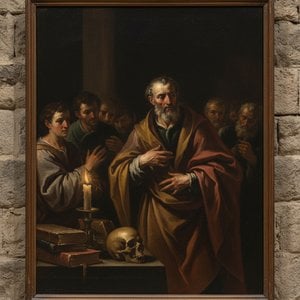
Juan Ribalta (1597 – 1628) stands as a singular figure within the vibrant tapestry of Spanish Baroque painting, a talent tragically cut short but whose artistic output nonetheless resonates with enduring beauty and technical prowess. Born in Valencia, Spain, Ribalta inherited an artistic lineage steeped in tradition—his father, Francisco Ribalta, was himself a celebrated painter deeply influenced by Caravaggio’s revolutionary approach to chiaroscuro and dramatic realism. While precise details surrounding Ribalta's early life remain elusive, biographical accounts suggest he was born in Madrid before relocating to Valencia, where he established his artistic career. The loss of his mother at the tender age of eleven profoundly impacted Ribalta’s formative years, shaping him into a man driven by an unwavering dedication to his craft. Early Influences & Artistic Training: Francisco Ribalta's Caravaggio-inspired style undeniably served as Ribalta’s foundational influence. This embrace of tenebrism—the stark contrast between light and dark—became a hallmark of Ribalta’s oeuvre, imbuing his canvases with an emotional intensity rarely seen in contemporary art. Observing Caravaggio’s masterful use of dramatic lighting and expressive brushstrokes instilled in Ribalta a profound understanding of artistic principles that would guide his entire career. He diligently studied anatomical accuracy alongside compositional techniques—skills honed through meticulous observation and a deep appreciation for the visual language of Baroque art. Notable Commissions & Patronage: Ribalta gained recognition through prestigious commissions from the Valencian Cathedral, securing the monumental task of depicting Saint Sebastian. This ambitious undertaking showcased his mastery of composition and anatomical precision—skills honed by meticulous observation and a profound understanding of artistic principles. The cathedral’s patronage afforded him access to invaluable resources and allowed him to undertake projects that demanded exceptional skill and dedication. His depiction of Saint Sebastian is considered one of the finest examples of Baroque religious painting, capturing both the saint's suffering and the spiritual significance of his martyrdom with breathtaking realism. Ribalta’s artistic journey culminated in several significant achievements that cemented his place within Baroque art history. Among these stand out “The Adoration of the Shepherds,” now housed at Bilbao’s Museo de Bellas Artes, and “Saint Peter,” both masterpieces demonstrating Ribalta's exceptional skill in capturing human emotion and conveying spiritual depth. These paintings exemplify the period’s preoccupation with religious fervor and humanist ideals—themes that continue to inspire admiration and scholarly study today. Furthermore, he produced captivating portraits, notably Gaspar De Aguilar, a celebrated poet whose likeness Ribalta immortalized with remarkable sensitivity and detail—a testament to his ability to portray character and intellect through visual representation. His meticulous attention to facial expressions and subtle gestures conveyed the essence of Aguilar’s personality with unparalleled artistry. Technique & Style: Ribalta’s technique was characterized by meticulous brushwork and an unwavering commitment to capturing the subtleties of light and shadow. Like Caravaggio, he employed a dramatic chiaroscuro effect, utilizing intense contrasts to heighten emotional impact and create a palpable sense of realism. He achieved this remarkable feat through painstaking layering of pigments—a hallmark of Baroque painting—resulting in surfaces that shimmer with luminosity and depth. Ribalta’s canvases possess an unparalleled vibrancy and textural richness, reflecting his mastery of artistic craftmanship. Historical Significance: Ribalta's work represents a crucial link between Caravaggio’s revolutionary style and subsequent Baroque developments in Spain. His paintings exemplify the period’s preoccupation with religious fervor and humanist ideals—themes that continue to inspire admiration and scholarly study today. He stands as a testament to the enduring power of talent and dedication within the annals of art history, securing his legacy as one of the most influential painters of his era. Ribalta's influence extended beyond Valencia, shaping artistic sensibilities across Spain and contributing significantly to the flourishing Baroque aesthetic—a contribution that continues to resonate with audiences worldwide.