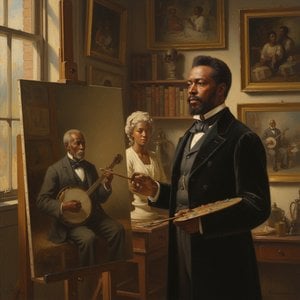
Joseph Frank Hoover: A Pioneer of Chromolithography and American Decorative Art
Joseph Frank Hoover (1830-1913) stands as a monumental figure in the annals of American lithography, particularly during the Victorian era—a period defined by an unwavering devotion to beauty and refinement. Born in Baltimore, Maryland, he embarked on a remarkable artistic odyssey that spanned decades, bequeathing us a treasure trove of vibrant chromolithographs and decorative prints celebrated for their unparalleled precision and emotionally resonant color palettes. Hoover’s oeuvre embodies the spirit of his time—a profound fascination with genre scenes portraying commonplace life alongside idealized landscapes imbued with breathtaking grandeur and still lifes brimming with botanical accuracy.
Early Life and Artistic Training
The specifics surrounding Hoover's formative years remain shrouded in obscurity, yet evidence suggests he cultivated his artistic prowess through diligent self-education coupled with invaluable apprenticeship under seasoned Baltimore lithographers. This foundational training instilled within him a mastery of the printing process—a technique that would become inextricably linked to his distinctive stylistic signature. The burgeoning enthusiasm for chromolithography during the mid-19th century – spurred by groundbreaking advancements in color printing technology – undoubtedly exerted considerable influence upon Hoover’s artistic sensibilities, propelling him toward innovative visual narratives and cementing his position as a visionary of his age.
The Rise of Chromolithography and Decorative Printmaking
Hoover swiftly embraced chromolithography, capitalizing on its transformative capacity to reproduce images with astonishing brilliance and accuracy—a feat that defied the limitations imposed by prevailing printing methodologies. Unlike etching or engraving, chromolithography harnessed mineral pigments meticulously applied to stone surfaces, resulting in prints that achieved an astounding level of color fidelity—a testament to Hoover’s ingenuity and a remarkable accomplishment considering the technological constraints of his era. This revolutionary technique enabled him to translate his artistic vision into breathtaking visual representations of subjects ranging from tranquil pastoral landscapes to bustling urban panoramas – reflecting the Victorian preoccupation with capturing the splendor of both natural beauty and human activity. His prints swiftly gained renown for adorning parlor walls and elevating interior décor, embodying the aesthetic ideals of the Victorian epoch.
Notable Works and Artistic Style
Hoover’s artistic output encompassed a remarkably diverse spectrum of subjects—genre depictions portraying intimate domestic scenes alongside expansive vistas showcasing the untamed majesty of American wilderness and meticulously rendered botanical illustrations demonstrating his unwavering commitment to scientific observation. Recurring motifs included idealized figures engaged in rural pursuits – symbolizing harmony with nature – and serene landscapes bathed in soft light – evoking feelings of tranquility and contemplation. Hoover’s prints are characterized by meticulous attention to detail—a hallmark of Victorian artistic practice—and a masterful command of color harmony, achieving an exquisite balance between vibrancy and subtlety. This stylistic approach solidified his reputation as one of the foremost chromolithographers of his generation and ensured his enduring legacy within American art history.
- Notable Prints: “The Man Who Shot Liberty Valance,” “Hell Is For Heroes” (Remake), “Stagecoach”
- Technique: Chromolithography – Mineral Pigment Printing
- Style: Detailed Genre Scenes, Idealized Landscapes, Botanical Illustrations
Influence and Legacy
Joseph Frank Hoover’s contribution to American decorative art is undeniable. He elevated chromolithography beyond mere replication into an expressive medium capable of conveying profound emotional resonance—a pioneering achievement that foreshadowed future developments in printmaking and solidified his place as a pivotal figure in Victorian artistic discourse. His prints continue to inspire admiration for their artistic merit and serve as tangible reminders of a bygone era—a testament to Hoover’s enduring influence on the visual culture of the Victorian period. Furthermore, Hoover’s work aligns with broader trends in American art history, reflecting the nation's growing appreciation for landscape painting and its embrace of scientific illustration as forms of aesthetic contemplation – establishing him as a visionary who anticipated the artistic sensibilities of his time.