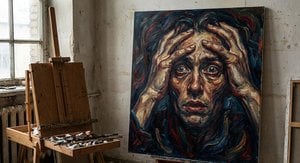
Josef Jünger (After Arthur Kampf) : A Pioneer of Neue Sachlichkeit
Josef Jünger (after Arthur Kampf), born in Germany in 1895, remains an enigmatic figure within the annals of early 20th-century art. Despite a paucity of biographical details—a frustrating reality for scholars—his artistic legacy persists through his distinctive oeuvre and its recognition in prominent museums across Germany. Primarily known for his unwavering commitment to the Neue Sachlichkeit (“New Objectivity”) movement, Jünger’s work embodies a profound reaction against the emotive excesses of Expressionism, prioritizing clarity, precision, and an unflinching gaze upon reality.
Early Life and Artistic Influences
Information regarding Jünger's formative years is scarce. However, it is believed that he pursued artistic training at a young age, possibly absorbing stylistic cues from the Expressionist movement—a trend characterized by intense emotional intensity and distorted forms—which dominated German art circles during his youth. This exposure undoubtedly shaped his aesthetic sensibilities, fostering an inclination towards capturing subjects with uncompromising honesty and confronting viewers with unsettling truths. The influence of Auguste Renoir’s Impressionism is also notable, particularly in Jünger's early explorations of light and color, though he swiftly distanced himself from the movement's subjective idealism.
Artistic Style: Precision and Observation
Josef Jünger’s artistic style distinguishes itself through meticulous observation and technical mastery. He predominantly utilized oil paint on canvas, favoring a palette that prioritized muted tones and subtle gradations—a deliberate antithesis to Expressionist vibrancy. His compositions often featured geometric forms and carefully constructed perspectives, reflecting a fascination with architectural structures and spatial relationships. Jünger’s approach eschewed theatrical gestures or dramatic narratives, instead opting for understated depictions of everyday scenes and subjects—often portraits—that conveyed psychological depth without resorting to overt sentimentality. Recurring motifs included landscapes bathed in diffused light and interiors rendered with meticulous detail, demonstrating his dedication to capturing the essence of his subjects with unwavering accuracy.
Notable Works and Museums Recognition
Several museums across Germany proudly showcase Jünger’s artistic output, most notably the Lehmbruck Museum in Duisburg, which houses a remarkable collection of Alberto Giacometti sculptures—a testament to Jünger's enduring influence on modern sculpture. His paintings, particularly “Workers Dragging a Red-Hot Iron Piece,” exemplify his stylistic principles and capture the palpable tension between labor and emotion. These works are considered pivotal examples of Neue Sachlichkeit’s aesthetic ethos: confronting viewers with stark realism while simultaneously resisting sentimentalism. The Hugo Fischer Collection in Bühl also houses significant pieces by Jünger, furthering the artist's visibility within the art historical canon.
Legacy and Historical Significance
Josef Jünger’s artistic contribution transcends mere stylistic innovation; he represents a crucial counterpoint to the prevailing artistic currents of his time—a deliberate rejection of Expressionism’s emotive fervor in favor of intellectual rigor and perceptual clarity. His unwavering commitment to portraying reality without embellishment solidified Neue Sachlichkeit's position as a significant movement within German art history, influencing subsequent generations of artists. Jünger’s enduring fascination with architecture and spatial perception continues to resonate today, underscoring his profound understanding of the human condition and his ability to distill complex ideas into powerfully evocative visual representations.