John Quinton Pringle (1864–1925): Glasgow Boy Painter of Light and Landscape
John Quinton Pringle (December 13, 1864 – April 25, 1925) was a Scottish painter who emerged from the vibrant Glasgow Boys movement—a group of artists dedicated to capturing the spirit of Scotland’s industrial landscape and portraying its people with remarkable sensitivity. Though largely overlooked during his lifetime, Pringle's distinctive style and evocative depictions of everyday life continue to resonate with art historians today.
- Early Life and Education:
Born in Dennistoun, Glasgow, the son of a railway employee, Pringle’s formative years were steeped in the industrial atmosphere of Victorian Scotland. Despite a brief relocation to Langbank during his father's tenure as stationmaster, he remained firmly rooted in Glasgow and pursued his education diligently at Glasgow High School before embarking on an apprenticeship as an optical repairman—a vocation that would later inform his artistic approach.
- The Influence of Bastien-Lepage and the Glasgow Boys:
Pringle’s artistic vision was profoundly shaped by Jules Bastien-Lepage, whose paintings depicting rural French landscapes captivated him during his formative years. This fascination extended to the broader ethos of the Glasgow Boys—a collective committed to portraying Scotland's industrial realities with a humanist gaze. Like his peers—Charles Rennie Mackintosh, David Sylvester and Joseph Cranston—Pringle sought to capture not merely visual appearances but also the emotional essence of Scottish life.
Artistic Style and Technique
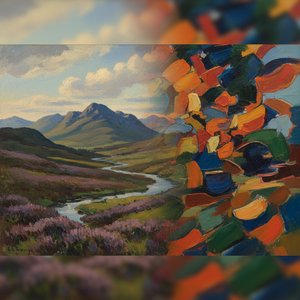
Pringle’s artistic style is characterized by a masterful command of light and color. He eschewed grand narratives, favoring instead intimate scenes—often featuring his family, friends, or glimpses into ordinary domestic spaces—that reveal the beauty inherent in commonplace subjects. His technique involved applying paint in short strokes using a square brush—a deliberate choice that imparted a luminous quality to his canvases. This method allowed him to achieve remarkable textural effects and imbue his paintings with an ethereal glow, mirroring the atmospheric conditions of Scotland’s landscapes.
Notable Works
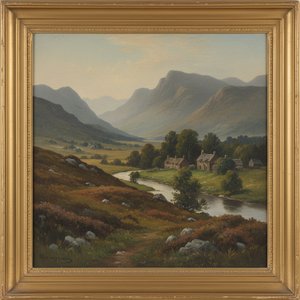
Pringle produced approximately 100 paintings—a substantial oeuvre for his time—spanning a diverse range of subjects. Among his most celebrated works are “Greenock,” “Parkheid,” and “Self Portrait”—each demonstrating his unwavering commitment to capturing the subtleties of Scottish scenery and human experience. His landscapes, particularly those depicting Whalsay Island in Shetland—where he spent summers observing the coastal environment—are imbued with a palpable sense of place and convey a deep appreciation for the natural world. Furthermore, Pringle’s portraits—often executed in miniature—offer intimate glimpses into the lives of his subjects and showcase his skill in conveying psychological depth.
Legacy and Recognition
Despite facing relative obscurity during his lifetime, John Quinton Pringle's artistic legacy has gained renewed appreciation in recent decades. His paintings are housed in prominent institutions such as Kelvingrove Art Gallery and Museums and Tate Britain—testaments to the enduring power of his vision. Scholars recognize him as a pivotal figure within the Glasgow Boys movement—a group that championed realism and humanist sentiment in Scottish art—and celebrate his contribution to capturing the spirit of Victorian Scotland. His distinctive technique—characterized by luminous brushstrokes and an unwavering focus on local landscapes—continues to inspire artists today.