Early Life and Agricultural Roots
John Bracken’s formative years were deeply intertwined with the landscape of Ontario’s Leeds County, where he was born in 1883, the eldest son of Ephraim Bracken and Alberta Gilbert. His family’s modest homestead—a legacy passed down through generations—became the bedrock of his worldview and instilled within him a profound appreciation for rural life and its rhythms. Growing up amidst the fertile lowland surrounding Gananoque, where the St Lawrence embraced the Thousand Islands, shaped his sensibilities and fostered an enduring fascination with capturing the beauty of the Canadian countryside. Like many young men of his era, Bracken pursued higher education, earning a bachelor’s degree from McGill University before embarking on a distinguished academic career focused on animal husbandry at the University of Saskatchewan. This experience wasn't merely professional; it instilled in him a meticulous observation of nature and honed his skills in scientific analysis—qualities that would later inform his artistic sensibilities.
Political Ascendancy and Leadership Roles
Bracken’s trajectory shifted decisively in 1920 when he accepted the role of Principal of Manitoba Agricultural College, marking a significant departure from his scholarly pursuits. However, it was his foray into politics that cemented his place in Canadian history. Elected to the Legislative Assembly in 1923 representing The Pas constituency, Bracken quickly ascended through the ranks of provincial governance, serving as Minister of Education, Lands Commissioner, Railway Commissioner, and Treasurer—positions that demanded considerable administrative acumen and a commitment to public service. His unwavering belief in rural interests guided his policies during his premiership (1922-1943), shaping Manitoba’s trajectory amidst the challenges of the Great Depression. Bracken's leadership was characterized by prudence and consensus-building, reflecting the values instilled in him by his mother—a woman who championed Methodist faith and emphasized responsibility and duty. He skillfully navigated complex political landscapes, securing reelections in 1927, 1932, 1936, and 1941, demonstrating a remarkable ability to connect with voters across the province.
Influence of Tom Thomson and Symbolist Art
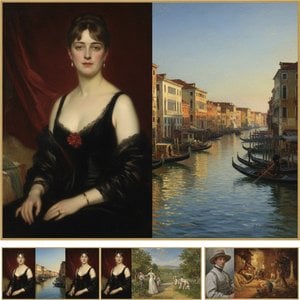
While Bracken’s artistic output remained largely undocumented—a notable omission considering his passion for art—his aesthetic sensibilities were undeniably shaped by the works of fellow Canadian artist Tom Thomson. Thomson's evocative depictions of Algonquin landscapes, imbued with a spirit of Romanticism and capturing the essence of Canada’s wilderness, resonated deeply with Bracken’s own appreciation for rural beauty. Furthermore, Bracken’s tastes leaned towards Symbolist and Impressionist styles—a movement championed by artists like Gustave Moreau and Edvard Munch—whose explorations of emotion and subjective experience mirrored his intellectual curiosity. Museums such as the Musée Gustave Moreau in Paris likely served as inspiration, exposing him to groundbreaking artistic innovations that challenged conventional perceptions of reality. Notable artworks influencing Bracken’s vision included Manet's *The Execution of Maximilian*, showcasing Impressionistic techniques and capturing a pivotal moment in European history, and Dali’s *Portrait of Countess Ghislaine d’Oultremont*, demonstrating Surrealist exploration of the subconscious mind—styles that undoubtedly broadened his artistic horizons.
Notable Achievements and Legacy
John Bracken's tenure as Premier of Manitoba was marked by steadfast dedication to rural prosperity and a resolute commitment to safeguarding Canada’s natural heritage. He championed initiatives bolstering agricultural productivity, fostering economic growth in underserved communities, and advocating for robust environmental protections—a legacy that continues to inspire discussions about sustainable development and social justice. Beyond his political accomplishments, Bracken's unwavering belief in the transformative power of education fueled reforms aimed at improving Manitoba’s educational system, prioritizing access to knowledge and empowering future generations. His leadership fostered a spirit of collaboration and compromise, securing bipartisan support for crucial legislation addressing pressing societal concerns—a testament to his diplomatic skills and his ability to unite disparate viewpoints toward common goals. Bracken's enduring influence extends beyond the confines of provincial governance, shaping Canada’s cultural landscape through his patronage of artistic endeavors and his advocacy for values rooted in compassion and civic responsibility. He remains a symbol of integrity and service—a figure whose life story embodies the pursuit of excellence both professionally and personally.