Job Adriaenszoon Berckheyde: A Harmonious Blend of Biblical Faith and Everyday Life
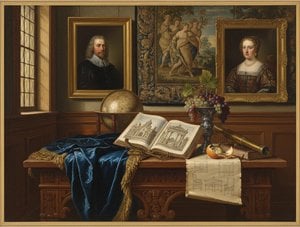
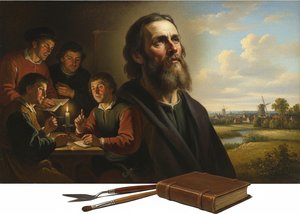
Job Adriaenszoon Berckheyde (1630–1693) stands as a pivotal figure in Dutch Baroque painting, recognized primarily for his intimate depictions of Haarlem interiors and genre scenes—a testament to his ability to capture the essence of daily life alongside moments of spiritual reflection. Born in Haarlem, he was the elder brother of Gerrit Berckheyde, whom he diligently mentored in the art of painting, establishing a familial legacy rooted in artistic excellence. His formative years were marked by an apprenticeship under Jacob Willemszoon de Wet, whose stylistic influence is palpable in his earliest canvases, notably “Christ Preaching to the Children” (1661), demonstrating a masterful grasp of chiaroscuro and meticulous detail—a hallmark of the Golden Age’s artistic sensibilities.
Early Training & Influences: Berckheyde's apprenticeship with De Wet instilled in him foundational techniques and fostered an appreciation for dramatic lighting, mirroring the broader trends of his time. This formative experience undoubtedly shaped his artistic vision and equipped him with the technical prowess necessary to execute his ambitious projects. The influence of Jacob Willemszoon de Wet extended beyond mere technique; it cultivated a sensitivity to compositional balance and a profound understanding of how light could convey emotion—elements that would permeate Berckheyde’s subsequent oeuvre.
The Rhine Journey (1656-1660): Alongside Gerrit, Berckheyde embarked on a transformative expedition along the Rhine, immersing themselves in the artistic milieu of Cologne, Bonn, Mannheim, and Heidelberg—a pilgrimage inspired by Vincent van der Vinne’s pioneering spirit. This journey served as an invaluable catalyst for artistic growth, exposing Berckheyde to innovative stylistic approaches and fostering connections with fellow artists who championed experimentation and innovation. The Rhine expedition solidified Gerrit and Job's commitment to pursuing excellence in art and broadened their horizons beyond the confines of Haarlem.
Heidelberg Patronage & Artistic Recognition: Their patronage by Charles I Louis, Elector Palatine, yielded significant commissions, including portraits and hunting scenes, culminating in the bestowal of a golden chain as a token of esteem—a tangible symbol of their artistic contribution to the court’s cultural landscape. This honor underscored the recognition Berckheyde and Gerrit received for their talent and demonstrated the importance of artistic patronage within the intellectual currents of Europe during the Baroque period. The Heidelberg commission allowed them to hone their skills in capturing regal grandeur and conveying noble ideals—a testament to their versatility as artists.
Distinct Artistic Style & Legacy: Unlike Gerrit Berckheyde’s preference for expansive outdoor scenes, Job Berckheyde excelled in portraying enclosed spaces—particularly the Sint-Bavokerk of Haarlem—capturing architectural grandeur with remarkable precision and conveying a sense of serene contemplation. His paintings resonate with the stylistic conventions of his contemporaries, including Adriaen van Ostade and Jan Steen, embodying the humanist spirit characteristic of the Dutch Baroque period. Berckheyde’s enduring legacy resides not merely in his individual masterpieces but also in his contribution to Haarlem's artistic heritage—a painter who seamlessly blended biblical themes with the realities of daily life, leaving behind a body of work that continues to inspire admiration and scholarly inquiry. His signature “j r” – Job Berckheyde – serves as a testament to his artistic identity and distinguishes him from Gerrit’s “g,” highlighting the subtle nuances within their oeuvre. He remains an exemplar of Dutch Baroque artistry—a painter who mastered the art of capturing both spiritual depth and visual beauty.