L'Architecte de l'Élégance : La Vie et l'Héritage de Jeanne Lanvin
Jeanne Lanvin, née Marguerite di Pietro au cœur de Paris en 1867, était bien plus qu'une simple couturière ; elle était une poétesse visionnaire du tissu et de la forme. Son voyage vers le panthéon des légendes de la mode ne commença pas par un décret académique formel, mais par un apprentissage profond et pratique sous l'égide du légendaire Charles Frederick Worth. Cette immersion précoce dans l'univers de la haute couture lui permit d'absorber l'essence même de l'artisanat, lui apprenant à manipuler les tissus drapés et à comprendre l'âme structurelle d'un vêtement. Sa vie, marquée par la perte précoce de ses parents, fut définie par un esprit résilient qui transforma la tragédie personnelle en une ambition créative inégalée, menant finalement à la naissance de la Maison Lanvin.
La marque de fabrique de l'art de Lanvin résidait dans sa capacité à rejeter les contraintes rigides et étouffantes de son époque au profit d'un mouvement plus lyrique. Alors que de nombreux créateurs de son temps s'accrochaient à un corsetage restrictif, Lanvin fut la pionnière de la robe de style. Cette silhouette emblématique célébrait une féminité romantique, utilisant des jupes volumineuses et des lignes fluides qui reflétaient la grâce naturelle d'une danseuse étoile. Ses créations étaient imprégnées d'une mélancolie subtile et d'un profond sens du romantisme, faisant de chaque pièce moins un vêtement qu'une expression émotionnelle. Qu'il s'agisse des broderies complexes de ses coiffes de l'époque édouardienne ou de l'expérimentation frappante avec le coton damassé dans les années 1930, son travail a toujours maintenu un équilibre délicat entre sophistication structurelle et légèreté éthérée.
Un Empire Sensoriel : Au-delà de la Couture
Le génie de Jeanne Lanvin s'étendait au-delà du domaine visuel, atteignant l'air même par sa maîtrise des senteurs. Elle avait compris que la véritable élégance est une expérience multisensorielle, ce qui la mena à la création d'un empire de parfums qui demeure légendaire encore aujourd'hui. Sa création la plus célèbre, Arpège, témoigne de sa sensibilité artistique. Composition complexe et veloutée de jasmin, de fleur d'oranger et de vanille, Arpège n'était pas seulement un parfum, mais l'incarnation liquide de sa couture — harmonieuse, évocatrice et d'une beauté intemporelle. Cette expansion dans la parfumerie permit au nom Lanvin de pénétrer le quotidien des femmes du monde entier, consolidant son statut de créatrice d'atmosphères autant que de parures.
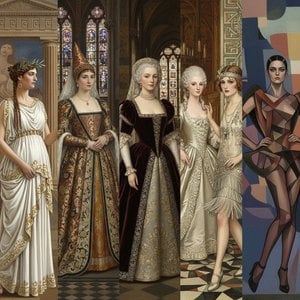
L'importance historique de Jeanne Lanvin ne peut être surestimée, car son influence a jeté un pont entre les traditions ornées du XIXe siècle et la modernité épurée du XXe siècle. Sa capacité à habiller la royauté, notamment la reine Mary de Teck et Wallis Simpson, lui apporta un sceau de prestige qui consolida sa réputation auprès des esthètes les plus exigeants au monde. À travers son œuvre, elle a aidé à définir les transitions esthétiques de plusieurs décennies :
- L'Époque Édouardienne : Caractérisée par une chapellerie exquise et des applications florales complexes.
- La Période Art Déco des années 1920 : Une époque où ses créations embrassaient l'élégance géométrique et le mouvement rythmique d'un nouvel âge.
- La Silhouette des années 1930 : Où elle expérimenta le volume et les textures luxueuses comme le damas pour créer des chefs-d'œuvre de couture durables.
En fin de compte, Jeanne Lanvin a laissé derrière elle un héritage qui continue d'inspirer le monde de la mode. Elle ne s'est pas contentée de suivre les tendances ; elle les a dictées, laissant une marque indélébile dans l'histoire de la haute couture française par son engagement inébranlable envers la beauté, le mouvement et l'esprit romantique.
Questions et réponses
Dans quelle ville et quel pays Jeanne Lanvin est-il/elle né(e) ?
Jeanne Lanvin est né à Paris, en France.
Puis-je étudier l'utilisation de la couleur par Jeanne Lanvin à travers l'ensemble de ses œuvres ?
La ADN de la palette de Jeanne Lanvin présente le profil chromatique de l'ensemble de son œuvre.
Puis-je visiter un musée virtuel des œuvres de Jeanne Lanvin ?
Retrouvez les œuvres de Jeanne Lanvin dans une galerie 3D sur la page Musée en 3D de l'artiste.