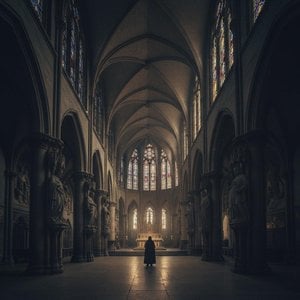
Jean Colombe (en latin : Ioannes Colombus ; v. 1430 – v. 1493) s'impose comme une figure singulière du paysage artistique de la France du XVe siècle, principalement célébré pour sa contribution aux manuscrits enluminés et, plus particulièrement, pour son rôle pivot dans l'achèvement des Très Riches Heures du Duc de Berry—un accomplissement monumental qui a scellé sa légende en tant que l'un des plus grands miniaturistes de son époque. Né à Bourges, en France, la vie de Colombe demeure enveloppée d'une relative obscurité, laissant les historiens tributaires de détails biographiques fragmentaires glanés dans les archives contemporaines. Cependant, ce qui est indéniable, c'est son lien profond avec Michel Colombe, son frère et compagnon sculpteur—un partenariat qui a nourri une vision artistique partagée et a propulsé les deux frères vers la renommée au sein du mouvement humaniste bourgeonnant de leur temps.
Jeunesse et Famille
Formation Sculpturale et Influences Artistiques
L'Œuvre d'Enluminure : Les Très Riches Heures du Duc de Berry
Autres Commandes Notables et Production Artistique
Héritage et Importance Historique
Formation Sculpturale et Influences Artistiques
L'influence de Michel Colombe sur Jean Colombe allait bien au-delà de la simple parenté ; elle représentait un conduit crucial pour la transmission du savoir artistique et le développement stylistique. Bien que les informations biographiques concernant les années de formation de Jean Colombe soient rares, les preuves suggèrent qu'il a reçu sa formation sculpturale sous la tutelle de Michel—un maître artisan reconnu pour son attention méticuleuse aux détails et son adoption d'une représentation naturaliste. Cet héritage artistique commun a sans aucun doute inculqué à Jean Colombe un profond respect pour l'artisanat et un engagement à capturer l'essence de la forme humaine avec une précision remarquable. De plus, les courants artistiques circulant dans toute la Bourgogne durant la vie de Colombe—caractérisés par une renaissance des idéaux classiques et une fascination croissante pour l'érudition humaniste—ont servi de catalyseurs supplémentaires à ses entreprises créatives. Des artistes tels que Filippo Brunelleschi et Donatello, dont les innovations révolutionnaires en architecture et en sculpture commençaient déjà à remodeler l'esthétique européenne, ont indubitablement captivé l'imagination de Colombe et nourri sa sensibilité artistique.
L'Œuvre d'Enluminure : Les Très Riches Heures du Duc de Berry
La renommée de Jean Colombe repose principalement sur sa participation à l'ambitieux projet d'ornementation des Très Riches Heures du Duc de Berry—un luxueux manuscrit liturgique commandé par Louis XI de France. Initialement conçu par les frères Limbourg, le projet fut interrompu suite au décès prématuré de Louis XI, puis confié à Jean Colombe pour en finaliser la décoration. Cette commande monumentale exigeait une compétence artistique et un dévouement sans précédent, nécessitant l'attention méticuleuse de Colombe à chaque nuance de couleur, de composition et de symbolisme. Il entreprit la tâche ardue d'achever plusieurs scènes—notamment celle du mois de novembre—capturant avec une précision époustouflante la beauté solennelle de la représentation par Saint Luc du Christ devant Ponce Pilate. Sa contribution fut particulièrement remarquable par son travail magistral de réinterprétation des dessins des frères Limbourg, injectant un style distinctif qui mariait harmonieusement la tradition gothique aux idéaux émergents de la Renaissance. Les Très Riches Heures demeurent un témoignage éternel du génie artistique de Colombe et restent l'un des manuscrits enluminés les plus célèbres de son époque.
Autres Commandes Notables et Production Artistique
Au-delà de sa contribution monumentale aux Très Riches Heures, Jean Colombe entreprit de nombreuses autres commandes tout au long de sa carrière, démontrant ainsi sa polyvalence en tant qu'enlumineur et artiste. Parmi celles-ci figurent les Passages d’oultre mer du noble Godefroy de Bouillon et du bon roy Saint Loys—une chronique des Croisades enluminée par Sébastien Mamerot—ainsi que la décoration de l'Heures de Louis de Laval, illustrant la capacité de Colombe à adapter son style à divers contextes artistiques. Son savoir-faire méticuleux et sa compréhension profonde du symbolisme visuel garantissaient que chaque œuvre transmette un message puissant de foi et de dévotion.
Héritage et Importance Historique
L'héritage de Jean Colombe s'étend bien au-delà des frontières de la France du XVe siècle, lui assurant une place d'influence dans l'histoire de l'art européen. Il représente un lien charnière entre les traditions artistiques gothiques et la Renaissance naissante—un témoignage du pouvoir transformateur de l'innovation artistique. Son œuvre continue d'inspirer l'admiration par ses détails exquis, ses couleurs vibrantes et son exécution magistrale—servant de phare à l'art humaniste et démontrant la beauté durable des manuscrits enluminés médiévaux. La contribution de Colombe aux Très Riches Heures du Duc de Berry demeure un accomplissement inégalé—un chef-d'œuvre qui incarne les plus hauts standards de l'excellence artistique et illustre l'esprit de créativité durant une période de profonds changements culturels.
Par la rédaction de WahooArt.com
Quiz d'art
Chaque question ne comporte qu'une seule bonne réponse.
Question 1:
Avec qui Jean Colombe partageait-il une formation artistique importante ?
Question 2:
Quel est le nom du projet monumental auquel Jean Colombe a contribué avec Michel Colombe ?
Question 3:
Jean Colombe était connu pour sa spécialité artistique :
Embark on a journey through the dramatic era of Gothic art. Discover the profound beauty of illuminated manuscripts, sacred gold leaf masterpieces, and the transition to naturalism in this expert-led exploration of medieval artistry and historical grandeur.
Embark on a visual journey through Early Medieval art. Explore the profound beauty of illuminated manuscripts, sacred symbols, and golden light through an expert historical lens, celebrating the enduring legacy of medieval craftsmanship and divine artistry.
Explore the exquisite elegance of International Gothic art. Discover the mastery of illuminated manuscripts, the brilliance of gold leaf, and the legacy of the Limbourg Brothers in this expert guide to Europe's sophisticated medieval dawn.
Bonjour ! Je peux vous aider à choisir une œuvre d'art, à suivre une commande ou à répondre à vos questions sur la garantie. Comment puis-je vous aider ?