Les Royaumes Enchantés de Jean-Baptiste Pillement
Dans le crépuscule doré du XVIIIe siècle, peu d'artistes possédaient la capacité de transporter le spectateur vers un monde aussi onirique et exotique que Jean-Baptiste Pillement. Né à Nîmes en 1728, Pillement s'est imposé non seulement comme un peintre, mais comme un maître de l'atmosphère, tissant ensemble l'élégance délicate du style Rococo avec une fascination profonde pour l'ailleurs et l'inconnu. Bien que ses premières années demeurent partiellement voilées par les brumes de l'histoire, son ascension au sein de la hiérarchie artistique française fut rien de moins que météoritique. Grâce à sa formation méticuleuse sous l'égide du vénéré Jean-Baptiste Huet, il maîtrisa les nuances subtiles de l'aquarelle, un médium qui lui permit de capturer la lumière éphémère et les pigments vibrants nécessaires pour donner vie à ses visions fantastiques.
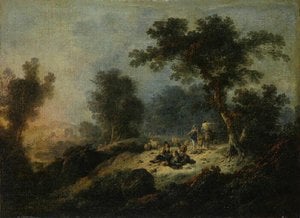
L'œuvre de Pillement sert de fenêtre sur les mouvements de la Chinoiserie et de l' qui captivaient l'aristocratie française. Contra Unlike les traditionalistes de son époque, qui cherchaient refuge dans les ruines romaines classiques ou les portraits historiques sombres, Pillement tourna son regard vers l'horizon. Ses voyages en Italie et son engagement profond avec les motifs persans lui permirent de construire des paysages à la fois luxuriants et d'un autre monde. Entre ses mains, le monde naturel fut réimaginé ; des palmiers imposants, des rivières serpentines et des oiseaux aux plumes éclatantes devinrent les protagonistes d'un drame silencieux et magnifique. Cette maîtrise de l'exotisme fit de lui une figure indispensable à la cour de Louis XV et de Marie-Antoinette, car son art offrait une évasion indispensable vers un royaume de pure et absolue imagination.
Technique, Influence et Esprit Rococo
Le génie de la technique de Pillement réside dans sa capacité à équilibrer la précision avec une lueur douce et éthérée. Il utilisait une délicate technique de sfumato — un mélange magistral des tons par une superposition méticuleuse — qui conférait à ses paysages une qualité presque translucide. Cette approche lui permettait d'évoquer la profondeur atmosphérique de maîtres tels que Claude Lorrain, tout en infusant ces fondations classiques d'une énergie singulièrement fantaisiste. Ses compositions n'étaient jamais statiques ; elles pulsaient d'une vitalité rythmique, souvent caractérisée par :
- Un détail botanique complexe : Un accent profond mis sur la flore, paraissant à la fois inspiré par la science et magnifié par le mythe.
- Une vibrance chromatique : L'usage de couleurs audacieuses et saturées pour représenter la luxuriance des environnements tropicaux et orientaux.
- Une fluidité décorative : Une aptitude à combler le fossé entre la peinture d'art et le design décoratif, rendant son travail tout aussi à sa place sur une toile que dans une murale d'intérieur opulente.
Son évolution stylistique fut profondément façonnée par les explorations d'artistes tels que Nicolas Pocock et Gaspar Pérégrine Rigaud. En absorbant leurs approches du paysage et de la lumière, Pillement put affiner une esthétique signature qui semblait à la fois ancrée dans la tradition européenne et résolument aventureuse. Son influence s'étendit bien au-delà de la toile, car ses dessins imprégnèrent la trame même des arts décoratifs français, influençant tout, des motifs de papiers peints aux décors de porcelaine.
Un Héritage Durable dans l'Histoire de l'Art
L'importance historique de Jean-Baptiste Pillement ne peut être surestimée, particulièrement en ce qui concerne son rôle dans la définition du langage visuel du luxe de la fin du XVIIIe siècle. Ses prestigieuses commandes, notamment les fresques époustouflantes ornant le Château de Fontainebleau et le Petit Trianon, témoignent de son statut de favori de la royauté française. Ces œuvres n'étaient pas de simples décorations ; elles étaient des environnements immersifs qui aidèrent à définir l'identité esthétique d'une époque.
Alors que le monde de l'art passait de l'exubérance ludique du Rococo vers la discipline plus structurée du Néoclassicisme, l'œuvre de Pillement resta un pont précieux entre ces deux mondes. Il a laissé derrière lui un héritage d'émerveillement, rappelant aux générations futures que l'art possède le pouvoir unique de transcender les frontières géographiques et de transporter l'esprit humain vers des terres d'une beauté et d'un mystère infinis. Aujourd'hui, son nom demeure synonyme d'exquis, d'exotisme et du charme éternel du Rococo français.
Questions et réponses
Existe-t-il une liste complète des œuvres de Jean-Baptiste Pillement ?
Chaque œuvre de Jean-Baptiste Pillement sur ce site web peut être consultée depuis la page Toutes les œuvres de l'artiste.
À quelle période historique Jean-Baptiste Pillement a-t-il exercé ?
Jean-Baptiste Pillement a œuvré durant la période L'époque moderne. Cette période situe l'activité de l'artiste dans l'histoire.
Comment puis-je trouver des œuvres de Jean-Baptiste Pillement dans une palette spécifique ?
La page Par palettes regroupe les œuvres de Jean-Baptiste Pillement par leurs palettes de couleurs.