L'Ombre Radieuse : La Vie et l'Héritage de Jan Cossiers
Au cœur de la scène artistique d'Anvers au XVIIe siècle, peu de noms résonnent avec une telle polyvalence stylistique que Jan Cossiers. Né le 15 juillet 1600, dans la vibrante cité flamande d'Anvers, Cossiers était destiné à une vie immergée dans les coups de pinceau de la grandeur. Issu d'une lignée artistique, il était le fils de l'aquarelliste Antoine Cossiers, un fait qui lui conféra une compréhension précoce et intime de la couleur et de la forme. Ses années de formation furent façonnées par l'apprentissage rigoureux de Cornelius de Vos, dont la maîtrise du portrait jeta les bases de la capacité de Cossiers à capturer l'essence humaine. Cependant, c'est son esprit inquiet et sa quête de l'avant-garde qui allaient véritablement définir sa trajectoire, l'éloignant du confort familier des Flandres vers les paysages ensoleillés de France et les ombres dramatiques d'Italie.
L'évolution du style de Cossiers est un voyage captivant à travers les marées changeantes de l'ère baroque. Ses voyages à Aix-en-Provence en 1623 lui permirent d'absorber l'énergie dynamique des influences néerlandaises, mais c'est son pèlerinage à Rome en 1624 qui altéra fondamentalement son ADN artistique. Là, il rencontra le ténébrisme révolutionnaire du Caravage — une technique définie par un jeu théâtral et intense entre l'obscurité profonde et la lumière perçante. Cette rencontre insuffla une vie nouvelle et dramatique à son œuvre. Son répertoire de jeunesse se caractérisait par des scènes de genre caravagesques, dépeignant souvent des sujets de la "vie quotidienne" avec un réalisme brut et sans artifice. Ces œuvres, telles que l'évocatrice La Voyante (1640), utilisaient un clair-obscur magistral pour transformer des moments banals de contemplation ou d'interaction sociale en profondes études psychologiques.
Des Scènes de Genre aux Grands Récits
À mesure que sa carrière mûrissait, Cossiers passa des représentations intimes et souvent terreuses de la vie quotidienne vers les domaines plus prestigieux de la peinture d'histoire et religieuse. Ce changement ne fut pas seulement une modification du sujet, mais une expansion de son vocabulaire émotionnel et technique. Sa connexion avec le légendaire Pierre Paul Rubens joua un rôle pivot dans cette ascension ; en travaillant au sein de l'illustre atelier de Rubens, Cossiers affina sa capacité à gérer des compositions à grande échelle et des récits complexes comportant de multiples figures. L'influence de Rubens est évidente dans le dynamisme accru et les détails opulents que l'on retrouve dans ses œuvres tardives, où les ombres tranchantes de sa jeunesse commencèrent à se mêler à une utilisation plus sophistiquée de la couleur et du mouvement.
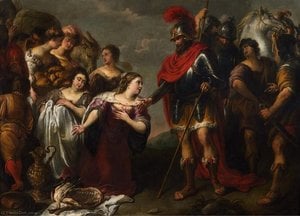
Ses toiles religieuses témoignent de sa capacité à transmettre la ferveur spirituelle par le drame physique. Dans des chefs-d'œuvre tels que Le Martyre de sainte Catherine (1647) et Jésus apparaît à Marie-Madeleine, Cossiers utilise la tension dramatique apprise à Rome pour évoquer une piété et une souffrance profondes. Son œuvre Saint Nicolas délivrant les captifs démontre davantage sa maîtrise de l'épopée baroque, mêlant une émotion intense à une composition dynamique qui guide l'œil du spectateur à travers un océan de lutte biblique. Même dans ses moments les plus calmes, comme son méticuleux Autoportrait, on peut ressentir la dignité et la précision technique qui lui valurent une haute distinction au sein de la communauté artistique d'Anvers.
Un Pilier de l'École d'Anvers
Au-delà de la toile, Jan Cossiers fut une figure centrale du tissu institutionnel de l'art flamand. Son ascension au poste de Doyen de la Guilde de Saint-Luc en 1640 signifie non seulement sa maîtrise technique, mais aussi le profond respect qu'il inspirait à ses pairs. Il vécut une période d'immense transition culturelle, agissant comme un pont entre l'énergie brute et dramatique du premier caravagisme et les sensibilités classiques plus raffinées qui allaient suivre. Sa vie fut une tapisserie de triomphes professionnels et de complexité personnelle, marquée par des liens significatifs avec des intellectuels tels que Nicolas Claude Fabri de Peiresc et les cercles prestigieux de l'élite d'Anvers.
La signification historique de Jan Cossiers réside dans sa capacité à synthétiser diverses influences en une voix unique et reconnaissable. Il a puisé dans les ombres de l'Italie, le dynamisme des Pays-Bas et la grandeur de la Flandre de Rubens pour créer une œuvre qui soit à la fois profondément personnelle et largement représentative de l'esprit baroque. Aujourd'hui, il est mémorisé non pas seulement comme un disciple des grands maîtres, mais comme un pionnier qui a aidé à façonner le langage visuel du XVIIe siècle, laissant derrière lui un héritage de lumière, d'ombre et d'une éternelle émotion humaine.
Questions et réponses
D'où vient Jan Cossiers ?
Jan Cossiers est né(e) en Belgique.
Puis-je parcourir les œuvres de Jan Cossiers par palette de couleurs ?
Les œuvres de Jan Cossiers peuvent être parcourues par palette de couleurs sur la page Par palettes de l'artiste.
Combien d'œuvres de Jan Cossiers sont disponibles à la consultation ?
Vous pouvez parcourir 45 œuvres d'art œuvres de Jan Cossiers sur la page Toutes les œuvres.