Insane Park: Decoding the Echoes of Media Culture
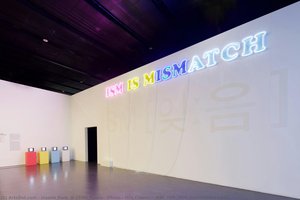
Insane Park (b. 1980, Seoul, South Korea) stands as a compelling figure in contemporary Korean art, recognized primarily for his immersive installations and thought-provoking video works that delve into the intricate relationship between visual culture and psychological perception. His artistic practice isn’t merely about representation; it's an active interrogation of how images – relentlessly disseminated across television screens, internet platforms, and countless other sources – shape our understanding of reality and influence societal ideologies. Park’s methodology begins with a profound fascination for Nam June paik’s pioneering explorations of video art and experimental filmmaking, establishing a foundational influence on his stylistic choices. Paik's unwavering commitment to pushing boundaries and questioning established artistic conventions resonated deeply with Park’s own desire to disrupt traditional visual hierarchies and explore unconventional mediums. This connection underscores the artist’s broader engagement with conceptual art and its emphasis on challenging viewers’ assumptions about art’s role in society—a core principle that continues to permeate his oeuvre. The genesis of Insane Park's artistic vision lies in a meticulous process of image gathering. He painstakingly collects vast quantities of visual material from diverse media channels, transforming them into raw data for his artistic explorations. This accumulation isn’t haphazard; it reflects a deliberate effort to capture the pervasive presence of images within daily life—a phenomenon he eloquently termed “ISM,” referencing the repetitive mantra of mass media. Through editing and manipulation, Park transforms these collected images into artworks that challenge conventional notions of perception and invite viewers to confront unsettling truths about how we interpret the world around us. This approach mirrors techniques employed by Surrealist artists like René Magritte and Salvador Dalí—a deliberate use of visual paradoxes and unexpected combinations to destabilize viewers’ expectations and provoke contemplation on the nature of reality itself. The culmination of this intellectual curiosity materialized in 2013 when he was awarded the Etró Art Prize, marking a pivotal moment in his artistic trajectory. This recognition propelled him into the spotlight, affording him opportunities to showcase his work internationally and solidify his position as a leading voice within Korea’s burgeoning contemporary art scene. Exhibitions at galleries like Arario Gallery in Seoul have presented his installations—often unsettling juxtapositions of fragmented images and text—to discerning audiences worldwide. His debut solo exhibition at ARARIO GALLERY SEOUL showcased *Avant-Garde Does Not Surrender*, reaffirming his dedication to challenging artistic conventions and exploring the psychological dimensions of visual experience. Subsequent exhibitions, including *The 13th Hesitation* and *Insane PARK: Director's Cut*, further cemented his reputation as a visionary artist committed to disrupting established norms. Park’s recent series, *Post Vandalism*, continues his experiments dismantling the authority and safeguards of institutional art, through the form of fictitious documentaries created with digital technology, motion graphics, and live-streaming formats reminiscent of social media. While vandalism may be a self-contradictory and rebellious act, it is also a movement that negates existing systems and generates new perspectives and discourses. For PARK, graffiti layered onto decaying buildings and messages scattered across artworks are not simply acts of destruction, but gestures of resistance against authority and oppression. He regards acts of scribbling and defacement as processes of redefinition—disrupting existing orders and hierarchies while simultaneously infusing them with new meaning. In doing so, PARK confronts the futility, emptiness, and fragility of reality, yet refuses to remain in despair. Instead, he focuses on humor, self-contradiction, and the act of doing itself, seeking minimal fissures and sparks of articulation that art can still generate. The messages directly inscribed onto the gallery walls and works are extensions of this attitude; like graffiti on urban surfaces, his images speak from within the cracks of the system. His artistic journey has been marked by participation in group exhibitions held at institutions such as Gyeonggi Museum of Modern Art (Ansan, Korea), Suwon Museum of Art (Suwon, Korea), Gyeongnam Art Museum (Changwon, Korea), NamJune Paik Art Center (Yongin, Korea), Savina Museum (Seoul, Korea), Kyonggi University Sosung Museum (Suwon, Korea), Alternative Space Loop (Seoul, Korea), Art Space Boan 1942 (Seoul, Korea) and more. Notably, he secured the Grand Prize of t The 2nd ETRO Art Prize in 2013—a testament to his artistic merit and recognition within the international art community. Furthermore, he undertook residencies at Baan Noorg Collaborative Arts and Culture (Ratchaburi, Thailand), Studio M17 (Paju, Korea) from 2016 to 2017, Akiyoshidai International Art Village (Yamaguchi, Japan) in 2016, Gyeonggi Creation Center (Ansan, Korea) from 2015 to 2016 and Youngeun Museum of Contemporary Art (Gwangju, Gyeonggi-do, Korea) from 2011 to 2013. Insane Park’s work continues to provoke dialogue and inspire contemplation on the role of art in shaping our understanding of the world—a legacy rooted in his unwavering dedication to conceptual innovation and artistic experimentation.Questions et réponses
Où trouver les œuvres de Insane Park classées par couleur ?
L'Par couleur de Insane Park permet de parcourir les œuvres de l'artiste par couleur.
Existe-t-il une chronologie de la carrière de Insane Park ?
Retrouvez l'itinéraire chronologique de l'œuvre de Insane Park sur la page Parcours de carrière de l'artiste, où les œuvres se succèdent par périodes de création, chapitre par chapitre.
Où peut-on trouver les œuvres de Insane Park regroupées par mouvement artistique ?
Retrouvez les mouvements associés à Insane Park sur la page Tous les mouvements artistiques de l'artiste, qui regroupe ses œuvres par mouvement.