Le Maître du Drame Historique : La Vie et l'Héritage de Paul Delaroche
Dans le paysage vibrant et turbulent de l'art français du XIXe siècle, peu de figures ont imposé leur présence avec autant de force dramatique qu'Hippolyte Paul Delaroche. Né à Paris en 1797 au sein d'une famille où l'art était tissé dans la trame même de la vie quotidienne, Delaroche était destiné à la grandeur. Avec un père expert en art et un oncle conservateur du prestigieux Cabinet des Estampes, son enfance fut une éducation immersive dans la splendeur visuelle. Cette exposition précoce aux maîtres lui apporta bien plus qu'une simple appréciation esthétique ; elle instilla en lui un respect profond pour le poids de l'histoire et la puissance d'un seul coup de pinceau magistralement placé. Sous la tutelle d'Antoine-Jean Gros, Delaroche commença à maîtriser l'art du grand récit, apprenant à insuffler aux sujets monumentaux un sentiment d'immédiateté haletante qui deviendrait sa marque de fabrique.
L'art de Delaroche occupait un espace liminaire fascinant, entre l'émotionnisme débordant du Romantisme et la précision disciplinée de l'Académisme. Alors que beaucoup de ses contemporains se perdaient dans l'abstraction pure ou un néoclassicisme rigide, Delaroche chercha une voie médiane — un réalisme pragmatique visant à dépouiller le vernis idéalisé de l'histoire pour en révéler le cœur humain et brut. Il ne peignait pas seulement des rois et des reines ; il peignait leur vulnérabilité, leur terreur et leurs moments de désespoir les plus silencieux. Cette approche lui permit de jeter un pont entre la grandiosité du passé et le réalisme naissant de sa propre époque, rendant les événements historiques d'une présence saisissante pour le public du milieu du siècle.
Une Tapisserie d'Émotion et de Précision
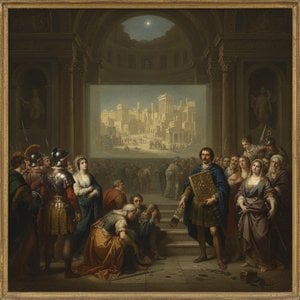
Le véritable génie de Delaroche résidait dans sa capacité à transformer une toile en une scène de théâtre. Ses œuvres fonctionnaient souvent comme des chroniques visuelles, méticuleusement documentées et rendues avec une attention au détail époustouflante qui captivait l'imagination du public. Dans des chefs-d'œuvre tels que L'Exécution de Lady Jane Grey, on peut ressentir l'atmosphère lourde et suffocante de la tragédie. Le tableau n'est pas une simple représentation d'un événement ; c'est une exploration de l'innocence perdue, accomplie grâce à un usage magistral de l'ombre et de la lumière qui guide l'œil du spectateur vers le chagrin poignant et silencieux des protagonistes. De même, ses représentations de Napoléon — que ce soit dans la solennité de Napoléon à Fontainebleau ou l'échelle héroïque de Napoléon traversant les Alpes — démontrent sa capacité à équilibrer le statut légendaire de la figure avec une touche profondément humanisante.
Au-delà de ses triomphes personnels, l'influence de Delaroche se propagea dans la scène artistique parisienne en tant qu'éducateur et mentor respecté. Son atelier devint le creuset de la génération suivante de maîtres français, favorisant des talents tels que :
- Thomas Couture, qui allait affiner davantage les frontières de la peinture historique ;
- Jean-Léon Gérôme, un titan du réalisme académique ;
- Jean-François Millet, dont l'œuvre ultérieure s'orienterait vers la dignité profonde de la vie paysanne.
À travers ces liens, l'ADN stylistique de Delaroche — caractérisé par des techniques de glacis méticuleuses et une structure narrative émotive — s'est ancré dans les fondements mêmes de la peinture française.
La Résonance Éternelle d'un Passé Disparu
À mesure que le XIXe siècle progressait, le monde de l'art connut des transformations rapides, pourtant les œuvres de Delaroche demeurèrent une ancre inébranlable pour ceux qui cherchaient le spectacle de l'histoire. Il possédait une capacité unique à évoquer la nostalgie d'une époque disparue, traitant les sujets de l'histoire anglaise et française avec une égale mesure de révérence et de réalisme. Qu'il capturât la tendre dévotion familiale dans Repos sur les bords du Tibre ou le bouleversement politique violent dans Le Meurtre du Duc de Guise, son travail cherchait toujours à trouver la vérité humaine universelle sous le costume historique.
Bien que l'ère de la grande peinture d'histoire ait fini par céder la place aux impressions fugaces des Impressionnistes, l'héritage de Delaroche reste inaltérable. Il s'impose comme un pont charnière dans l'histoire de l'art, un peintre capable de commander la grandeur du vieux monde tout en embrassant la profondeur psychologique exigée par le nouveau. Ses toiles continuent de nous inviter dans le passé, non pas comme des reliques poussiéreuses et lointaines, mais comme des moments vivants et vibrants d'une expérience humaine profonde, éternellement préservés dans l'exquise précision de son pinceau.