Heo Mok (Misu): The Eyebrowed Master of Korean Calligraphy
Heo Mok, also known as Misu (미수), stands as a towering figure in Korean art history—a testament to intellectual prowess combined with artistic brilliance during the Joseon Dynasty. Born Yangcheon, South Korea, in 1596, he ascended to prominence not through royal lineage but through sheer dedication and unparalleled skill in calligraphy, earning him the moniker “the eyebrowed old man,” reflecting his distinctive facial feature and profound wisdom.
His life unfolded against a backdrop of turbulent political times. He was educated at Seoul University, where he excelled in Confucian scholarship, shaping his worldview and informing his artistic sensibilities. However, it wasn’t solely academic pursuits that defined him; he possessed an innate talent for painting and poetry—disciplines interwoven with calligraphy to create a holistic vision of Korean culture.
A Singular Calligraphic Style
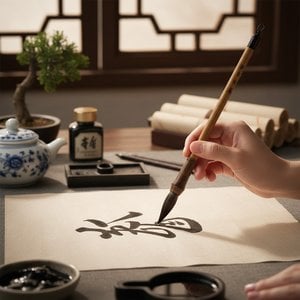
What truly distinguishes Heo Mok is his revolutionary approach to Korean calligraphy. Departing from prevailing conventions, he championed a style characterized by exceptional balance and elegance—a technique that prioritized conveying emotion and capturing the essence of nature. Unlike many contemporaries who adhered rigidly to established rules, Misu experimented with innovative brushstrokes and compositional arrangements, establishing a precedent for future generations of calligraphers.
His distinctive style was heavily influenced by Taoist philosophy, particularly the concept of “wu wei” – effortless action—which encouraged him to strive for spontaneity and authenticity in his work. This philosophical underpinning resonated deeply within his artistic practice, resulting in pieces that embody a serene beauty and profound contemplation. He believed that true artistry resided in aligning oneself with the natural order of things, mirroring the Taoist ideal of harmony.
Notable Works & Achievements
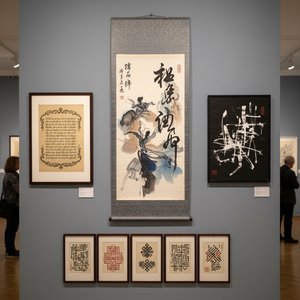
Misu’s legacy rests upon a remarkable body of artistic output. Among his most celebrated achievements is the “Album of Calligraphy (眉叟篆隷_詩經),” a masterful fusion of calligraphy and poetry—a genre favored by literati artists during the Joseon period. This work exemplifies his ability to synthesize intellectual thought with aesthetic expression, demonstrating the interconnectedness of art and philosophy.
Furthermore, he served as Governor at the age of 81, an unprecedented honor for someone without formal credentials. This appointment underscored the respect accorded to him by King Sukjong—a recognition of his erudition and moral integrity. He was considered a pioneer in Korean governance, embodying Confucian ideals of virtue and responsibility.
His home, Taeryeongsipcheongwon House (태령십경원), constructed in 1794 during Sukjong’s reign, embodies the refined aesthetic sensibilities of its owner—a testament to Misu's commitment to cultivating a harmonious environment conducive to artistic creation. The landscape painting housed within reflects his deep appreciation for nature and his belief that art should serve as a conduit for spiritual contemplation.
More than just an artist, Misu was a philosopher who championed Taoist ideals and sought to express the beauty of nature through calligraphy and poetry—a multifaceted genius whose legacy resonates powerfully within Korean cultural heritage. He remains revered as one of Korea’s greatest artistic figures, inspiring generations of artists with his unwavering dedication to excellence and his profound understanding of the human spirit.