Le Visionnaire Impérial : La Vie et l'Héritage de Hans Maler zu Schwaz
Au cœur de la Renaissance, parmi les richesses minières foisonnantes des Alpes tyroliennes, le pinceau de Hans Maler zu Schwaz a capturé bien plus qu'une simple ressemblance ; il a immortalisé l'essence même du pouvoir. Né dans la ville historique d'Ulm en Allemagne vers 1480, le parcours artistique de Maler était profondément ancré dans les prestigieuses traditions de l'École d'Ulm. Les érudits s'accordent largement à dire que sa formation initiale fut façonnée par l'influence de Bartholomäus Zeitblom, un maître dont la précision et le traitement délicat des formes ont posé les fondations sur lesquelles Maler allait bâtir sa réputation de portraitiste éminent de la cour des Habsbourg.
Bien que ses origines soient liées à Ulm, la carrière de Maler a trouvé sa véritable résonance dans la ville industrieuse de Schwaz. Ce lieu, carrefour vital du domaine des Habsbourg, le plaçait au confluent de la politique et du commerce européens. C'est ici qu'il est passé du statut d'élève de la tradition allemande à celui de chroniqueur sophistiqué des figures les plus redoutables de l'époque. Son œuvre est devenue un témoignage visuel de la stabilité et de la grandeur des règnes de Maximilian Ier et de Ferdinand Ier, servant de pont entre les sensibilités du gothique tardif et l'humanisme naissant de la Renaissance.
Une Maîtrise de la Retenue et de la Dignité
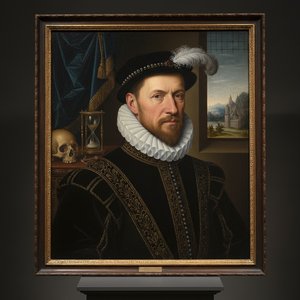
Ce qui distingue Maler des portraitistes plus flamboyants de son temps, c'est son engagement profond envers une esthétique sobre, presque monacale. Il privilégiait le format du portrait en buste, un choix qui éliminait les distractions des paysages vastes ou des gestes théâtraits pour se concentrer entièrement sur la présence psychologique de ses sujets. Entre ses mains, la toile devenait un espace de contemplation silencieuse. Sa technique se caractérisait par un dévouement inébranlable à l'observation méticuleuse, où chaque ride subtile de la peau et chaque pli de velours épais témoignaient du rang et du caractère du modèle.
Une dimension envoûtante émane de ses compositions, souvent obtenue par une absence délibérée de contact visuel direct entre le modèle et le spectateur. Cette technique crée un sentiment de sang-froid royal, suggérant que les sujets sont perdus dans une pensée intellectuelle profonde ou peut-être accablés par le poids de leurs responsabilités impériales. En évitant tout mouvement expressif, Maler a atteint une forme d'intemporalité ; ses portraits ne capturent pas seulement un instant précis, mais plutôt un état d'être durable. Cette discipline stylistique lui a permis de transmettre la solennité exigée par ses commanditaires de haut rang, transformant de simples portraits en véritables icônes d'autorité.
Mécénat et Documentation d'une Époque
L'importance historique de Hans Maler zu Schwaz est inextricablement liée aux cercles prestigieux qu'il a fréquentés. Sa capacité à obtenir des commandes auprès des plus hauts échelons de la noblesse européenne — notamment la dynastie des Habsbourg — a scellé sa place dans l'histoire de l'art. À travers des œuvres telles que ses portraits de Ferdinand de Habsbourg et de la reine Anne de Hongrie et de Bohême, Maler a fourni le vocabulaire visuel de la propagande impériale, projetant une image d'élégance, de force et de légitimité à travers tout le continent.
Cependant, l'influence de Maler s'étendait au-delà du palais royal pour atteindre le monde florissant de la classe marchande. Son implication dans la documentation de la vie de figures éminentes comme la famille Fugger démontre sa polyvalence et son rôle de chroniqueur des mutations économiques de l'époque. À travers son art, nous contemplons l'intersection de la vieille noblesse et de la nouvelle richesse, capturée avec le même niveau de détail méticuleux et de dignité. Son héritage demeure une fenêtre vitale sur le XVIe siècle, nous offrant un regard profond sur les visages qui ont façonné le paysage politique et social du Saint-Empire romain germanique.