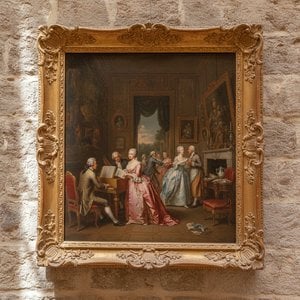
Gaspard Gresly: A Master of Illusion in the Heart of Franche-Comté
Gaspard Gresly (1712 – 1756) remains a captivating enigma within the history of 18th-century French art. Born in the small, picturesque town of L’Isle-sur-le-Doubs, nestled in the heart of Franche-Comté, his life was tragically short, yet his artistic legacy—a remarkable collection of trompe-l'oeil paintings—continues to enchant and intrigue viewers today. Gresly wasn’t a grand salon painter seeking court commissions; instead, he carved out a unique niche for himself, becoming renowned for his ability to conjure convincing illusions within the confines of modest interiors, offering glimpses into everyday life with an extraordinary degree of realism.
His early training remains somewhat obscure. While no formal academies or recognized masters are definitively linked to his development, it’s believed he honed his skills through apprenticeship and independent study, absorbing influences from both Flemish illusionists and the burgeoning trends in French genre painting. The influence of artists like Jan Bruegel the Elder, known for his detailed depictions of peasant life, is readily apparent in Gresly's compositions—a focus on ordinary people engaged in commonplace activities. However, Gresly’s distinctive style quickly evolved beyond mere imitation, developing a uniquely French sensibility characterized by an almost theatrical quality and a masterful manipulation of light and shadow.
The World of the *Cris* and the Illusion of Commerce
Gresly's most celebrated works depict scenes from the bustling marketplaces – or *cris* – that thrived in towns throughout Franche-Comté. These weren’t idealized pastoral landscapes; they were vibrant, noisy, and often chaotic representations of commerce, brimming with detail and a keen awareness of human interaction. He frequently portrayed vendors selling everything from cherries and flowers to textiles and lace, capturing the energy and dynamism of these vital trading centers. His depictions are remarkably astute observations of social behavior, revealing not just the products being sold but also the personalities of the merchants themselves – their gestures, expressions, and interactions with customers.
A particularly compelling example is his “Petite fille conduite en classe” (Little Girl Led to School), a charming portrait that exemplifies Gresly’s ability to create an illusion of depth and space. The scene, seemingly captured within a domestic interior, convincingly suggests the presence of a larger streetscape beyond the window, complete with passersby and architectural details. Similarly, his “Diogène cherchant un homme” (Diogenes Seeking a Man) is a Baroque masterpiece that utilizes dramatic lighting and perspective to create an illusion of a crowded public square, drawing the viewer into the scene’s bustling activity.
Technique and Artistic Innovation
Gresly's mastery lay not just in his subject matter but also in his technical execution. He was a true innovator in the field of trompe-l'oeil painting, employing techniques that went far beyond simple perspective tricks. He meticulously rendered textures – the rough bark of trees, the folds of fabric, the sheen of polished metal – creating an astonishingly tactile quality within his paintings. His use of *chiaroscuro*—the dramatic contrast between light and dark—was particularly effective in enhancing the illusion of depth and volume, making the painted scenes appear almost three-dimensional.
Furthermore, Gresly’s compositions often incorporated elements of theatricality, as if he were staging a miniature drama within his canvases. He frequently used diagonals and converging lines to draw the eye into the scene, creating a sense of movement and dynamism. His ability to seamlessly blend illusion with realism—to convincingly simulate space and depth while simultaneously capturing the details of everyday life—established him as one of the foremost masters of trompe-l'oeil in France during his time.
Legacy and Historical Significance
Despite his tragically short life, Gaspard Gresly left behind a significant body of work that continues to be admired for its technical brilliance and artistic charm. His paintings offer a unique window into the social and cultural landscape of Franche-Comté in the mid-18th century, providing valuable insights into the lives of ordinary people and the rhythms of daily commerce. While his name may not be as widely recognized as some of his contemporaries, Gresly’s contributions to the development of trompe-l'oeil painting are undeniable, and his work remains a testament to the power of illusion and the enduring appeal of realistic representation.
His works are now housed in museums across France and beyond, ensuring that this remarkable artist’s vision continues to captivate audiences for generations to come. The rediscovery and appreciation of Gresly's oeuvre highlight the importance of exploring lesser-known figures within the history of art—artists who, through their unique talents and innovative techniques, enriched the cultural landscape of their time.