Gil Vicente: Portugal’s Shakespeare – A Renaissance Dramatist Reimagined
Gil Vicente (c. 1465 – c. 1536), affectionately known as “the Trobadour,” stands as a monumental figure in Portuguese literature and theatre, rightfully earning the moniker "Portuguese Plautus." He wasn’t merely a playwright; he was a cultural innovator who bridged the gap between medieval traditions and the burgeoning humanist ideals of the Renaissance, leaving an indelible mark on Iberian drama and shaping Portugal's artistic identity.
Early Life & Court Patronage: Seeds of Genius
Born around 1465 in Guimarães, Portugal – a city steeped in history as Alfonso Henriques’ birthplace and the cradle of Portuguese independence – Vicente’s formative years were spent under the watchful eye of Queen Dowager Leonor Teles de Menezes. Recognizing his prodigious talent early on, Leonor championed his artistic endeavors, securing him positions within the royal courts of Manuel I and John III. This patronage proved invaluable, providing him with access to influential circles and fostering an environment conducive to creative exploration. It was during this period that Vicente honed his craft, absorbing the philosophical currents of humanist thinkers like Erasmus and Pico della Mirandola, which would profoundly influence his dramatic vision. He married Branca Bezerra first. They had two sons, Gaspar and Belchior. After she passed away, he married Melícia Rodrigues. With Melícia, he had several children. These included Paula Vicente, who became a celebrated scholar. His son Luís Vicente later meticulously collected and organized his father’s works—a testament to the enduring respect for Vicente's legacy.
A Dramatic Voice: Plays That Challenged Conventions
Vicente’s theatrical output is remarkable for its scope and ambition. He penned over 150 plays—a staggering number considering the era—spanning comedies, tragedies, religious dramas (autos sacramentales), and historical chronicles. Unlike many of his contemporaries who adhered to strict Aristotelian principles, Vicente deliberately sought to disrupt established dramatic conventions. His works tackled controversial themes – social injustice, hypocrisy, corruption – often portraying characters from all strata of society with unflinching honesty. He skillfully blended medieval morality tales with humanist observations about human nature, creating a uniquely Portuguese theatrical experience that resonated deeply with audiences. Notable productions included “Floresta de Enganos” (The Forest of Deceptions), “O Velho da Horta” (The Old Gardener), and “Auto da Festa” (The Miracle Play), each demonstrating his masterful command of language and dramatic technique. His plays weren’t merely entertaining; they were a forceful critique of societal ills, prompting reflection on moral responsibility and challenging accepted norms.
Artistic Style: Photography & Collage – A Fusion of Techniques
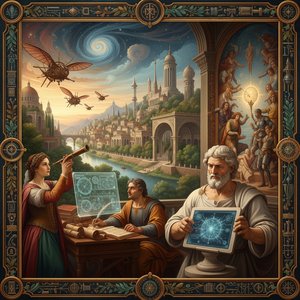
Vicente’s artistic style is particularly noteworthy for its innovative use of mixed media. His paintings, notably “Gil Vicente, Called the Trobadour,” exemplify this approach. Employing photography alongside collage—a technique relatively uncommon in Portugal at the time—he achieved a striking visual effect that captured both the grandeur of royal patronage and the gritty realities of everyday life. The resulting images are imbued with symbolic resonance, reflecting the artist’s preoccupation with moral dilemmas and societal critique. He skillfully combined elements of realism with stylized representations, creating canvases that conveyed complex narratives through subtle visual cues. His masterful blending of photographic detail with textural collage—often incorporating fragments of fabric or paper—established him as a pioneer in Portuguese art during the Renaissance.
Legacy & Enduring Influence: Beyond His Time
Despite facing censorship during the Inquisition—a testament to the sensitivity of his themes—Gil Vicente’s legacy persists as a cornerstone of Portuguese cultural heritage. He is recognized as the foremost dramatist of Portugal, arguably surpassing Shakespeare in terms of dramatic innovation and psychological depth. Furthermore, he played a pivotal role in establishing Spanish drama alongside Portuguese theatre, cementing his position as a father figure within Iberian literary history. His enduring influence can be seen in subsequent generations of playwrights who drew inspiration from his daring experimentation with form and content. Gil Vicente’s insistence on confronting uncomfortable truths and celebrating human dignity—a hallmark of his artistic vision—continues to inspire artists and scholars alike, ensuring that his voice remains vibrant across centuries. He is remembered as a true visionary, whose plays continue to provoke discussion and debate about fundamental questions concerning morality and social justice.