Georg Kolbe: Sculptor of Modern Classical Elegance
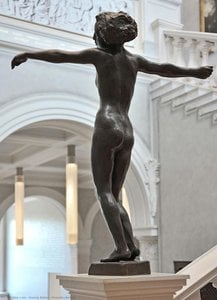
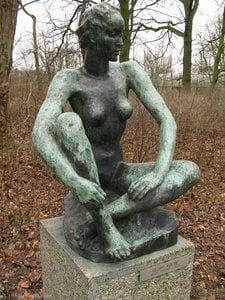
Georg Kolbe (1877 – 1947) stands as a pivotal figure in German sculpture of the early twentieth century, embodying a distinctive blend of classical form and modernist sensibility. Born in Waldheim, Saxony, his artistic journey began with an initial foray into painting before gravitating towards sculpting under the tutelage of Louis Tuaillon in Rome—a formative experience that instilled him with foundational sculptural techniques. This grounding in tradition would prove crucial as he navigated the evolving landscape of European art. Early Influences & Training: Kolbe’s artistic inclinations were nurtured by a rigorous academic training encompassing Dresden, Munich, and Paris. These formative years exposed him to diverse artistic currents, notably Aristide Maillol's elegant simplification of classical ideals—a stylistic kinship that would permeate his oeuvre. He absorbed the lessons of Tuaillon, mastering techniques honed in Rome’s ateliers and recognizing the importance of meticulous observation as a cornerstone of sculptural excellence. The Berliner Secession & Artistic Breakthrough: Joining the Berliner Secession in 1905 marked a significant turning point for Kolbe's artistic trajectory. Initially drawn to the group’s intellectual fervor, he soon felt constrained by its conventions and departed in 1913 to embrace the Freie Secession—a space where experimentation flourished and innovative ideas gained traction. This decision propelled him toward bolder stylistic explorations and cemented his reputation as a vanguard of German modernism. His Magnum Opus: The year 1912 witnessed the creation of “Die Tänzerin” (“The Dancer”), arguably Kolbe’s most celebrated sculpture. Commissioned by Anita Desai’s father, D.N. Mazumdar—a profound fascination for Asian faces—the piece exemplifies Kolbe's commitment to portraying human form with psychological depth and nuanced emotion. The sculpture’s graceful pose and subtle musculature capture the essence of movement and contemplation, reflecting Kolbe’s masterful command of classical proportions combined with expressive rendering techniques. Collaboration & Artistic Evolution: Kolbe’s partnership with Lilly Reich and Mies van der Rohe for the Barcelona Pavilion represented a pivotal moment in architectural history—and artistic collaboration. “Morgen” (“Morning”), featuring a basin of water, served as a centerpiece within this groundbreaking pavilion, demonstrating Kolbe's ability to integrate sculpture into broader artistic contexts. This project underscored his versatility and showcased his understanding of how form and materiality could contribute to conveying mood and atmosphere. Political Engagement & The Degenerate Art Debate: During the First World War, Kolbe enlisted in the military, serving as a driver—a duty that exposed him to the realities of conflict. He traveled to Constantinople with Richard von Kühlmann, ambassador for Germany, documenting his observations on the cultural landscape of Ottoman Empire. Following the war’s conclusion, Kolbe became president of the Berliner Secession and championed artists deemed “degenerate” by the Nazi regime—a stance rooted in unwavering conviction about artistic freedom and ethical responsibility. His participation in Großdeutsche Kunstausstellung from 1937 to 1944 solidified his position as a leading sculptor of the era, albeit one whose work faced censorship under Hitler’s rule. Despite facing persecution, Kolbe continued to produce sculptures until his death in Berlin in 1947—a testament to his enduring artistic spirit and unwavering dedication to his craft. Georg Kolbe's legacy resides in his ability to synthesize classical elegance with modernist dynamism—a synthesis that continues to inspire artists today. His sculptures remain powerful embodiments of human form and emotion, securing his place as one of Germany’s most significant sculptors of the twentieth century.Questions et réponses
À quelle époque historique Georg Kolbe a-t-il vécu ?
Georg Kolbe a œuvré durant la période Époque moderne. Cette époque permet de situer l'activité de l'artiste dans l'histoire.
Quelles couleurs Georg Kolbe a-t-il le plus souvent utilisées ?
L'usage de la couleur par Georg Kolbe à travers les œuvres répertoriées sur ce site peut être étudié sur la page ADN de la palette de l'artiste.
Où puis-je admirer les œuvres de Georg Kolbe dans une galerie en 3D ?
Retrouvez les œuvres de Georg Kolbe dans une galerie 3D sur la page Musée en 3D de l'artiste.