La Genèse d'un Maître Espagnol
Né au cœur de la richesse culturelle de Valence en 1866, Fernando Cabrera Cantó s'engagea dans un voyage artistique qui allait finalement jeter un pont entre la réalité ancrée de la fin du XIXe siècle et les murmures éthérés du Symbolisme. Sa formation initiale à la Real Academia de Bellas Artes de San Carlos, sous la direction de Lorenzo Casanova, lui assura des bases solides, mais ce furent ses voyages à travers Madrid et l'Italie — soutenus par la généros et de la Diputación provincial d'Alicante — qui élargirent véritablement son vocabulaire visuel. Cette période d'errance et d'étude lui permit d'absorber la précision technique du réalisme espagnol tout en préparant son âme à l'esthétique plus décorative et fluide du mouvement Art Nouveau alors en pleine éclosion.Une Tapisserie d'Ombre et de Lumière
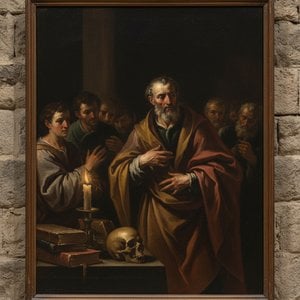
Le génie de Cabrera Cantó réside dans sa remarquable capacité à traverser le vaste paysage émotionnel de la condition humaine. Son œuvre est une étude des contrastes, où l'on peut rencontrer la satire joyeuse et baignée de soleil d'une scène de genre pour être soudain confronté à ce qui est sombrement morbide ou profondément contemplatif. Dans des œuvres telles que Mujer Rezando, il utilise un rendu délicat et une lumière subtile pour capturer des moments de dévotion sereine, faisant écho à l'influence de maîtres comme Fortuny et Pinazo. À l'inverse, ses compositions plus sombres, comme Sermón soporífero, démontrent une maîtrise de l'atmosphère, utilisant des tons lourds et contemplatifs pour évoquer un sentiment de solennité qui demeure dans l'esprit du spectateur bien après que son regard se soit détourné. Que ce soit à travers les lignes organiques de l'Art Nouveau ou la profondeur psychologique de ses portraits, sa touche demeure un dialogue intime entre l'artiste et son sujet.Un Héritage au-delà de la Toile
Au-delà de ses toiles individuelles, l'influence de Cabrera Cantó a imprégné l'architecture même et l'éducation de son époque. Sa collaboration avec l'architecte Vicente Pascual Pastor pour la décoration de l'emblématique Casa del Pavo témoigne de sa capacité à intégrer les beaux-arts dans le tissu vivant du paysage Art Nouveau d'Alcoy. De plus, son passage en tant qu'enseignant à l'École des Arts et Métiers a permis que sa prouesse technique et son approche philosophique de la peinture soient transmises à une nouvelle génération de talents espagnols. L'œuvre de sa vie demeure un lien vital dans l'évolution de l'art espagnol, nous rappelant une époque où les frontières entre réalisme, décoration et émotion étaient magnifiquement et inextricablement entremêlées.Questions et réponses
Où peut-on trouver les œuvres de Fernando Cabrera Cantó regroupées par palette ?
Retrouvez les œuvres de Fernando Cabrera Cantó classées par palette de couleurs sur la page Par palette de couleurs de l'artiste.
Où peut-on trouver les œuvres de Fernando Cabrera Cantó regroupées par technique ?
La page Par technique regroupe les œuvres de Fernando Cabrera Cantó par technique.
Dans quelle ville et quel pays Fernando Cabrera Cantó est-il/elle né(e) ?
Fernando Cabrera Cantó est né à Valence, en Espagne.