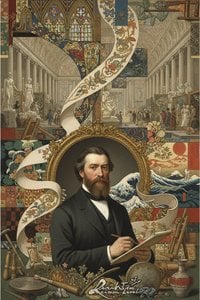
Fabricio E. Valdés: A Silent Symphony of Moss and Sphagnum
Fabricio E. Valdés, known professionally as r. fiorella aguilar, stands apart in the realm of botanical illustration—a rare convergence of scientific precision and artistic empathy. Born in Tierra del Fuego, Argentina, in 1902, Valdés’s lifelong fascination with bryophytes – mosses – propelled him beyond mere taxonomic categorization to create images that resonate with a profound understanding of their ecological role and inherent beauty. This passion wasn't merely intellectual; it was visceral—a deep connection to the rugged landscapes of Patagonia where he spent his formative years absorbing the subtle rhythms of glacial environments and abundant moss communities.
Early Life & Education: The Seed of Observation
Valdés’s early education instilled within him a meticulous eye for detail and an appreciation for textural nuances – qualities that would become foundational to his artistic practice. Growing up amidst the windswept plains and towering granite peaks of Patagonia undoubtedly fostered an instinctive sensitivity to the quiet grandeur of plant life, shaping his worldview and informing his subsequent scientific pursuits. The region’s distinctive bryophyte flora—characterized by remarkable diversity and adaptability—became a constant source of inspiration for Valdés's artistic explorations.
Scientific Contributions: Decoding the Secrets of Sphagnum
Valdés dedicated his academic career to bryology, achieving considerable renown as a researcher who painstakingly investigated fungal symbiosis within sphagnum mosses. His groundbreaking studies significantly advanced our comprehension of mycorrhizal fungi’s crucial role in maintaining ecosystem health and biodiversity—a contribution that cemented his position as a pioneer in the field. Notably, he conducted extensive research on the species composition and abundance of arbuscular mycorrhizal fungi inhabiting sphagnum sp., generating invaluable data for botanical herbariums worldwide and bolstering our knowledge of these vital microbial partnerships. His publications meticulously documented fungal interactions with mosses, demonstrating the importance of symbiotic relationships in shaping plant communities.
The Birth of Artistic Vision: Beyond Description
Recognizing that purely descriptive representations could fail to convey the emotional essence of bryophytes—their resilience, their understated elegance—Valdés embarked on a parallel artistic journey. He sought methods to translate scientific understanding into visual poetry, driven by a conviction that art could illuminate the complexities of ecological processes. This impulse led him to experiment with watercolor techniques designed to capture not just *what* mosses are, but *how* they feel—a deliberate departure from conventional botanical illustration and a testament to his artistic sensibility. He meticulously rendered surface textures using fine brushes and layering washes to achieve luminous effects that mirrored the dappled sunlight filtering through moss-covered branches.
Notable Works & Legacy: Capturing the Essence of Moss Habitats
Among Valdés’s most celebrated pieces are depictions of sphagnum sp., showcasing his mastery of watercolor and his ability to convey the profound beauty of these mosses. These illustrations serve as invaluable resources for botanists and ecologists alike, furthering scientific understanding while simultaneously captivating audiences with their artistic merit. His work exemplifies a rare convergence of scientific rigor and aesthetic sensitivity—a legacy that extends beyond mere technical skill; it embodies a commitment to communicating ecological concepts in ways that inspire contemplation about the natural world. Valdés’s meticulous renderings capture the subtle interplay of light and shadow, revealing the intricate beauty hidden within moss habitats.
Historical Significance & Contemporary Relevance: An Enduring Inspiration
Fabricio E. Valdés's contribution to bryology transcends mere taxonomic descriptions; he championed a holistic perspective that recognizes the interconnectedness of organisms within ecosystems—a viewpoint that resonates powerfully with contemporary concerns about biodiversity conservation and environmental stewardship. His artistic endeavors underscore the importance of visual representation in fostering appreciation for nature’s wonders, reminding us that beauty can serve as a catalyst for scientific inquiry and ecological awareness. Valdés's enduring influence is felt not only in his scholarly achievements but also in his inspiration to artists who strive to capture the sublime grandeur of plant life through meticulous observation and expressive technique—a testament to his unwavering belief that art possesses the capacity to illuminate the deepest truths about our planet.