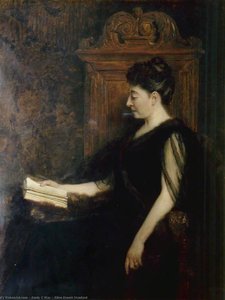
L'Âme de la Côte Ouest : La Vie et la Vision d'Emily Carr
Emily Carr (1871–1945) s'impose comme une figure singulière de l'histoire de l'art canadien, une pionnière ayant fusionné les principes stylistiques du postimpressionnisme avec une sensibilité inégalée pour les paysages de la Colombie-Britannique et la profonde spiritualité des Premières Nations. Née à Victoria, au Canada, son voyage artistique a débuté au cœur d'un milieu intellectuel en pleine effervescence — fille de Michael Eugene Ossebelle (souvent cité sous le nom de Richard Carr) et de Theresa Osmette. Son éducation lui a apporté des influences formatrices qui allaient imprégner l'ensemble de son œuvre. Ayant grandi dans un paysage qui était à la fois une colonie britannique et la terre ancestrale de la nation Songhees, Carr s'est épanouie au carrefour des cultures, une perspective qui allait plus tard définir sa voix artistique unique.
La jeunesse de Carr fut marquée par d'importants voyages, favorisant son exposition aux mouvements artistiques européens tels que ceux de Cézanne et Gauguin. Ces rencontres furent cruciales dans le façonnement de son style distinctif, allumant en elle un désir ardent de capturer l'essence des lieux — plus précisément la beauté sauvage de la Colombie-Britannique — avec une honnêteté sans compromis. Rejetant les conventions académiques, elle a prôné une approche audacieuse caractérisée par des coups de pinceau en empâtement épais et des palettes de couleurs vibrantes. Ses toiles pulsaient de vie, transmettant non seulement des représentations visuelles, mais des sensations palpables de vent, de pluie et de lumière solaire filtrant à travers les anciennes forêts de cèdres. Son travail présentait souvent des couleurs inattendues, des tourbillons de peinture et des textures vibratoires incluant des contours flous et de légères géométries, créant une expérience sensorielle presque magique.
Un Dialogue avec la Tradition et la Terre
Sa percée artistique survint au début des années 1900, lorsque Carr commença à documenter les mâts totémiques érigés par les communautés des Premières Nations le long de la côte de la Colombie-Britannique. Contrairement à de nombreux artistes de son époque qui abordaient les sujets autochtones avec un détachement ethnographique, Carr engagea un véritable dialogue avec les Aînés, s'immergeant dans leurs traditions orales et approfondissant sa compréhension de leur cosmologie. Cette connexion profonde aboutit à des œuvres séminales cherchant à capturer le poids spirituel de ces structures monumentales. Sa fascination pour les villages autochtones et l'art monumental de la côte lui permit de jeter un pont entre le monde naturel et l'héritage humain.
Au fil de sa carrière, l'œuvre de Carr évolua des représentations plus traditionnelles vers une abstraction moderniste. Elle devint une figure de proue du modernisme canadien, se tenant sur un pied d'égalité avec le légendaire Groupe des Sept. Bien qu'elle fût souvent inspirée par les forêts luxuriantes et verdoyantes du Nord-Ouest Pacifique, son utilisation de la lumière et son coup de pinceau expressif repoussèrent les limites de ce que la peinture de paysage pouvait accomplir au Canada. Sa capacité à traduire l'atmosphère lourde et humide de la côte ouest en peinture fit d'elle la chroniqueuse d'une époque en mutation rapide, capturant la majesté des forêts primaires avant qu'elles ne soient irrévocablement altérées par l'industrialisation.
Héritage Littéraire et Iconographie Nationale
Au-delà de la toile, Carr était une écrivaine vive et une maîtresse de la prose, une artiste multi-talentueuse dont les contributions littéraires furent aussi significatives que ses œuvres visuelles. Elle fut louée pour sa « franchise totale » et sa « prose puissante », des qualités qui lui permirent de documenter la vie de son environnement avec une profonde intimité. Son premier livre, Klee Wyck (1941), remporta le prix littéraire du Gouverneur général dans la catégorie non-fiction, témoignant de sa capacité à tisser le récit et l'observation en une tapisserie fascinante de l'expérience humaine et naturelle. Ce livre demeure très prisé aujourd'hui, servant de fenêtre vitale sur le paysage culturel du début du XXe siècle.
Aujourd'hui, Emily Carr est vénérée comme un trésor national canadien et une icône des arts. Sa signification historique réside non seulement dans sa maîtrise technique, mais aussi dans son rôle de trait d'union entre les cultures et les époques. Elle demeure l'une des premières artistes d'importance nationale à émerger de la côte ouest, laissant derrière elle un héritage qui continue d'inspirer l'émerveillement. L'œuvre de sa vie témoigne du pouvoir de l'observation, de l'importance de l'empathie culturelle et de la beauté éternelle de la nature sauvage canadienne.