L'Âme du Paysage Argentin : La Vie et l'Héritage de Domingo Casimiro
Domingo Casimiro (1882–1969) demeure une figure profonde de la tapisserie de l'histoire de l'art argentin, un artiste dont le pinceau possédait la capacité unique de traduire la majesté vaste et silencieuse de sa patrie en expériences visuelles intimes. Né dans la région chargée d'histoire de Santiago del Estero, la jeunesse de Casimiro fut imprégnée des textures et de la lumière du paysage argentin, un fondement qui lui permettrait plus tard de capturer l'essence même de l'esprit de la nation. Son voyage vers la maîtrise commença à l'Académie Nationale des Beaux-Arts de Buenos Aires, une institution où il s'immergea dans les disciplines rigoureuses de l'anatomie et de la perspective. Cette formation formelle lui fournit l'échafaudage technique nécessaire pour atteindre un réalisme époustouflant, pourtant, c'est sa capacité à infuser cette précision d'une profondeur émotionnelle qui le distingua véritablement de ses contemporains. À mesure que son style mûrissait, Casimiente commença à tisser ensemble les courants stylistiques provenant d'Europe — spécifiquement les sensibilités lumineuses de l'impressionnisme et la puissance expressive structurée du postimpressionnisme — pour créer un langage qui semblait distinctement sud-américain. Il ne se contentait pas de reproduire des paysages ; il cherchait à évoquer une atmosphère. Sa palette penchait souvent vers des tons terreux et feutrés, créant un sentiment de beauté sereine et de grandeur discrète. Entre ses mains, les vastes plaines et les régions montagneuses accidentées de l'Argentine se transformaient en méditations poétiques sur la lumière et l'ombre. Il existe un calme palpable dans son œuvre, une quiétude qui invite le spectateur à s'attarder au sein du paysage et à ressentir le poids de l'histoire et de la nature entrelacées.Maîtrise de la Forme et Résonance Historique
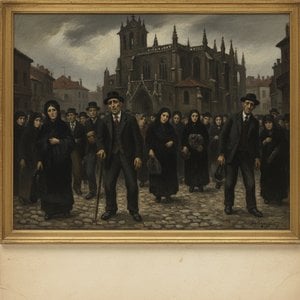
Le brio technique de l'œuvre de Casimiro est peut-être plus évident dans sa capacité à naviguer entre le monumental et le minuscule. Bien qu'il fût un maître du paysage expansif, son dévouement à l'exactitude anatomique lui permettait d'exécuter des portraits et des études architecturales avec une précision remarquable. Cette dualité est magnifiquement capturée dans des œuvres telles que « Church of Santo Domingo el Antiguo », où il rend hommage à l'héritage durable de l'architecture religieuse, faisant subtilement écho à l'influence d'El Greco par son traitement de la lumière et de la forme. De même, sa représentation de "Saõ Domingo", illustrant le Museo Santo Domingo du Pérou, démontre sa capacité à traiter les monuments historiques avec une révérence qui transcende la simple documentation, transformant la pierre et le mortier en réceptacles de la mémoire culturelle. Au-delà de la toile, Casimiro fut un participant vital de la scène artistique argentine en plein essor. En tant que membre respecté de la Société Argentine des Arts Plastiques, il contribua à l'identité collective d'une nation cherchant à définir sa propre voix esthétique au milieu des mutations mondiales. Son influence et sa reconnaissance s'étendirent bien au-delà des frontières de l'Amérique du Sud, ses œuvres trouvant leur place dans de prestigieuses collections internationales, notamment la Syracuse University Art Collection et le Butler Institute of American Art. Par son observation méticuleuse et sa touche expressive, Domingo Casimiro a accompli quelque chose de rare : il a capturé un sentiment de permanence dans une ère de changements rapides. Son héritage ne se trouve pas seulement dans les musées qui abritent ses peintures, mais dans la manière dont il a appris aux générations futures à regarder le paysage argentin — non pas seulement comme de la terre et du ciel, mais comme une âme vivante et vibrante, capable d'une expression profonde.- Jeunesse : Né à Santiago del Estero, Argentine (1882).
- Éducation : Formation formelle à l'Académie Nationale des Beaux-Arts, Buenos Aires.
- Mouvements Artistiques : Influencé par l'impressionnisme et le postimpressionnisme.
- Thèmes Clés : Paysages argentins, architecture religieuse et portrait atmosphérique.
- Collections Notables : Syracuse University Art Collection, Butler Institute of American Art.
Questions et réponses
Existe-t-il une chronologie des œuvres de Domingo Casimiro ?
La page Chronologie des œuvres de l'artiste présente les œuvres de Domingo Casimiro classées par date, année par année.
Quel est le degré de popularité des œuvres de Domingo Casimiro ?
La page Statistiques de Domingo Casimiro présente des statistiques calculées à partir des œuvres de l'artiste répertoriées sur ce site web.
Dans quels mouvements Domingo Casimiro a-t-il travaillé ?
Les mouvements dans lesquels Domingo Casimiro a travaillé sont consultables sur la page Tous les mouvements de l'artiste, qui regroupe les œuvres par mouvement.