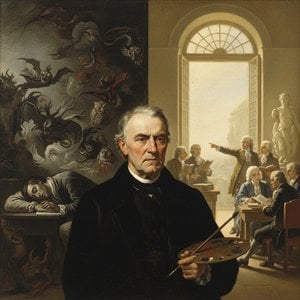
Curtis A. McDowell : Les Échos Surréalistes du Cinéma de San Francisco
Curtis A. McDowell (9 janvier 1945 – 3 juin 1987) demeure une figure singulière du cinéma underground américain — un témoignage de passion artistique et d'une créativiment tragiquement interrompue par l'ère de la crise du SIDA. Né à Lafayette, dans l'Indiana, l'installation de McDowell à San Francisco à la fin des années 1960 a marqué la genèse de ses explorations cinématographiques, nourries par une rencontre décisive avec George Kuchar au San Francisco Art Institute (sfaï). Cette relation formatrice s'est épanouie en un partenariat collaboratif caractérisé à la fois par une ferveur artistique et une dévotion romantique, façonnant ainsi toute la trajectoire de l'œuvre de McDowell.- Influences précoces et formation artistique : La première incursion de McDowell dans la peinture lui a inculqué un sens aigu de l'observation méticuleuse et de la composition formelle — des compétences qui allaient par la suite se traduire sans transition dans ses entreprises cinématographiques. Ses études sous la direction de Kuchar ont affiné sa compréhension des techniques expérimentales, mettant l'accent sur l'importance de repousser les limites et de défier les structures narratives conventionnelles.
- Thundercrack! : Le premier long-métrage de McDowell, Thundercrack! (1975), s'impose comme la pierre angulaire de son héritage cinématographique. Tourné en noir et blanc, ce projet ambitieux — décrit par Kuchar comme « les régurgitations prolifiques d'un "enfant terrible" » — a capturé l'esprit du mouvement contre-culturel de San Francisco à travers des visuels troublants et une narration fragmentée. Il a scellé la réputation de McDowell en tant que provocateur n'ayant pas peur de confronter les angoisses sociétales.
Style Cinématographique et Thèmes Récurrents
Le style cinématographique de McDowell se définissait par un mépris délibéré des conventions cinématographiques classiques. Il privilégiait la caméra à l'épaule, le montage improvisé et une conception sonore non conventionnelle — des méthodes qui donnaient la priorité à l'expérience viscérale plutôt qu'à une esthétique polie. Les thèmes récurrents explorés dans ses films incluaient l'aliénation, l'instabilité psychologique et les angoisses liées à l'identité — des sujets souvent présentés avec une imagerie surréaliste et des juxtapositions déroutantes. Son travail interrogeait constamment les frontières entre réalité et illusion, reflétant l'atmosphère de paranoïa omniprésente durant l'épidémie du SIDA. Des films tels que Beaver Fever, Peed Into The Wind et Confessions illustrent parfaitement cette approche distinctive.Héritage et Préservation
Malgré sa mort prématurée du SIDA en 1987, les films de McDowell ont survécu grâce au dévouement de Robert Evans — qui a acquis la propriété de son œuvre après avoir lui-même contracté le VIH — et ont été par la suite confiés à des amis qui ont établi la Fondation Curtis McDowell. L'Academy Film Archive a méticuleusement préservé une collection significative des productions cinématographiques de McDowell, garantissant que sa vision expérimentale continue de résonner auprès des futures générations de cinéastes. Sa contribution au cinéma d'avant-garde demeure remarquable, représentant un chapitre important de l'histoire du film américain.Pour Aller Plus Loin
Vous souhaitez approfondir votre découverte de l'univers artistique de McDowell ? Visitez le Hampshire Cultural Trust pour découvrir des expositions présentant des artefacts romains et des trésors anglo-saxons — un rappel du paysage culturel plus large qui a influencé ses sensibilités créatives. Alternativement, vous pourriez lire « Shadow Catcher: Edward S. Curtis & The Ethnographic Portraiture Of A Vanishing West » pour mieux comprendre l'influence de la photographie documentaire sur l'expression artistique.Questions et réponses
Où peut-on trouver les œuvres de Curtis A. McDowell regroupées par palette ?
Retrouvez les œuvres de Curtis A. McDowell classées par palette de couleurs sur la page Par palette de couleurs de l'artiste.
Où puis-je voir les œuvres de Curtis A. McDowell classées par atmosphère ?
La L'espace des émotions de Curtis A. McDowell vous permet de découvrir les œuvres de l'artiste classées par ambiance.
Où peut-on trouver les œuvres de Curtis A. McDowell regroupées par mouvement artistique ?
Retrouvez les œuvres de Curtis A. McDowell classées par mouvement sur la page Tous les mouvements artistiques de l'artiste.