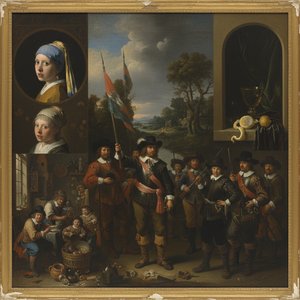
Cornelis Cels: A Flemish Portraitist Bridging Tradition and Observation
Cornelis Cels (1778 – 1859), born in Liers, Belgium, stands as a significant figure within the Belgian Romantic landscape of art. Primarily recognized for his meticulous portraiture—particularly commissioned by prominent patrons like the Hague Court—Cels’ artistic legacy extends beyond mere likeness; he embodies a nuanced synthesis of Mannerist elegance and burgeoning Impressionistic sensitivity. His career unfolded against the backdrop of evolving artistic tastes, marking him as a pivotal conduit between established stylistic conventions and emerging visual experimentation.- Early Life & Education: Cels received his formative artistic training at the Académie Royale des Beaux-Arts de Bruxelles, where he honed his skills under the tutelage of Jean-Baptiste Oudry, a celebrated Flemish landscape painter who championed naturalistic observation. This influence profoundly shaped Cels’ approach to artmaking, prioritizing accurate depiction and subtle tonal gradations—characteristics that would define his distinctive style. Oudry's insistence on capturing the subtleties of light and color instilled in Cels a fundamental understanding of how to convey atmosphere and emotion through visual mediums.
- Portraiture & Patronage: Cels swiftly established himself as a sought-after portrait artist, securing commissions from aristocratic families and dignitaries across Europe. His portraits are characterized by their dignified composure, refined drapery folds, and masterful use of chiaroscuro—the dramatic interplay of light and shadow—techniques borrowed directly from Mannerist painters like Peter Paul Rubens. These compositions hark back to the grandeur and theatricality of Renaissance art while simultaneously incorporating a newfound sensitivity to psychological nuance. He skillfully rendered figures with an unwavering attention to detail, capturing not only their physical appearance but also their inner character.
- Notable Works: Among Cels’ most celebrated paintings are “Swiss Peasant Woman” (1820-1821) and “Aryna van der Pot (1786-1850). Wife of N. J. A. C. Hoffmann,” both executed in oil on canvas. “Swiss Peasant Woman” exemplifies Cels’ commitment to realism, presenting a meticulously rendered depiction of rural Swiss life with muted colors and textured surfaces—a deliberate departure from idealized representations prevalent during the Romantic era. The artist skillfully utilized tonal gradations to evoke the feeling of twilight, capturing the quiet dignity of the subject against a backdrop of hazy mountains. “Aryna van der Pot” showcases Cels' ability to convey psychological depth through subtle facial expressions and nuanced poses, reflecting his profound understanding of human emotion.
- Influence & Legacy: Although Cels’ artistic output remained relatively modest compared to some of his contemporaries, he nonetheless exerted considerable influence on subsequent generations of Belgian painters. His meticulous attention to detail and masterful handling of tonal color anticipated the Impressionist movement's emphasis on capturing fleeting moments of perception—a testament to his pioneering spirit and enduring contribution to art history. Cels’ work at Académie des Beaux-Arts de Tournai fostered a tradition of artistic excellence, shaping the sensibilities of aspiring artists who would carry forward his legacy into the 20th century.
Questions et réponses
Puis-je parcourir les œuvres de Cornelis Cels par technique ?
Les œuvres de Cornelis Cels peuvent être consultées par technique sur la page Par technique de l'artiste.
Combien d'œuvres de Cornelis Cels sont disponibles à la consultation ?
Vous pouvez parcourir 25 œuvres œuvres de Cornelis Cels sur la page Toutes les œuvres d'art.
Puis-je explorer les œuvres de Cornelis Cels par sujet ?
Retrouvez les œuvres de Cornelis Cels classées par sujet sur la page Index thématique de l'artiste.