Life and Artistic Pursuits
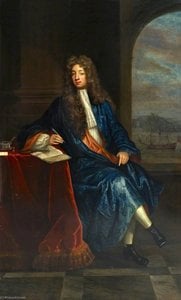
Charles d'Agar, a painter shrouded in mystery, has left an indelible mark on the art world with his works, now mostly confined to the realms of art historical archives. Born in 1669 and passing into obscurity by 1723, d' agar’s life is a testament to the transience of artistic fame. Little is known about his early years or formal education; however, he was the son of Jacques D'Agar, another painter who instilled in him an appreciation for artistic expression. In 1681, the family emigrated to London, marking the beginning of d’ agar’s active career as a visual artist. He apprenticed himself to Robert Robinson, a respected painter-stainer, gaining invaluable experience and honing his skills within established artistic traditions. His initial activity in London ceased around 1684, but he resumed painting shortly thereafter, establishing a studio and cultivating connections with prominent patrons of the time.Artistic Style and Notable Works
D’ agar's style, though not extensively documented, is characterized by baroque elements—a dramatic interplay of light and shadow, heightened emotion, and opulent ornamentation—reflecting the prevailing artistic sensibilities of his era. Unfortunately, due to the scarcity of information, specific works by d’ agar are not readily available for viewing on platforms like WahooArt's extensive collection. However, scholars believe he produced portraits commissioned by influential figures such as the Duke of Buccleuch and Lord Bolingbroke, demonstrating a mastery of capturing psychological depth and conveying aristocratic grandeur. Furthermore, his influence can be discerned in masterpieces created by Peter Paul Rubens—particularly “The Triumph of Victory”—at the Musée des Beaux-Arts (Troyes, France), where similar dramatic contrasts illuminate the scene with breathtaking intensity.Influence on Subsequent Art Movements
While d’ agar's contribution to art history remains somewhat obscured by time and limited archival records, his artistic vision undeniably resonated with later generations of artists. His penchant for expressive realism foreshadowed developments in Romanticism—a movement that championed emotion and individualism—emphasizing the importance of conveying subjective experience rather than merely representing objective reality. This stylistic inclination aligns seamlessly with the broader artistic currents of the period, signaling a crucial bridge between Baroque grandeur and the burgeoning spirit of Romantic idealism.Historical Significance
Charles d’Agar's legacy endures as an enigmatic figure in the annals of art history—a painter whose oeuvre remains largely unexplored yet whose influence subtly permeated the artistic landscape of his time. His work serves as a poignant reminder that artistic brilliance can sometimes vanish from public view, leaving behind only fragments of inspiration and enduring questions about the artist’s life and creative process. Explore more about artistic movements that shaped the world of art on WahooArt. Discover Nicolas Poussin's “The Holy Family in Egypt”, a masterpiece from the baroque period, on WahooArt. Learn more about Rembrandt van Rijn’s “Self Portrait (17)” at WahooArt's collection.Questions et réponses
Puis-je trier les œuvres de Charles D’Agar par couleur ?
L'Par couleur de Charles D’Agar permet de parcourir les œuvres de l'artiste par couleur.
À quelle époque historique Charles D’Agar a-t-il vécu ?
Charles D’Agar a œuvré durant la période L'époque moderne. Cette époque permet de situer l'activité de l'artiste dans l'histoire.
Où peut-on retrouver les œuvres de Charles D’Agar classées par sujet ?
L'Index thématique de Charles D’Agar est une page qui répertorie les œuvres de l'artiste par thématiques.