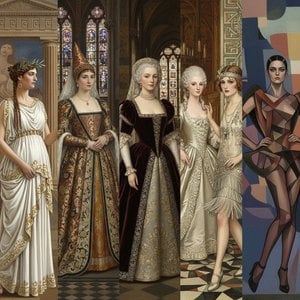
Une visionnaire façonnant la mode polonaise face aux contraintes idéologiques
Barbara Hoff, née en 1932 au cœur industriel de Katowice, en Pologne, s'impose comme une figure singulière dans les annales du design du XXe siècle. Sa vie et son œuvre représentent bien plus que de simples choix esthétiques ; elles incarnent l'esprit de créativité et de résilience nécessaire pour s'épanouir durant l'ère restrictive de la Pologne communiste. En ancrant ses sensibilités artistiques dans une compréhension profonde de la culture visuelle grâce à ses études à l'Université Jagellon, Hoff a développé une perspective transcendant les frontières de la mode traditionnelle. Elle ne se contentait pas de concevoir des vêtements ; elle a élaboré un moyen pour les individus de se réapproprier leur identité au sein d'un paysage marqué par l'uniformité idéologique.
Son entrée dans la conscience collective ne s'est pas faite sur un podium, mais par la plume. En tant que journaliste pour Przekrój, un hebdomadaire réputé pour sa position progressiste et socialement engagée, Hoff a affiné une capacité d'observation lui permettant de saisir le pouls d'une société en mutation. Ses écrits sont devenus un vecteur essentiel pour explorer l'univers bourgeonnant de la mode, où elle analysait les tendances émergentes et prônait une approche plus expérimentale du style personnel. À travers ses chroniques, elle a défendu l'idée que la mode pouvait être un outil d'expression de soi, même lorsque les ressources étaient rares, comblant ainsi le fossé entre le grand art et la vie quotidienne.
Le phénomène Hoffland et la défiance culturelle
Le chapitre peut-être le plus profond de sa carrière fut la création de Hoffland. Reconnaissant l'immense potentiel de la créativité "Do It Yourself" face aux limites de la production contrôlée par l'État, Hoff a fondé cette initiative vestimentaire pour privilégier des modèles accessibles et des collections produisant en série. Cette entreprise était un acte délibéré de défiance culturelle. À une époque où les biens de consommation étaient souvent monotones et difficiles à obtenir, Hoffland apportait une sensation de vitalité et d'individualité. Elle a transformé la nécessité de l'improvisation en une forme d'art célébrée, encourageant son public à métamorphoser des tissus simples en déclarations de style sophistiquées.
L'impact de son travail s'est profondément étendu au tissu visuel de la culture polonaise. Son influence ne se limitait pas à la page imprimée ou aux boutiques ; elle irriguait également les arts cinématographiques. En tant que costumière pour des films notables, elle a utilisé son attention méticuleuse aux détails et sa capacité à transmettre des émotions complexes par le récit visuel pour façonner des personnages mémorables. Ses créations ne visaient jamais seulement à couvrir le corps ; elles consistaient à narrer une histoire, reflétant les luttes internes et les triomphes de l'époque.
Héritage d'innovation et exploration artistique
Au-delà des vêtements tangibles et des costumes de cinéma, les contributions intellectuelles de Hoff demeurent une pierre angulaire de son héritage. Elle possédait une capacité rare à tisser des liens entre des mondes disparates, publiant des ouvrages éclairants qui plongeaient dans l'histoire de l'art et exploraient les connexions complexes entre mouvements artistiques et transformations sociétales. Cette profondeur érudite lui a permis de percevoir la mode comme faisant partie d'un continuum historique bien plus vaste, où chaque point et chaque silhouette reflétaient les marées changeantes de la politique et de la culture.
Aujourd'hui, l'œuvre de Barbara Hoff est reconnue pour son usage audacieux de la couleur et son esprit d'innovation durable. Ses accomplissements peuvent être résumés à travers plusieurs piliers clés de sa carrière :
- Démocratisation du style : Rendre la mode accessible aux masses grâce à l'utilisation ingénieuse de collections produites en série et de techniques DIY.
- Influence journalistique : Utiliser Przekrój comme plateforme pour remettre en question l'esthétique établie et promouvoir des valeurs sociales progressistes.
- Art cinématographique : Enrichir la puissance narrative du film par une conception de costumes évocatrice et historiquement résonnante.
- Résilience culturelle : Créer un sentiment d'agence individuelle et de liberté esthétique au sein des contraintes d'un régime communiste.
Barbara Hoff demeure une icône de la créativité polonaise, une designer qui a compris que le véritable style naît de la capacité à trouver la beauté et la distinction, même dans les circonstances les plus difficiles.
Questions et réponses
Puis-je étudier l'utilisation de la couleur par Barbara Hoff à travers l'ensemble de ses œuvres ?
Le profil chromatique des œuvres de Barbara Hoff est présenté sur la page Génome de la palette de l'artiste.
Où peut-on retrouver les œuvres de Barbara Hoff classées par sujet ?
L'Atlas thématique de Barbara Hoff est une page qui répertorie les œuvres de l'artiste par thématiques.
Puis-je trier les œuvres de Barbara Hoff par couleur ?
L'Index spectral de Barbara Hoff est une page qui organise les œuvres de l'artiste par couleur.