Antônio Francisco Soares : Un pionnier du carnaval brésilien
Jeunesse et origines
- Né : Rio de Janeiro, Brésil, en 1754.
- Peu de détails subsistent sur la jeunesse d'Antônio Francisco Soares ou sur sa formation artistique formelle. Il s'est imposé comme une figure marquante non par les cercles académiages établis, mais par ses contributions concrètes et pratiques aux célébrations publiques.
- Au-delà de son talent d'artiste, il occupait également les fonctions d'officier militaire, témoignant d'un éventail de compétences variées et d'une implication profonde dans les structures sociales du Brésil colonial.
Contributions artistiques et festivités de 1786
- Un rôle clé : Soares est principalement reconnu pour son rôle pivot dans l'organisation des festivités orchestrées par le vice-roi Luís de Vasconcelos e Sousa à Rio de Janeiro en 1786.
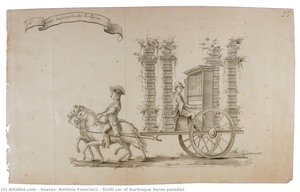
- Ses responsabilités englobaient la conception et la construction de carrosses élaborés, la scénographie et l'ensemble du spectacle visuel de ces événements. Loin d'être de simples éléments décoratifs, ses créations étaient essentielles à l'émergence d'une expérience publique vibrante.
- Ses desseins comprenaient des chars complexes, des représentations allégoriques et des performances théâtrales qui captivaient les foules.
Un précurseur du carnaval moderne
- Innovation : Soares est considéré comme un véritable précurseur des célébrations contemporaines du Carnaval au Brésil, ayant introduit des innovations dans plusieurs aspects des festivités de rue.
- Son œuvre a marqué des progrès notables en matière de scénographie, créant des environnements immersifs et visuellement époustouflants ; de conception théâtrale, en intégrant des performances dramatiques ; d'éléments architecturaux, par la construction de structures temporaires dédiées aux célébrations ; et de représentations symboliques, utilisant l'imagerie pour transmettre un sens profond et impliquer les participants.
- Son travail a transcendé le simple défilé pour établir les fondations des traditions carnavalesques complexes et multifacettes qui ont évolué au fil du temps.
Style artistique et œuvres notables
- Style : Le style artistique de Soares s'enracine dans la tradition baroque, caractérisée par des détails ornés, un sens du drame et une recherche de grandeur. Cette esthétique, prédominante au XVIIIe siècle, épousait parfaitement la nature somptueuse des célébrations qu'il concevait.
- Ses œuvres connues consistent principalement en des gravures illustrant les carrosses et les chars créés pour les festivités de 1786.
- Parmi ses œuvres notables, on trouve : le « Sixième char des parades équestres burlesques », le « Cinquième char du défilé équestre », le « Deuxième char et monture de Jupiter », le « Troisième char et monture de Bacchus », la « Première monture et le char du volcan », ainsi que le « Quatrième char des Maures ». Ces gravures offrent un aperçu précieux de sa vision créative.
Importance historique et héritage
- Un pionnier méconnu : Malgré l'importance de ses contributions, Antônio Francisco Soares est resté largement ignoré par l'histoire de l'art brésilien pendant de nombreuses années. Sa biographie est peu documentée et il était souvent absent des grands récits historiques.
- Cependant, les recherches récentes commencent à reconnaître son importance en tant que figure fondatrice du développement de l'identité culturelle brésilienne et des traditions du Carnaval.
- Son approche novatrice du spectacle public a jeté les bases de l'une des célébrations les plus emblématiques du Brésil, consolidant sa place de figure clé du patrimoine artistique et culturel de la nation.