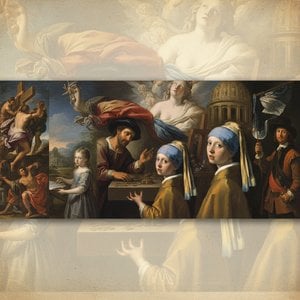
Antonio Carneo (1637–1692): Venetian Baroque Painter of Myth and Faith
Antonio Carneo, born in Concordia Sagittaria, Italy, in 1637, stands as a prominent figure within the Venetian Baroque artistic landscape. Though biographical details remain scarce—a testament to the challenges faced by documenting artists during his era—his prolific output speaks volumes about his talent and dedication to capturing both spiritual grandeur and human emotion. Trained initially by his father, he honed his skills under the tutelage of masters like Giovanni Giuseppe Cosattini in Udine, absorbing stylistic cues from Venetian luminaries such as Tintoretto and Paolo Veronese – artists whose dramatic chiaroscuro and theatrical compositions profoundly shaped Carneo’s artistic vision.
Early Life & Training
His formative years were marked by familial influence and a meticulous study of sixteenth-century Venetian art, establishing a foundation for his subsequent stylistic explorations. The encouragement of his father fostered an appreciation for artistic excellence from a young age, propelling him toward formal training under the guidance of esteemed Venetian painters—a crucial step in shaping his distinctive artistic sensibility. This immersion in Venetian artistic tradition instilled within him a deep understanding of compositional techniques and color palettes that would inform his entire oeuvre.
Active Career in Portogruaro & Cordovado
Carneo’s artistic activity centered primarily around Portogruaro and Cordovado between 1658 and 1667, where he undertook significant commissions—most notably the Charity of St Thomas of Villanova for Santa Lucia church—demonstrating his ability to convey religious fervor through monumental canvases. These ambitious projects demanded considerable skill and dedication, reflecting Carneo’s commitment to elevating artistic expression in service of faith and community. The grandeur of these paintings underscores his mastery of perspective and dramatic lighting – elements characteristic of Venetian Baroque art during this period.
Notable Commissions & Museums
His works graced numerous churches and castles across Friuli, including Cordovado’s castle chapel, showcasing a masterful blend of narrative storytelling and technical virtuosity. Today, his paintings reside in esteemed museums such as Castelvecchio Museum in Verona and the Staatsgalerie Stuttgart, offering enduring testament to his artistic legacy. The preservation of these artworks ensures that future generations can appreciate Carneo's contribution to Venetian art history—a lasting symbol of Baroque creativity and patronage.
Style & Influences
Carneo’s distinctive style was characterized by an unwavering commitment to color and pageantry—elements that distinguished him from many of his contemporaries. He embraced theatrical lighting and dynamic compositions, mirroring the dramatic aesthetic prevalent in Venetian painting during the period. Deeply influenced by Tintoretto and Veronese, he skillfully rendered human emotion through expressive facial expressions, embodying a humanist aesthetic that prioritized psychological depth. Like Caravaggio, he achieved remarkable realism by utilizing chiaroscuro—the interplay of light and shadow—to heighten emotional impact and create compelling visual narratives. His artistic vision was shaped by the legacy of Venetian masters who championed innovation and theatrical grandeur – influences that permeate his entire artistic output.
Major Achievements & Legacy
Among his most celebrated works are “La buona ventura” (The Temptation of Saint Anthony), depicting the saint’s struggle against temptation with meticulous detail and evocative color palettes; “L’Apparizione della Vergine ad un uomo malato,” portraying a poignant scene of compassion and divine intervention; “L’Apparizione della Vergine a un monaco dipingendo un’icona,” capturing the contemplative spirit of monastic devotion; “Miracolo della Vergine delle Nevi” commemorating the inauguration of Santa Maria Maggiore; and “Il Redentore con San Marco e donatori,” illustrating a grand narrative scene embodying faith, patronage, and artistic ambition. These canvases exemplify Carneo's ability to synthesize religious symbolism with masterful technique—a hallmark of Venetian Baroque art. His enduring influence continues to inspire artists today, securing his place as one of the most significant figures in Venetian Baroque painting history.