Le Peintre de l'Allégorie et de la Splendeur Impériale
Antoine François Callet, souvent connu simplement sous le nom d'Antoine Callet, demeure une figure lumineuse dans la grande tapisserie de l'art français de la fin du XVIIIe siècle. Sa vie et sa carrière se sont déployées sur fond de profondes transformations historiques, embrassant le crépuscule de l'Ancien Régime sous Louis XVI et l'aube de l'ère napoléonienne. Né à Paris en 1741, Callet s'est imposé comme un maître tant du portrait intime que de l'allégorie monumentale, un peintre capable de capturer les délicates nuances psychologiques d'un monarque tout en orchestrant simultanément de vastes récits célestes sur les plafonds des palais les plus prestigieux de France.
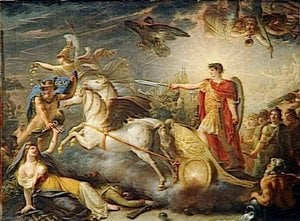
Le parcours de Callet vers la maîtrise artistique fut jalonné de distinctions prestigieuses au sein du système académique français. Son talent fut officiellement reconnu lorsqu'il remporta le grand prix de Rome en 1764 avec son œuvre évocatrice, Cléobis et Biton conduisent le char de leur mère au temple de Junon. Ce triomphe lui offrit l'opportunité inestimable d'étudier en Italie, où les ombres de maîtres tels que Caravage et l'énergie architecturale dramatique du Bernin laissèrent une marque indélébile sur sa technique. C'est durant ces années formatrices à Rome que Callet affina son usage du clair-obscur et apprit à infuser les thèmes classiques d'un sens du mouvement théâtral, une compétence qui allait plus tard définir ses compositions les plus célèbres.
Un Maître du Portrait Royal et de la Grandeur
À son retour en France, Callet accéda aux plus hauts échelons du monde de l'art, obtenant une place au sein de l'Académie Royale de peinture et de sculpture. Sa capacité à mêler l'élégance du style rococo à la discipline émergente du néoclassicisme fit de lui le choix privilégié de la noblesse et de la royauté françaises. Son héritage le plus durable réside peut-être dans son rôle de portraitiste officiel de Louis XVI. Dans des œuvres telles que son portrait du Roi en 1779, Callet ne se contenta pas de retranscrire une ressemblance ; il construisit une icône de la souveraineté. À travers le rendu méticuleux des robes bordées d'hermine et le placement stratégique de la fleur de lys, il utilisa le langage du symbolisme pour projeter la stabilité et le droit divin durant une période de tensions politiques croissantes.
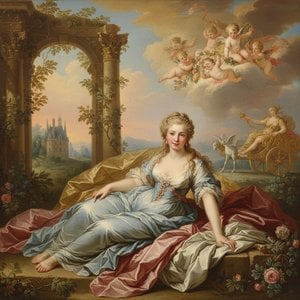
Au-delà du portrait individuel, le génie de Callet s'épanouit dans le domaine de la peinture décorative à grande échelle. Il possédait une capacité rare à transformer les espaces architecturaux en royaumes mythologiques immersifs. Ses contributions à la Galerie d'Apollon du Louvre, et plus particulièrement sa fresque de plafond époustouflante, Le Printemps ou Zéphire et Flore couronnant de fleurs Cybèle, démontrent sa maîtrise de la couleur et de la perspective illusionniste. Dans ces œuvres, les frontières entre la pièce physique et les cieux peints se dissolvent, invitant le spectateur dans une symphonie d'or, d'azur et de printemps éternel.
L'Héritage d'une Époque en Transition
La signification de l'œuvre de Callet s'étend bien au-delà de la simple décoration ; son travail sert de chronique visuelle d'un monde en mutation. Alors que la France passait de la splendeur décadente de la monarchie aux bouleversements de la Révolution, puis aux ambitions impériales de Napoléon, le pinceau de Callet a capturé l'évolution des valeurs esthétiques de l'époque. Sa capacité à naviguer entre la grâce ornementale du Rococo et la noblesse structurée du Néoclassicisme lui permit de rester pertinent à travers des décennies de changements sociaux intenses.
Étudier les œuvres d'Antoine François Callet, c'est être témoin des battements de cœur de l'histoire de France à travers la peinture et le pigment. Ses accomplissements incluent :
- L'Excellence Académique : L'obtention du prestigieux Prix de Rome, qui a établi ses fondations dans l'antiquité classique.
- Le Mécénat Royal : Son rôle d'architecte visuel principal pour l'identité de Louis XVI.
- La Transformation Architecturale : La création de peintures de plafond monumentales qui ont redéfini la grandeur intérieure des palais français, tels que le Palais du Luxembourg.
- La Synthèse Stylistique : Sa réussite à combler le fossé entre les lignes fluides et émotives du Rococo et les thèmes héroïques et disciplinés du Néoclassicisme.
Aujourd'hui, les peintures de Callet se dressent comme des fenêtres sur une époque perdue d'élégance, nous rappelant un temps où l'art était utilisé pour tisser ensemble les fils du mythe, du pouvoir et de l'émotion humaine en une seule et magnifique tapisserie.
Questions et réponses
Dans quels mouvements Antoine Callet a-t-il travaillé ?
Retrouvez les œuvres de Antoine Callet classées par mouvement sur la page Tous les mouvements artistiques de l'artiste.
Dans quelle ville et quel pays Antoine Callet est-il/elle né(e) ?
Antoine Callet est né à Paris, en France.
Dans quel pays Antoine Callet est-il né ?
Antoine Callet est né(e) en France.