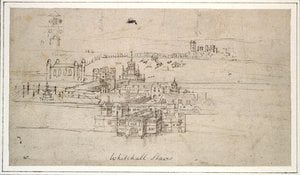
Le Cartographe de l'Âme de la Renaissance
Anthonis van den Wyngaerde s'impose comme une figure singulière de l'histoire de l'art flamand — un maître du dessin topographique qui captura la grandeur et la complexité des cités européennes durant la Haute Renaissance avec une précision et une vision artistique inégalées. Né à Anvers vers 1525, ses années de formation coïncidèrent avec une ère d'immense épanouissement artistique, nourrie par le mécénat de riches marchands et de familles nobles. Bien que les détails biographiques de sa jeunesse demeurent quelque peu voilés par le climat politique turbulent du XVIe siècle, les indices suggèrent qu'il a absorbé le style distinctif de maîtres tels que Pieter Bruegel l'Ancien, héritant d'un sens du réalisme terrestre et d'un regard aiguisé pour les détails complexes de l'existence humaine au sein du paysage.
Contrairement à nombre de ses contemporains qui cherchaient à capturer la beauté éthérée des récits mythologiques ou les traits idéalisés des portraits aristocratiques, Wyngaerde consacra sa vie à documenter les réalités physiques du monde urbain. Il fut le chroniqueur du tangible, produisant des panoramas qui servent de fenêtres inestimables sur la vie sociale, politique et culturelle de l'Espagne, de l'Angleterre et de l'Italie. Son œuvre transcende la simple cartographie ; elle est une exploration évocatrice de la manière dont l'architecture et la géographie façonnent l'expérience humaine.
Un Visionnaire de la Forme Panoramique
Le véritable génie de Wyngaend réside dans ses ambitieux croquis panoramiques, qui représentent une rupture radicale avec les conventions artistiques traditionnelles de l'époque. Ses accomplissements les plus célèbres incluent des œuvres monumentales telles que « La Tour », dépeignant le London Bridge, ainsi que ses vues imprenables sur les cités espagnoles. Ces toiles, dont certaines mesurent une dimension stupéfiante de 3,8 par 7 mètres, n'étaient pas seulement destinées au plaisir esthétique, mais fonctionnaient comme des registres méticuleux du détail architectural, du tracé des rues et du pouls bourdonnant de l'activité humaine. Sa renommée fut considérablement renforcée par son passage au service de figures puissantes ; il est suggéré que nombre de ses dessins espagnols furent créés alors qu'il voyageait au sein du cortège de Philippe II, le roi d'Espagne.
Sa technique était rien de moins que révolutionnaire pour le XVIe siècle. Wyngaerde employait une approche sophistiquée et stratifiée, combinant avec maestria de délicats lavis à l'aquarelle et un travail de plume minutieux. Cette méthode lui permettait d'atteindre des gradations tonales et des effets de texture remarquables, conférant à ses paysages urbains un sentiment de profondeur et une atmosphère presque tridimensionnelle. Par ce mariage de précision et d'art, il parvenait à rendre la pierre érodée d'une cathédrale ou le reflet miroitant de l'eau dans un port avec une exactitude tout aussi époustouflante.
Héritage et Importance Historique
Bien que ses œuvres se soient dispersées dans diverses collections après sa mort en 1571, la valeur historique et artistique de l'œuvre de Wyngaerde a été redécouverte par les chercheurs modernes. Ses dessins, aujourd'hui conservés dans des institutions prestigieuses telles que le British Museum, le Victoria and Albert Museum et la National Gallery of Art, offrent un témoignage visuel sans pareil d'une Europe en pleine transition. Il a capturé les villes avant que les cicatrices de la guerre ou les transformations de l'industrialisation ne puissent altérer leur caractère fondamental.
L'importance de sa contribution à l'histoire de l'art peut se résumer à travers plusieurs piliers essentiels :
- Précision Topographique : Il a comblé le fossé entre la cartographie scientifique et les beaux-arts, fournissant un niveau de détail qui sert de source primaire pour les historiens.
- Documentation Culturelle : Ses panoramas offrent une fenêtre sur le tissu urbain des Pays-Bas méridionaux, du nord de la France, d'Angleterre, d'Italie et d'Espagne.
- Innovation Artistique : Son utilisation de l'échelle panoramique et des techniques mixtes a repoussé les limites de ce que l'art du paysage pouvait accomplir durant la Renaissance.
En fin de compte, Anthonis van den Wyngaerde était bien plus qu'un dessinateur ; il était un observateur du visage changeant du monde. Dans chaque trait de sa plume et chaque lavis de couleur, il a préservé la majesté éphémère de la cité de la Renaissance, s'assurant que les rues, les tours et les ports d'une époque révolue restent éternellement gravés dans la mémoire collective de l'humanité.