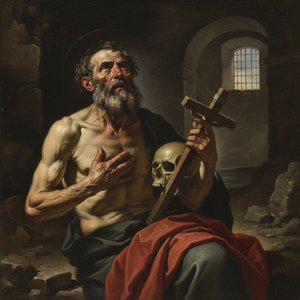
Andrés de Melgar: A Visionary of Grutesco
Andrés de Melgar (1501 – c. 1555) stands as a singular figure in Spanish Old Masters painting, primarily recognized for his pioneering exploration and masterful execution of grutescos—fantastical, grotesque imagery that captivated audiences during the Renaissance era. Born in Sahagún, León, Spain, Melgar’s artistic journey unfolded against the backdrop of transformative cultural shifts, leaving an indelible mark on Spanish art history and influencing subsequent generations of artists. His distinctive style cemented his place among the most celebrated painters of his time—a reputation built upon a singular vision that defied convention and embraced unsettling beauty.
Early Life and Artistic Training
Information about Melgar's formative years remains somewhat elusive, yet scholarly research suggests he honed his skills under the tutelage of prominent artists active in León during the early 16th century. The precise details of his training are debated amongst historians, but it’s widely accepted that he absorbed stylistic influences from both Italian Renaissance humanism and Iberian Gothic traditions—a confluence that would profoundly shape his artistic vision. This dual heritage instilled within him a sensitivity to both idealized beauty and unsettling psychological depth, characteristics that would become hallmarks of his oeuvre. He studied under masters who championed the grandeur of classical ideals alongside the expressive power of medieval symbolism – an uncommon pairing that foreshadowed Melgar’s own groundbreaking approach to artmaking.
The Style of Grutesco: An Imaginative Approach
Melgar’s artistic reputation rests almost entirely upon his unwavering commitment to grutescos—a technique characterized by exaggerated sculptural relief, often depicting monstrous or demonic figures intertwined with floral motifs and architectural elements. Unlike many of his contemporaries who adhered to more conventional representations, Melgar deliberately sought to unsettle viewers through unsettling imagery, mirroring the spirit of Andrea Mantegna’s work and reflecting a fascination with the sublime—the awe-inspiring grandeur that simultaneously inspires terror and wonder. This stylistic choice wasn't merely decorative; it served as a vehicle for conveying complex theological ideas about mortality and divine judgment – an ambitious undertaking for his time. He meticulously crafted these fantastical reliefs, imbuing them with symbolic resonance and challenging viewers to confront uncomfortable truths about human existence.
Notable Works and Collections
Among Melgar’s surviving paintings, “The Forge” stands out as an exemplary demonstration of his grutesco style. Executed with meticulous detail and imbued with symbolic resonance—the forge itself representing purification and transformation—it exemplifies the artist's ability to capture both visual splendor and profound spiritual contemplation. The painting depicts a dramatic scene featuring Saint Andrew and Saint Peter, rendered in vibrant colors against a backdrop of intricately carved grutescos that amplify the emotional impact of the narrative. His works are housed in prestigious institutions like Museo Nacional Centro de Arte Reina Sofía, where “Under the Awning at Zarauz Beach” showcases his talent for portraying serene landscapes infused with fantastical elements—a testament to his versatility and artistic ambition. These paintings continue to inspire admiration for their artistic innovation and enduring beauty.
Legacy and Historical Significance
Andrés de Melgar’s contribution to Spanish art history transcends mere stylistic experimentation; he championed a visual language that challenged prevailing aesthetic norms and engaged viewers on an emotional level. His pioneering use of grutescos established him as a pivotal figure in the dissemination of this distinctive artistic idiom, influencing subsequent artists who embraced similar imaginative approaches. Today, Melgar’s legacy persists through museum exhibitions and scholarly studies—affirming his enduring significance as one of Spain's most remarkable Old Masters and securing his place within the canon of European Renaissance art. He remains an artist whose unsettling beauty continues to provoke contemplation and inspire awe – a true visionary who reshaped the artistic landscape of his era.