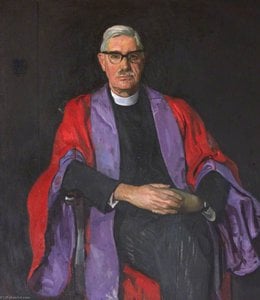
Alberto Morrocco: Bridging Impressionism and Scottish Landscape
Alberto Morrocco OBE FRSA FRSE RSW RP RGI LLD (1917 – 1998) stands as a pivotal figure in twentieth-century Scottish art, celebrated for his masterful depictions of Scotland’s dramatic landscapes alongside evocative explorations of Venetian interiors and still lifes. Born in Aberdeen to Italian immigrant parents—Domenic Antonio Marrocco and Celesta Crolla—Morrocco's artistic journey began at Gray’s School of Art under Robert Sivell, where he honed foundational skills before embarking on formative studies abroad in France, Italy, and Switzerland. These experiences profoundly shaped his aesthetic sensibilities, particularly the influence of avant-garde movements like Braque and Picasso, which instilled a lifelong commitment to experimentation and expressive brushwork. Early Influences: Morrocco’s artistic vision was undeniably rooted in the Impressionist tradition championed by Monet and Renoir. However, he swiftly embraced Cubism's geometric fragmentation and Picasso’s bold stylistic innovations, demonstrating an intellectual curiosity that propelled him beyond mere imitation. This dual inspiration—the luminous beauty of Impressionism combined with the analytical rigor of Cubism—became a defining characteristic of his oeuvre. He sought to capture not just what was seen but also how it felt – translating visual impressions into emotionally resonant compositions. Scottish Landscapes: Morrocco’s enduring legacy rests primarily on his breathtaking landscapes of Scotland—particularly the rugged coastline of Orkney and Sutherland. His canvases capture not just visual beauty but also a palpable sense of atmosphere, achieved through meticulous observation and masterful technique. Consider “John Henderson Seaforth Burleigh,” a portrait imbued with quiet dignity and rendered in subtle Impressionistic hues. Morrocco’s approach to landscape painting was characterized by an unwavering dedication to detail—capturing the textures of stone, heather, and sea spray with remarkable precision. Yet, he never sacrificed artistic expression for mere topographical accuracy; instead, he used his skill to convey the emotional power of place – the solitude, grandeur, and ever-changing moods of the Scottish Highlands. Venetian Visions: Morrocco’s fascination with Venice extended beyond mere scenic representation; he sought to convey the city's spirit—its grandeur, its melancholy, its shimmering light. Works like “Breakfast” exemplify this ambition, presenting a luminous interior bathed in diffused sunlight and populated by carefully positioned objects. He meticulously recreated the atmosphere of Venetian rooms – capturing the interplay of light and shadow, the reflections on polished surfaces, and the subtle nuances of color. Morrocco’s Venetian paintings are notable for their psychological depth—suggesting not just what was seen but also what was felt—the quiet contemplation, the understated elegance, and the pervasive sense of history that define Venice. Professional Life & Recognition: Morrocco established himself as Head of Painting at Duncan of Jordanstone College of Art in Dundee from 1950 until his retirement in 1983. During this time he championed a humanist approach to art education—emphasizing fundamental skills and fostering creativity alongside technical proficiency. He instilled in his students the importance of observation, experimentation, and personal expression – values that underpinned his own artistic practice. Morrocco’s influence extended beyond the classroom; he served as President of Dundee Art College from 1963 until 1983, shaping the college's identity and fostering its reputation for excellence. He was elected Fellow of the Royal Scottish Academy (RSA) in 1963 and Fellow of the Royal Photographic Society (RPS) in 1970 – honors recognizing his contribution to visual arts scholarship and practice. Furthermore, he received Honorary Degrees from Aberdeen University and Dundee University—affirming his commitment to intellectual pursuits and artistic legacy. He was awarded the Order of the British Empire (OBE) for services to art and education. Legacy & Artistic Output: Morrocco’s prolific output spanned over six decades, resulting in hundreds of paintings – a testament to his tireless pursuit of artistic excellence. His work encompassed landscapes, portraits, still lifes, and Venetian interiors—each infused with his distinctive stylistic vision. He produced monumental murals for St Columba's Church in Glenrothes and Liff Hospital, Dundee, demonstrating his commitment to public art and social responsibility. Morrocco’s paintings are held in numerous prestigious collections worldwide – including the Fleming Collection and The Scottish National Gallery of Modern Art—solidifying his place as one of Scotland’s most celebrated artists. His enduring influence can be seen in the work of subsequent generations of painters—who continue to draw inspiration from his masterful technique and expressive aesthetic. Alberto Morrocco died peacefully in Dundee in 1998, leaving behind a rich artistic heritage that continues to captivate audiences today.Questions et réponses
Comment trouver des œuvres de Alberto Morrocco sur un thème spécifique ?
Les œuvres de Alberto Morrocco peuvent être explorées par mot-clé sur la page Par mots-clés de l'artiste. Chaque mot-clé regroupe les œuvres associées.
Puis-je explorer les œuvres de Alberto Morrocco par spectre de couleurs ?
L'Index spectral de Alberto Morrocco est une page qui organise les œuvres de l'artiste par couleur.
Quelles œuvres de Alberto Morrocco sont les plus consultées ?
Une page Statistiques est disponible pour Alberto Morrocco, présentant des statistiques sur les œuvres de l'artiste sur ce site web.