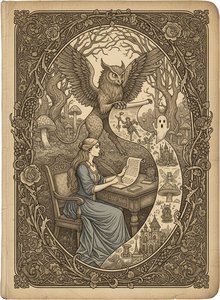
Le Prophète de l'Ère Électrique : Le Monde Visionnaire d'Albert Robida
Au crépuscule du XIXe siècle, alors que les rouages de la révolution industrielle commençaient à s'animer avec une intensité presque fiévreuse, un artiste leva les yeux au-delà de la suie et de la vapeur pour entrevoir un avenir chargé d'électricité et d'émerveillement. Albert Robida n'était pas seulement un illustrateur ou un romancier ; il était un voyageur temporel, un homme dont la plume traçait les contours d'un siècle encore à naître. Né dans la ville historique de Compiègne en 1848, Robida possédait une rare dualité intellectuelle, mêlant la précision méticuleuse d'un notaire formé à l'imagination satirique et sans limites d'un véritable conteur. Ses premières années, imprégnées de littérature classique et des beaux-arts, ont jeté les bases d'une carrière qui allait finalement jeter un pont entre le réalisme brut de son époque et les possibilités fantastiques de la science-fiction.
L'ascension de Robida au sein de la vibrante scène artistique parisienne fut nourrie par sa capacité remarquable à capturer le pouls des changements sociaux. Débutant son parcours professionnel en 1866 avec le Journal Amusant, il se distingua rapidement par un regard aiguisé et observateur pour la caricature. Il ne se contentait pas de dessiner les gens ; il dessinait l'esprit même d'une époque prise entre tradition et progrès. En tant que cofondateur et rédacteur du magazine satirique La Caricature, il utilisa ses illustrations à la fois comme un miroir et comme une arme, offrant un commentaire mordant sur les mutations politiques et les angoisses naissantes d'une société confrontée à des avancées technologiques rapides. Son travail durant cette période se caractérisait par un niveau de détail extraordinaire, utilisant des techniques de hachures complexes qui conféraient à ses compositions une qualité tactile, presque organique.
Une Trilogie de Demain : L'Architecture de l'Imaginaire
Si ses croquis satiriques lui valurent une célébrité contemporaine, c'est sa profonde trilogie littéraire et visuelle — comprenant des œuvres telles que Le Vingtième Siècle — qui assura sa place dans le panthéon des créateurs visionnaires. Dans ces œuvres, Robida dépassa largement les modèles de ses prédécesseurs comme Gustave Doré ou Honoré Daumier. Il construisit une « exposition pantomime » du futur, où l'air lui-même semblait vibrer du bourdonnement des nouvelles inventions. Ses illustrations pour ces récits n'étaient pas de simples accompagnements textuels, mais des composantes essentielles d'une mythologie plus large et cohérente. Il imagina un monde d'aérostats, de communications téléphoniques et de merveilles mécanisées, imprégnant souvent ces prodiges technologiques d'un sentiment de normalité quotidienne qui rendait ses prédictions d'une plausibilité troublante.
La maîtrise technique que Robida apportait à ses paysages spéculatifs était tout simplement extraordinaire. Son processus impliquait :
- Un dessin méticuleux : Un engagement envers l'exactitude anatomique et architecturale qui ancrait même ses inventions les plus absurdes dans une réalité reconnaissable.
- La méthode de la hachure : L'utilisation de lignes fines et rythmiques pour créer de la profondeur, de la texture et l'illusion d'une lumière filtrant à travers une atmosphère électrifiée.
- Une superposition narrative : Une capacité à intégrer des critiques sociales subtiles au sein de scènes fantastiques à grande échelle, faisant de chaque estampe une tapisserie dense de significations.
Héritage et Échos du Futur
À l'aube du XXe siècle, l'influence de Robida commença à se propager dans le genre naissant de la science-fiction. Sa capacité à mêler dystopie et satire lui permit d'explorer la face sombre du progrès — le potentiel de la guerre mécanisée et de la fragmentation sociale — sans jamais perdre le sens de l'émerveillement fantaisiste qui définissait son esthétique. Même lorsque sa célébrité grand public déclina après les dévastations de la Première Guerre mondiale, son impact resta gravé dans l'ADN de la narration visuelle. Il a ouvert la voie aux illustrateurs futurs qui chercheraient à visualiser l'impossible, servant de lien vital entre le passé romancé et le futur technologique.
Aujourd'hui, nous regardons Robida non seulement comme un chroniqueur de son temps, mais comme un architecte de notre imagination collective. Son œuvre demeure un témoignage de la puissance de l'art à transcender son époque, nous rappelant que la manière la plus profonde de comprendre notre présent est d'oser rêver de ce qui se trouve au-delà de l'horizon. À travers ses gravures et ses romans, Albert Robida continue de nous inviter dans un monde où les frontières entre réalité et fantaisie sont perpétuellement estompées par la lumière de l'ingéniosité humaine.